Division of Pharmacoepidemiology and Clinical Pharmacology, Utrecht Institute for Pharmaceutical Sciences, Utrecht University, Utrecht, The Netherlands.
Department of Pharmacovigilance, Medicines Evaluation Board, Utrecht, The Netherlands.
Drug Saf. 2023 Oct;46(10):1007-1020. doi: 10.1007/s40264-023-01341-0. Epub 2023 Sep 2.
In studies evaluating the effectiveness of additional risk minimisation measures (aRMMs), the need for speed must be properly balanced with the quality of the study. We assessed the duration of aRMM effectiveness evaluations, using additional pharmacovigilance activities, for centrally authorised medicinal products in the European Union.
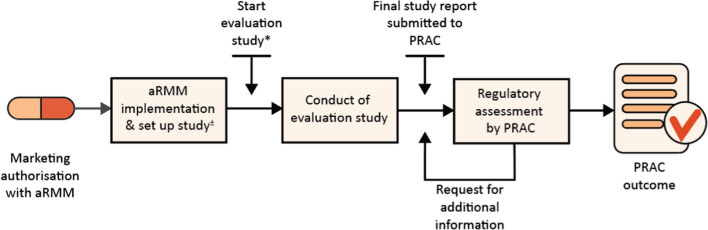
We established a cohort of medicinal products with aRMMs at marketing authorisation (MA) that were centrally authorised from July 2012-December 2021 using the European Public Assessment Reports. Evaluation studies were identified from the Risk Management Plans at the time of MA. Subsequently, we retrieved protocols, final study reports, Pharmacovigilance Risk Assessment Committee (PRAC) assessment reports, and PRAC minutes. We calculated the probability of completing an effectiveness evaluation within 60 months after MA using time-to-event analyses. Besides, we compared the planned final report with the actual final report date.
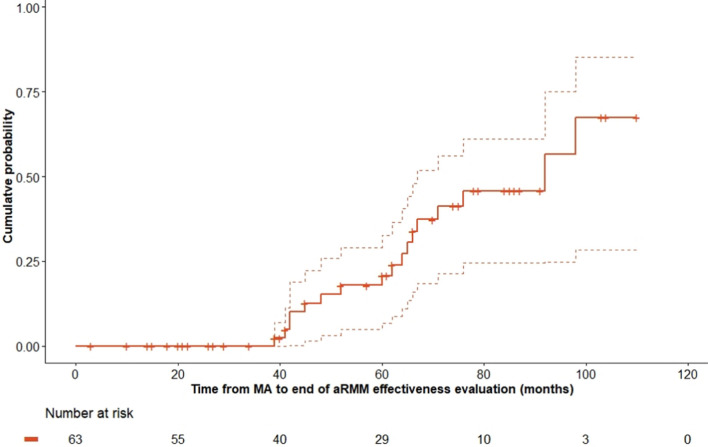
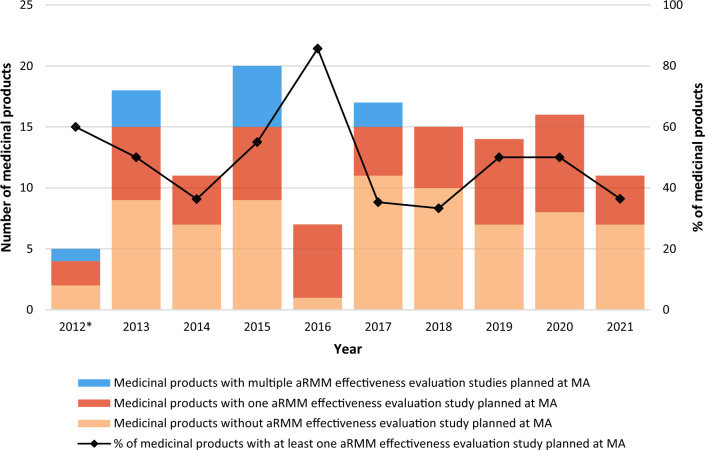
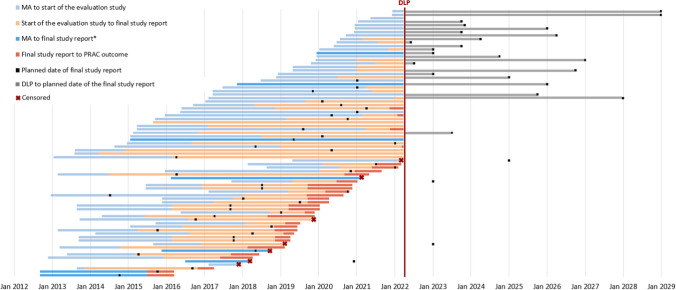
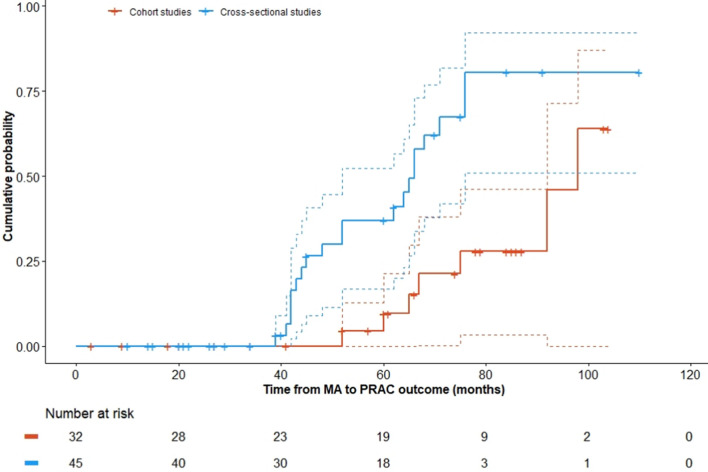
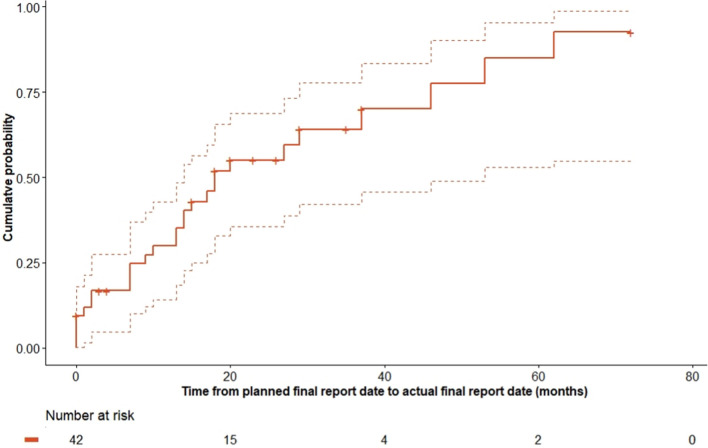
We identified 134 medicinal products authorised with aRMMs, of which almost half (n = 63, 47.0%) had an effectiveness evaluation study. The probability of an evaluation for a medicinal product being completed within 60 months after MA was 20.7% (95% CI 6.8-32.6). Regarding study design, the probability of completing a study was higher for cross-sectional studies when compared to cohort studies (p = 0.002). Moreover, 81.0% of studies were delayed when compared to their planned final report date.
The probability of completing an aRMM effectiveness evaluation at time for renewal of the MA was only one in five. Furthermore, estimates of the duration of studies around MA are too optimistic, with the majority being delayed.
在评估额外风险最小化措施(aRMMs)有效性的研究中,必须正确平衡速度与研究质量。我们评估了欧盟集中授权药品中使用额外药物警戒活动的 aRMM 有效性评估的持续时间。
我们使用欧洲公共评估报告,建立了一个在营销授权(MA)时具有 aRMM 的药物队列,这些药物是在 2012 年 7 月至 2021 年 12 月期间集中授权的。在 MA 时,我们从风险管理计划中确定了评估研究。随后,我们检索了方案、最终研究报告、药物警戒风险评估委员会(PRAC)评估报告和 PRAC 会议记录。我们使用时间事件分析计算了 MA 后 60 个月内完成有效性评估的概率。此外,我们比较了计划的最终报告与实际的最终报告日期。
我们确定了 134 种具有 aRMM 的授权药物,其中近一半(n = 63,47.0%)有一项有效性评估研究。MA 后 60 个月内完成评估的药物概率为 20.7%(95%CI 6.8-32.6)。关于研究设计,与队列研究相比,横断面研究完成研究的概率更高(p = 0.002)。此外,与计划的最终报告日期相比,81.0%的研究被推迟。
在 MA 续展时完成 aRMM 有效性评估的概率仅为五分之一。此外,MA 周围研究持续时间的估计过于乐观,大多数研究都被推迟了。