Department of Population and Health, College of Humanities and Legal Studies, University of Cape Coast, Cape Coast, Central Region, Ghana.
Berekum College of Education, Berekum, Bono Region, Ghana.
Reprod Health. 2023 Sep 2;20(1):131. doi: 10.1186/s12978-023-01676-y.
Twohundred and seventy out of every thousand live births died in Nigeria in 2019. These deaths were attributable to infections, complications of preterm birth, and intrapartum-related conditions. The World Health Organization recommends withholding bathing of neonates until 24 h after birth or until their vital signs become stable to prevent hypothermia. Despite the link between neonatal bathing and thermal control, the subject is understudied in Nigeria. This study aimed at investigating the factors associated with late neonatal bathing practices in Nigeria.
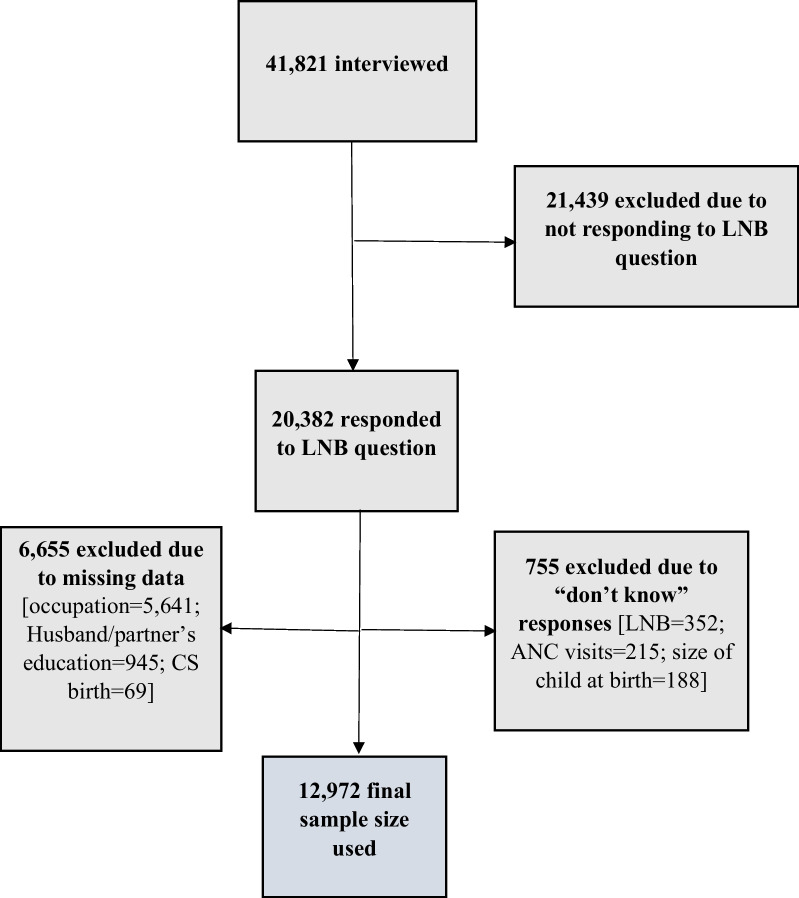
The study adopted a cross-sectional design and extracted data from the women's file of the 2018 Nigerian Demographic and Health Survey. The unit of analysis was limited to 12,972 women who had complete data for the study. We applied chi-square test of independence to ascertain the association between the outcome variable and explanatory variables. At 95% confidence interval, two logistic regression models were built with Model I consisting of only maternal factors whilst Model II contained both maternal and child factors, and results were presented in adjusted odds ratio.
Descriptively, 12% (CI = 0.122-0.134) of the women bathed their neonates after 24 h of delivery. Inferentially, women with secondary/higher education [AOR = 1.30, CI = 1.05-1.61], the rich [AOR = 1.24, CI = 1.03-1.50], those with access to mass media [AOR = 131, CI = 1.15-1.50], women that professed other religions [AOR = 9.28, CI = 4.24-17.56], those who delivered in a health facility [AOR = 1.93, CI = 1.66-2.25], whose child was small in size at birth [AOR = 1.46, CI = 1.21-1.77] and delivered by caesarean section [AOR = 2.50, CI = 1.97-3.18] had higher odds of bathing their neonates 24 h after birth.
The proportion of women who practised late neonatal bathing was generally low. To improve the practice of late neonatal bathing, much-concerted effort should be directed to women's education and approaches to increasing receptivity of late neonatal bathing among pregnant women through the media. The Nigerian Ministry of Health should incorporate routine counselling on the risks of bathing newborns prematurely into antenatal and postnatal care services.
2019 年,尼日利亚每千名活产儿中有 270 名死亡。这些死亡归因于感染、早产并发症和分娩期间相关情况。世界卫生组织建议在新生儿出生后 24 小时或生命体征稳定后再给新生儿洗澡,以防止体温过低。尽管新生儿洗澡与体温控制有关,但在尼日利亚,这一主题的研究还很不足。本研究旨在调查与尼日利亚晚新生儿洗澡做法相关的因素。
该研究采用横断面设计,从 2018 年尼日利亚人口与健康调查的妇女档案中提取数据。分析单位仅限于有完整研究数据的 12972 名妇女。我们应用独立性卡方检验来确定因变量与自变量之间的关联。在 95%置信区间内,建立了两个逻辑回归模型,模型 I 仅包含母亲因素,而模型 II 包含母亲和儿童因素,并以调整后的优势比呈现结果。
描述性结果显示,12%(95%CI=0.122-0.134)的妇女在分娩后 24 小时后给新生儿洗澡。推断性结果显示,接受过中等/高等教育的妇女(AOR=1.30,95%CI=1.05-1.61)、富裕的妇女(AOR=1.24,95%CI=1.03-1.50)、能够接触大众媒体的妇女(AOR=131,95%CI=1.15-1.50)、信奉其他宗教的妇女(AOR=9.28,95%CI=4.24-17.56)、在医疗机构分娩的妇女(AOR=1.93,95%CI=1.66-2.25)、新生儿出生时体型较小的妇女(AOR=1.46,95%CI=1.21-1.77)和剖宫产分娩的妇女(AOR=2.50,95%CI=1.97-3.18),她们给新生儿洗澡的可能性更高24 小时后出生。
实践晚新生儿洗澡的妇女比例普遍较低。为了改善晚新生儿洗澡的做法,应该大力加强妇女教育,并通过媒体增加孕妇对晚新生儿洗澡的接受度。尼日利亚卫生部应将关于过早给新生儿洗澡风险的常规咨询纳入产前和产后护理服务中。