Bukhari Syed S U H, Parkes Rebecca S V
Department of Veterinary Clinical Sciences, Jockey Club College of Veterinary Medicine and Life Sciences, City University of Hong Kong, Kowloon, Hong Kong SAR, China.
Centre for Animal Health and Welfare, Jockey Club College of Veterinary Medicine and Life Sciences, City University of Hong Kong, Kowloon, Hong Kong SAR, China.
Front Vet Sci. 2023 Aug 17;10:1214015. doi: 10.3389/fvets.2023.1214015. eCollection 2023.
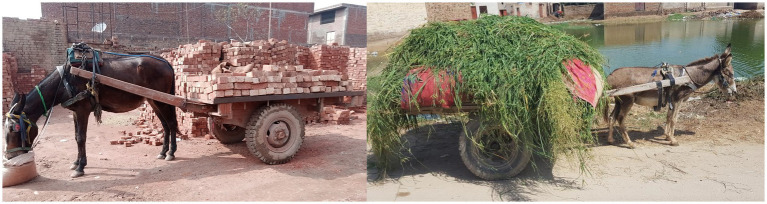
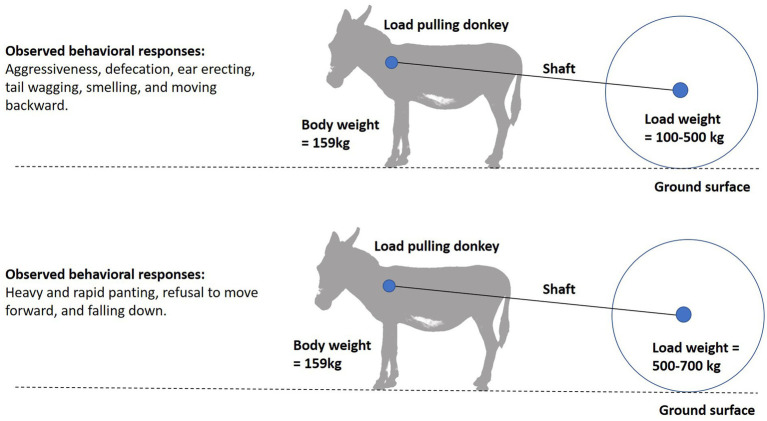
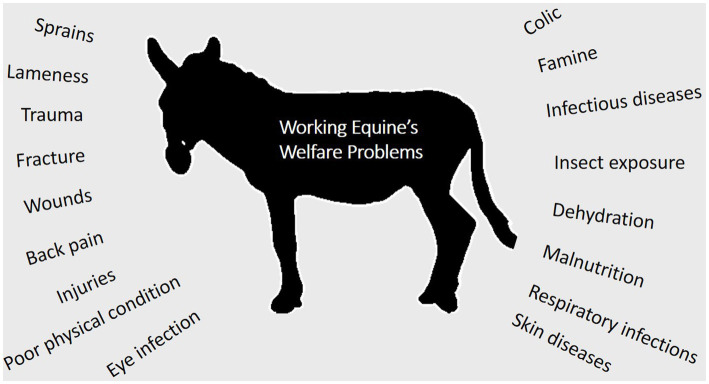
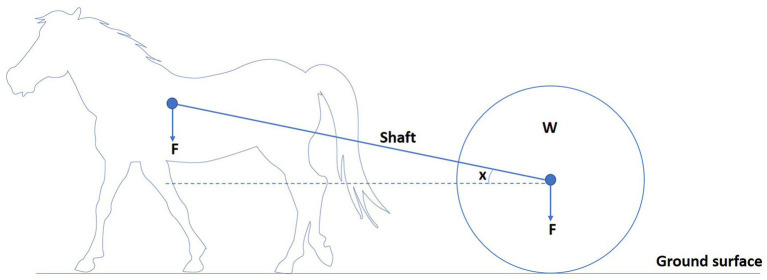
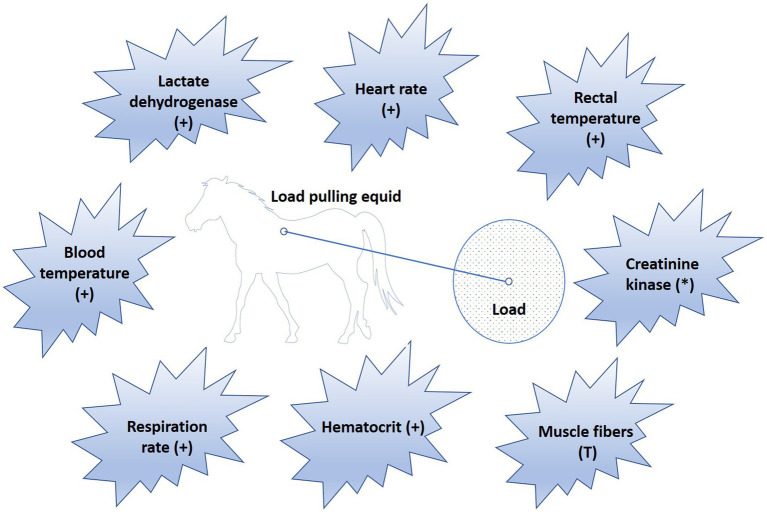
About 112 million working equids are the source of income for 600 million people globally. Many equids are used for pulling loads (up to 15,000 kg per day) to transport goods. Most of them are associated with brick kilns, mining, and agriculture industries in developing countries. They may suffer from welfare issues such as overloading, being beaten, and being forced to work for long periods. These issues may occur due to a poor understanding of load-pulling equids. Understanding their capabilities and the elements that influence them is critical for efficient performance and welfare. The measurement of stride characteristics and gait kinematics can reveal loading adaptations and help identify loading limitations. It is known that both loading and fatigue change the locomotor patterns of load-pulling horses. Heart rate is a stress quantifying metric and an important representative of the speed of work and draught force. Heart rate variability is a regularly used statistic to quantify a physiological response to stresses, but it has never been used for load-pulling equids. Changes in blood lactate, nitrogen, oxygen, and carbon dioxide contents are reliable biochemical indicators of the effects of load pulling. Changes in plasma cortisol levels reflect the intensity of exercise and stress levels in horses while pulling a load. However, eye blink rate is a cheap, simple, and immediate indicator of acute equine stress, and we suggest it may be used to aid in load-pulling equine welfare assessment. However, further research is needed for a standardized and evidence-based draught load pulling capacity of working horses, mules, and donkeys.
约1.12亿头役用马是全球6亿人的收入来源。许多役用马用于拉载重物(每天可达15000千克)以运输货物。其中大多数与发展中国家的砖窑、采矿和农业产业相关。它们可能面临诸如超载、被打以及被迫长时间工作等福利问题。这些问题可能是由于对拉载役用马了解不足所致。了解它们的能力以及影响这些能力的因素对于高效工作和福利至关重要。步幅特征和步态运动学的测量可以揭示负载适应情况并有助于识别负载限制。已知负载和疲劳都会改变拉载马匹的运动模式。心率是一种应激量化指标,也是工作速度和拉力的重要代表。心率变异性是一种常用于量化对应激生理反应的统计量,但从未用于拉载役用马。血乳酸、氮、氧和二氧化碳含量的变化是拉载影响的可靠生化指标。血浆皮质醇水平的变化反映了马匹拉载时的运动强度和应激水平。然而,眨眼频率是马匹急性应激的一种廉价、简单且即时的指标,我们建议可将其用于辅助评估拉载役用马的福利。然而,对于工作用马、骡和驴的标准化且基于证据的拉载能力,还需要进一步研究。