• 文献检索
  • 文档翻译
  • 深度研究
  • 学术资讯
  • Suppr Zotero 插件Zotero 插件
  • 邀请有礼
  • 套餐&价格
  • 历史记录
应用&插件
Suppr Zotero 插件Zotero 插件浏览器插件Mac 客户端Windows 客户端微信小程序
定价
高级版会员购买积分包购买API积分包
服务
文献检索文档翻译深度研究API 文档MCP 服务
关于我们
关于 Suppr公司介绍联系我们用户协议隐私条款
关注我们

Suppr 超能文献

核心技术专利:CN118964589B侵权必究
粤ICP备2023148730 号-1Suppr @ 2026

文献检索

告别复杂PubMed语法,用中文像聊天一样搜索,搜遍4000万医学文献。AI智能推荐,让科研检索更轻松。

立即免费搜索

文件翻译

保留排版,准确专业,支持PDF/Word/PPT等文件格式,支持 12+语言互译。

免费翻译文档

深度研究

AI帮你快速写综述,25分钟生成高质量综述,智能提取关键信息,辅助科研写作。

立即免费体验

《来自另一个时代的印记:诺塔尔基里科旧石器时代早期遗址(67万至69.5万年;F层至I2层)的核心技术与石片生产》

With Impressions Chosen from Another Time: Core Technologies and Debitage Production at the Lower Palaeolithic Site of Notarchirico (670-695 ka; layers F to I2).

作者信息

Carpentieri Marco, Moncel Marie-Hélène, Eramo Giacomo, Arzarello Marta

机构信息

Dipartimento Studi Umanistici, Università Degli Studi Di Ferrara, C.So Ercole I d'Este 32, 44121 Ferrara, Italy.

UMR 7194 HNHP (MNHN-CNRS-UPVD), Département Homme Et Environnement, Muséum National d'Histoire Naturelle, 1 Rue René Panhard, 75013 Paris, France.

出版信息

J Paleolit Archaeol. 2023;6(1):27. doi: 10.1007/s41982-023-00154-y. Epub 2023 Sep 5.

DOI:10.1007/s41982-023-00154-y
PMID:37675140
原文链接:https://pmc.ncbi.nlm.nih.gov/articles/PMC10477117/
Abstract

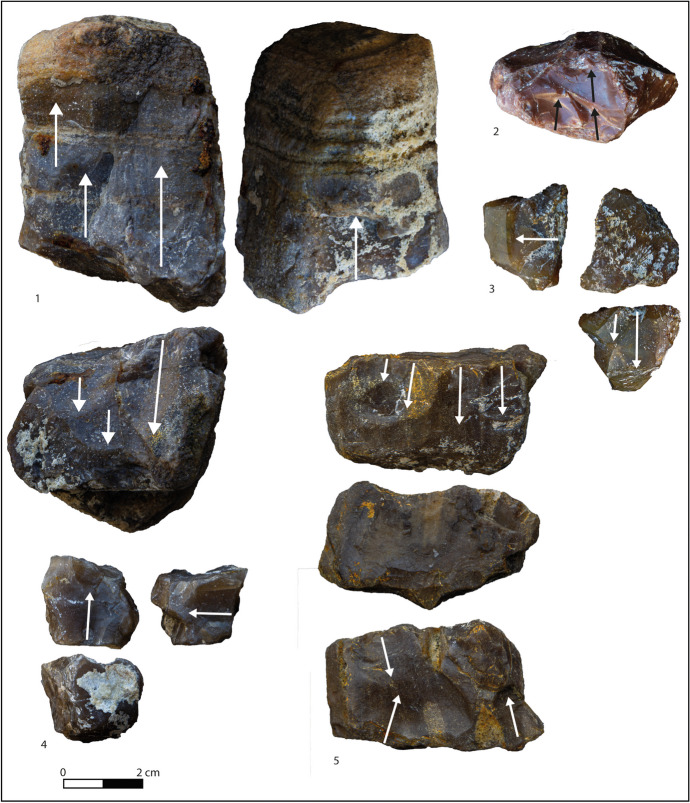
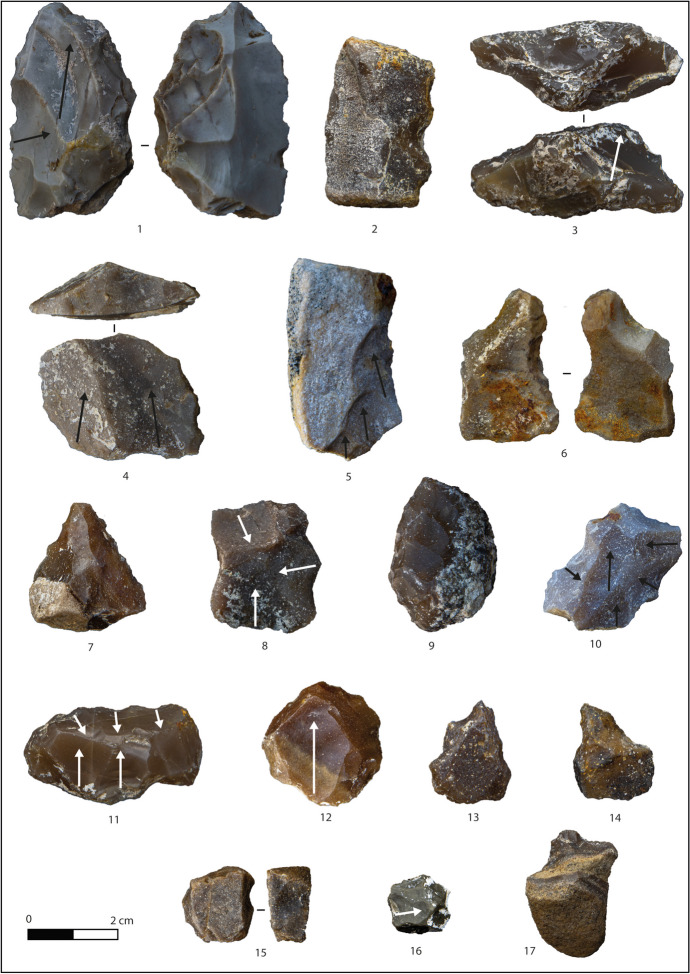
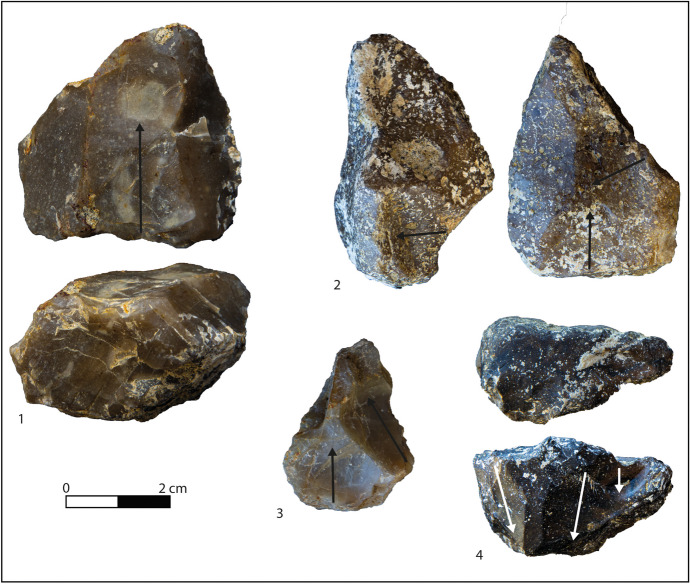
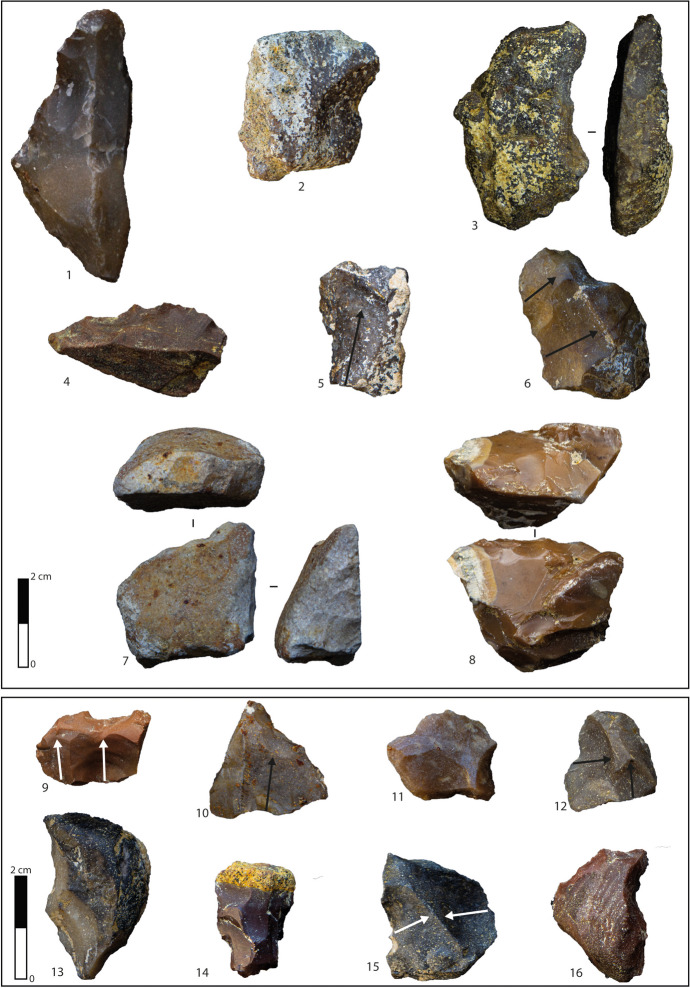
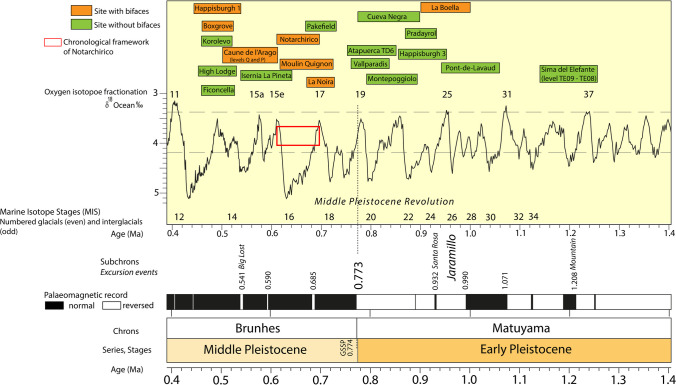
The earliest evidence of bifaces in western Europe is dated to the initial phase of the Middle Pleistocene (la Noira, Notarchirico, Moulin Quignon, 700-670 ka), with the findings of Barranc de la Boella (1.0-0.9 Ma) considered to be an earlier local evolution. No transition assemblages are recorded during this time frame, and the "abrupt" appearance of bifaces during this time frame is associated with significant cognitive shifts in human technological behaviours (Acheulean techno-complex). The new investigations conducted at the site of Notarchirico unearthed 30 ka of repeated human occupation (695-670 ka, layers F-I2) during MIS 17, with evidence of bifacial tools in layer G (680 ka) and F along with other heavy-duty implements (LCTs, pebble tools, etc.). Massive production of products realised on local raw materials collected in situ through simple and efficient core technologies characterises a large part of the lithic assemblage with a high ratio of diversified light-duty tools, including modified chert nodules. Despite core and flake assemblages being a recurrent trait of Lower Pleistocene contexts, the increase in retouched implements recorded at the onset of the Middle Pleistocene has been considered a significant technological shift. The technological analysis of the products presented in this work highlights recurrent and systematic technological behaviours of the hominins of Notarchirico-who proved to efficiently overcome the raw materials dimensional constraints-even in the layers without bifaces. This may shed light on the meaning of cultural and behavioural innovation that the Acheulean techno-complex is thought to bring over Europe. It is plausible that given the substantial homogeneity of the lithic strategies within the sequence of Notarchirico, which only the "introduction" of the bifaces in the upper layers seems to interrupt, a supposed behavioural or cultural change in the site might have already occurred in the lowermost portion of the sequence. In this work, we evaluate the degree of change-if any-from a technological perspective by analysing the reduction sequences.

摘要

西欧双面器的最早证据可追溯到中更新世初期(拉努瓦、诺塔尔基里科、穆兰基农,70万 - 67万年),巴兰卡 - 德拉博埃拉(100万 - 90万年)的发现被认为是更早的本地进化。在此时间框架内未记录到过渡组合,而在此期间双面器的“突然”出现与人类技术行为(阿舍利技术复合体)的重大认知转变有关。在诺塔尔基里科遗址进行的新调查发现,在海洋同位素阶段17期间(69.5万 - 67万年,F - I2层)有3万年的人类反复居住迹象,在G层(68万年)和F层发现了双面工具以及其他重型工具(大型切割工具、卵石工具等)。通过简单高效的石核技术就地采集当地原材料制作的大量产品,构成了大部分石器组合的特征,其中轻型工具种类繁多,包括经过改良的燧石结核。尽管石核和石片组合是更新世早期环境的常见特征,但中更新世开始时记录的经过修整的工具数量增加被认为是一次重大的技术转变。本研究中对产品的技术分析突出了诺塔尔基里科古人反复且系统的技术行为,他们证明即使在没有双面器的层位中也能有效克服原材料尺寸限制。这可能有助于揭示阿舍利技术复合体被认为给欧洲带来的文化和行为创新的意义。鉴于诺塔尔基里科序列中石器策略的高度同质性,似乎只有上层中双面器的“引入”才打破了这种同质性,那么该遗址可能在序列的最底层就已经发生了假定的行为或文化变化。在这项工作中,我们通过分析石器制作序列从技术角度评估变化程度(如果有变化的话)。
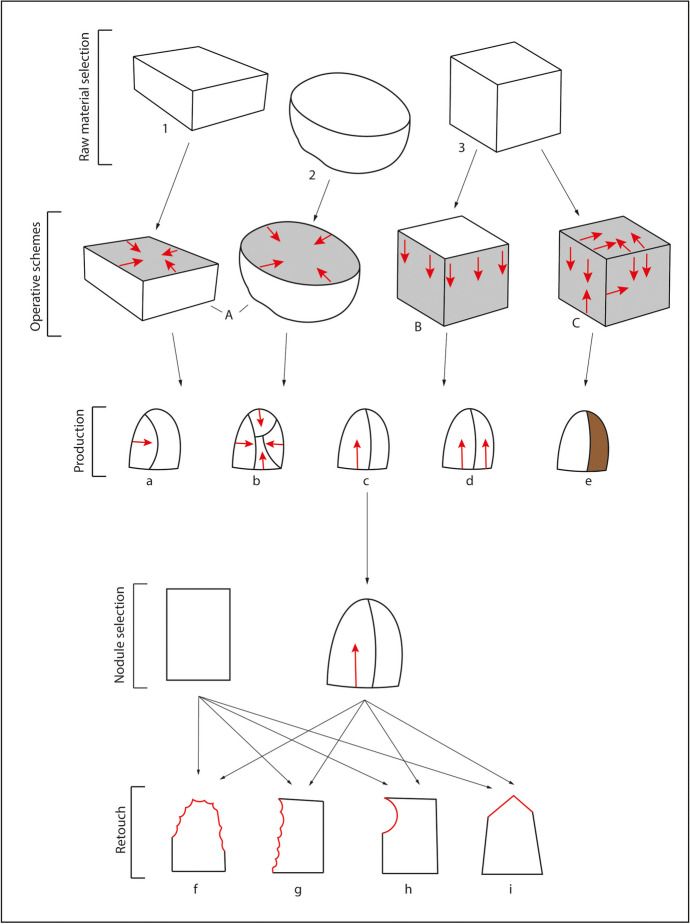
https://cdn.ncbi.nlm.nih.gov/pmc/blobs/e9c4/10477117/941110f2c27a/41982_2023_154_Fig10_HTML.jpg
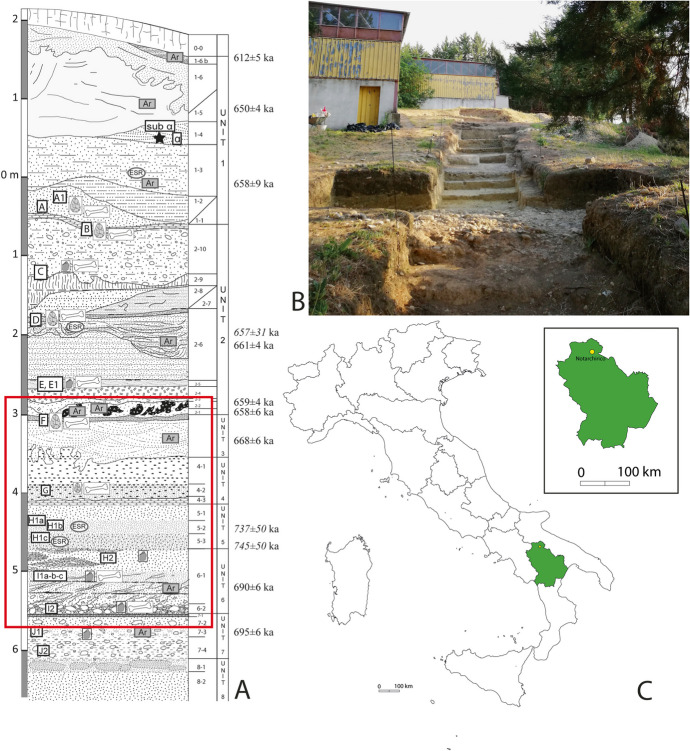
https://cdn.ncbi.nlm.nih.gov/pmc/blobs/e9c4/10477117/d3d9064ba70e/41982_2023_154_Fig1_HTML.jpg
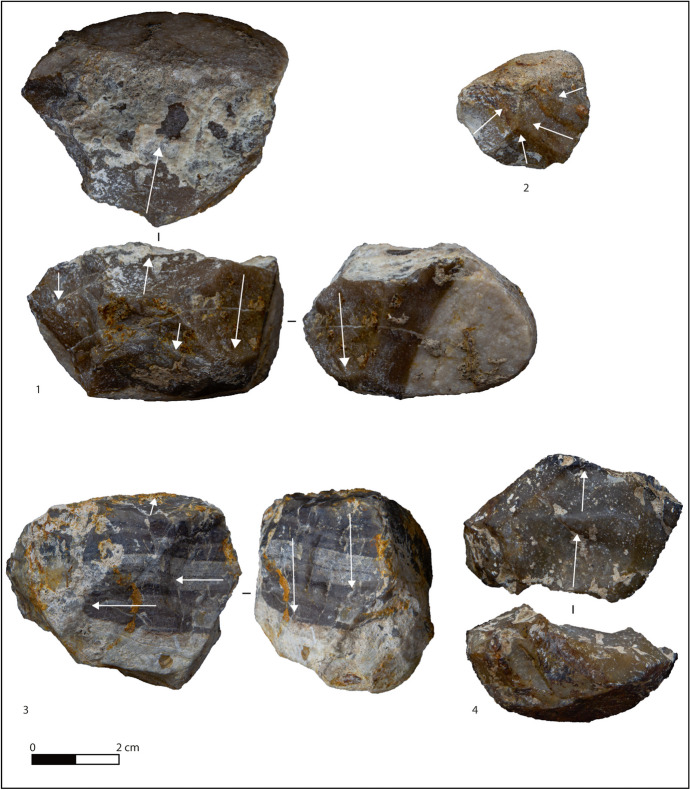
https://cdn.ncbi.nlm.nih.gov/pmc/blobs/e9c4/10477117/da038de24b68/41982_2023_154_Fig2_HTML.jpg
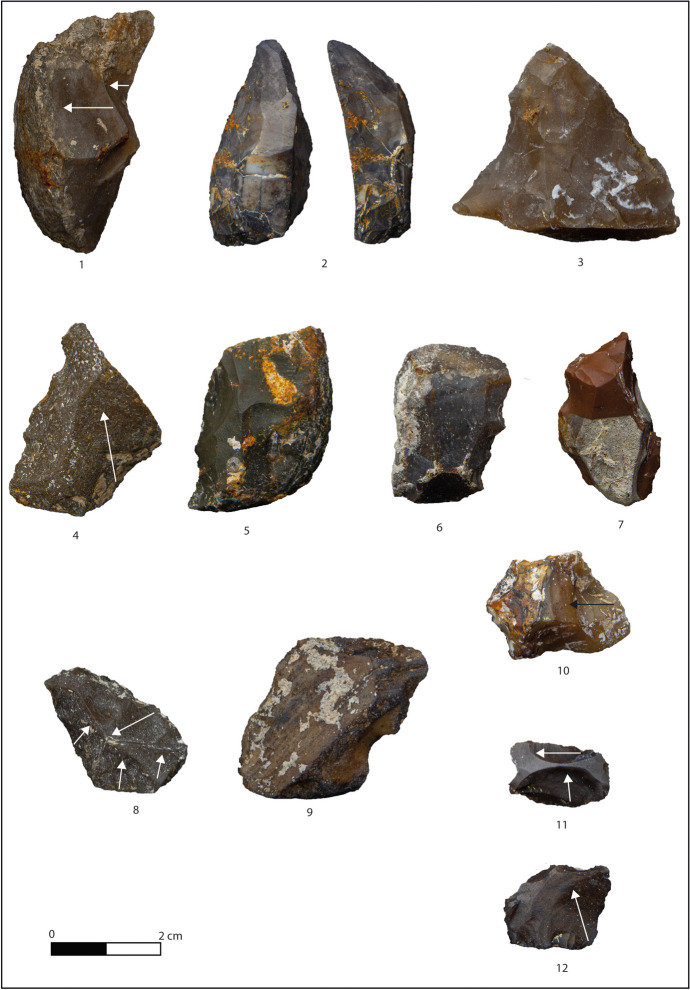
https://cdn.ncbi.nlm.nih.gov/pmc/blobs/e9c4/10477117/d60126e0a7f6/41982_2023_154_Fig3_HTML.jpg
https://cdn.ncbi.nlm.nih.gov/pmc/blobs/e9c4/10477117/e35c82e7e68b/41982_2023_154_Fig4_HTML.jpg
https://cdn.ncbi.nlm.nih.gov/pmc/blobs/e9c4/10477117/65e5bea1b5db/41982_2023_154_Fig5_HTML.jpg
https://cdn.ncbi.nlm.nih.gov/pmc/blobs/e9c4/10477117/f411892a4a49/41982_2023_154_Fig6_HTML.jpg
https://cdn.ncbi.nlm.nih.gov/pmc/blobs/e9c4/10477117/0556bfded269/41982_2023_154_Fig7_HTML.jpg
https://cdn.ncbi.nlm.nih.gov/pmc/blobs/e9c4/10477117/8d6adebbfbe3/41982_2023_154_Fig8_HTML.jpg
https://cdn.ncbi.nlm.nih.gov/pmc/blobs/e9c4/10477117/b4a785cdd588/41982_2023_154_Fig9_HTML.jpg
https://cdn.ncbi.nlm.nih.gov/pmc/blobs/e9c4/10477117/941110f2c27a/41982_2023_154_Fig10_HTML.jpg
https://cdn.ncbi.nlm.nih.gov/pmc/blobs/e9c4/10477117/d3d9064ba70e/41982_2023_154_Fig1_HTML.jpg
https://cdn.ncbi.nlm.nih.gov/pmc/blobs/e9c4/10477117/da038de24b68/41982_2023_154_Fig2_HTML.jpg
https://cdn.ncbi.nlm.nih.gov/pmc/blobs/e9c4/10477117/d60126e0a7f6/41982_2023_154_Fig3_HTML.jpg
https://cdn.ncbi.nlm.nih.gov/pmc/blobs/e9c4/10477117/e35c82e7e68b/41982_2023_154_Fig4_HTML.jpg
https://cdn.ncbi.nlm.nih.gov/pmc/blobs/e9c4/10477117/65e5bea1b5db/41982_2023_154_Fig5_HTML.jpg
https://cdn.ncbi.nlm.nih.gov/pmc/blobs/e9c4/10477117/f411892a4a49/41982_2023_154_Fig6_HTML.jpg
https://cdn.ncbi.nlm.nih.gov/pmc/blobs/e9c4/10477117/0556bfded269/41982_2023_154_Fig7_HTML.jpg
https://cdn.ncbi.nlm.nih.gov/pmc/blobs/e9c4/10477117/8d6adebbfbe3/41982_2023_154_Fig8_HTML.jpg
https://cdn.ncbi.nlm.nih.gov/pmc/blobs/e9c4/10477117/b4a785cdd588/41982_2023_154_Fig9_HTML.jpg
https://cdn.ncbi.nlm.nih.gov/pmc/blobs/e9c4/10477117/941110f2c27a/41982_2023_154_Fig10_HTML.jpg

相似文献

1
With Impressions Chosen from Another Time: Core Technologies and Debitage Production at the Lower Palaeolithic Site of Notarchirico (670-695 ka; layers F to I2).《来自另一个时代的印记:诺塔尔基里科旧石器时代早期遗址(67万至69.5万年;F层至I2层)的核心技术与石片生产》
J Paleolit Archaeol. 2023;6(1):27. doi: 10.1007/s41982-023-00154-y. Epub 2023 Sep 5.
2
A biface production older than 600 ka ago at Notarchirico (Southern Italy) contribution to understanding early Acheulean cognition and skills in Europe.在意大利南部的诺塔奇里科(Notarchirico)发现了一件 60 多万年前的两面器,这为理解欧洲早期阿舍利文化的认知和技能提供了新的视角。
PLoS One. 2019 Sep 26;14(9):e0218591. doi: 10.1371/journal.pone.0218591. eCollection 2019.
3
Tracking behavioral persistence and innovations during the Middle Pleistocene in Western Europe. Shift in occupations between 700 and 450 ka at la Noira site (Centre, France).追踪欧洲西部中更新世时期的行为持续性和创新性。法国中部拉诺拉遗址(la Noira site)70 万至 45 万年前之间的职业转变。
J Hum Evol. 2021 Jul;156:103009. doi: 10.1016/j.jhevol.2021.103009. Epub 2021 May 25.
4
The origin of early Acheulean expansion in Europe 700 ka ago: new findings at Notarchirico (Italy).70 万年前早期阿舍利文化在欧洲的扩张起源:来自意大利诺塔奇里科的新发现。
Sci Rep. 2020 Aug 14;10(1):13802. doi: 10.1038/s41598-020-68617-8.
5
Early evidence of Acheulean settlement in northwestern Europe--la Noira site, a 700,000 year-old occupation in the center of France.欧洲西北部阿舍利文化聚落的早期证据——拉努瓦遗址,位于法国中部,有70万年的人类居住历史。
PLoS One. 2013 Nov 20;8(11):e75529. doi: 10.1371/journal.pone.0075529. eCollection 2013.
6
Age and date for early arrival of the Acheulian in Europe (Barranc de la Boella, la Canonja, Spain).阿舍利文化在欧洲早期出现的年代与日期(西班牙拉博埃利亚峡谷、拉卡诺尼亚)。
PLoS One. 2014 Jul 30;9(7):e103634. doi: 10.1371/journal.pone.0103634. eCollection 2014.
7
On the earliest Acheulean in Britain: first dates and artefacts from the MIS 15 site of Fordwich (Kent, UK).关于英国最早的阿舍利文化:来自福特威奇(英国肯特郡)海洋同位素阶段15遗址的首批年代测定与文物
R Soc Open Sci. 2022 Jun 22;9(6):211904. doi: 10.1098/rsos.211904. eCollection 2022 Jun.
8
Technological behaviour in the early Acheulean of EF-HR (Olduvai Gorge, Tanzania).早期阿舍利石器技术在 EF-HR(坦桑尼亚奥杜威峡谷)的行为。
J Hum Evol. 2018 Jul;120:329-377. doi: 10.1016/j.jhevol.2018.01.003. Epub 2018 Apr 27.
9
Technological variability during the Early Middle Palaeolithic in Western Europe. Reduction systems and predetermined products at the Bau de l'Aubesier and Payre (South-East France).西欧旧石器时代中期早期的技术变异性。奥贝西耶堡和佩尔(法国东南部)的还原系统与预定产品。
PLoS One. 2017 Jun 7;12(6):e0178550. doi: 10.1371/journal.pone.0178550. eCollection 2017.
10
An older origin for the Acheulean at Melka Kunture (Upper Awash, Ethiopia): techno-economic behaviours at Garba IVD.梅尔卡库图雷(埃塞俄比亚上阿瓦什)阿舍利石器工业的较古老起源:加巴 IVD 的技术经济行为。
J Hum Evol. 2013 Nov;65(5):594-620. doi: 10.1016/j.jhevol.2013.07.001. Epub 2013 Aug 15.

引用本文的文献

1
Climatic and environmental changes of ~100 thousand years: The mammals from the early Middle Pleistocene sequence of Notarchirico (southern Italy).十万年以来的气候和环境变化:来自意大利南部诺塔基里科(Notarchirico)早更新世中期序列的哺乳动物。
PLoS One. 2024 Oct 23;19(10):e0311623. doi: 10.1371/journal.pone.0311623. eCollection 2024.

本文引用的文献

1
Hominins likely occupied northern Europe before one million years ago.人属动物可能在 100 万年前就已经居住在北欧了。
Evol Anthropol. 2023 Feb;32(1):10-25. doi: 10.1002/evan.21966. Epub 2022 Nov 16.
2
Tracking behavioral persistence and innovations during the Middle Pleistocene in Western Europe. Shift in occupations between 700 and 450 ka at la Noira site (Centre, France).追踪欧洲西部中更新世时期的行为持续性和创新性。法国中部拉诺拉遗址(la Noira site)70 万至 45 万年前之间的职业转变。
J Hum Evol. 2021 Jul;156:103009. doi: 10.1016/j.jhevol.2021.103009. Epub 2021 May 25.
3
Macaca ulna from new excavations at the Notarchirico Acheulean site (Middle Pleistocene, Venosa, southern Italy).
来自意大利南部韦诺萨诺塔尔基里科阿舍利文化遗址新发掘处的猕猴尺骨(中更新世)。
J Hum Evol. 2021 Apr;153:102946. doi: 10.1016/j.jhevol.2020.102946. Epub 2021 Feb 25.
4
The origin of early Acheulean expansion in Europe 700 ka ago: new findings at Notarchirico (Italy).70 万年前早期阿舍利文化在欧洲的扩张起源:来自意大利诺塔奇里科的新发现。
Sci Rep. 2020 Aug 14;10(1):13802. doi: 10.1038/s41598-020-68617-8.
5
Correction: A biface production older than 600 ka ago at Notarchirico (Southern Italy) contribution to understanding early Acheulean cognition and skills in Europe.更正:意大利南部诺塔尔基里科60万年前以前的双面器制作,对理解欧洲早期阿舍利文化的认知和技能有重要意义。
PLoS One. 2019 Oct 24;14(10):e0224603. doi: 10.1371/journal.pone.0224603. eCollection 2019.
6
Understanding stone tool-making skill acquisition: Experimental methods and evolutionary implications.理解石器制造技能的习得:实验方法及其进化意义。
J Hum Evol. 2019 Aug;133:146-166. doi: 10.1016/j.jhevol.2019.05.010. Epub 2019 Jul 2.
7
Shedding light on the Early Pleistocene of TD6 (Gran Dolina, Atapuerca, Spain): The technological sequence and occupational inferences.揭示TD6(西班牙阿塔普尔卡格兰多利纳)早更新世:技术序列与居住推断
PLoS One. 2018 Jan 25;13(1):e0190889. doi: 10.1371/journal.pone.0190889. eCollection 2018.
8
New dating evidence of the early presence of hominins in Southern Europe.在南欧发现了早期人类存在的新dating 证据。
Sci Rep. 2017 Aug 30;7(1):10074. doi: 10.1038/s41598-017-10178-4.
9
European Acheuleans. northern v. southern Europe: hominins, technical behaviour, chronological and environmental contexts. International Conference, National Museum of Natural History, Paris, France November 19-21, 2014.欧洲阿舍利文化。北欧与南欧:古人类、技术行为、年代学与环境背景。国际会议,法国巴黎国家自然历史博物馆,2014年11月19日至21日。
Evol Anthropol. 2017 Apr;26(2):44-46. doi: 10.1002/evan.21517.
10
Chronological and environmental context of the first hominin dispersal into Western Europe: The case of Barranco León (Guadix-Baza Basin, SE Spain).首个古人类向西欧扩散的年代与环境背景:以巴兰科·莱昂为例(西班牙东南部瓜迪克斯-巴扎盆地)。
J Hum Evol. 2015 Oct;87:87-94. doi: 10.1016/j.jhevol.2015.02.014. Epub 2015 Apr 13.