Department of Clinical Pharmacology, King's College London British Heart Foundation Centre, St. Thomas' Hospital, United Kingdom (Y.L., M.C., P.C.).
School of Bioengineering and Imaging Science, King's College London, United Kingdom (E.C., E.P.-A., B.R., A.P.K., R.R.).
Hypertension. 2023 Nov;80(11):2473-2484. doi: 10.1161/HYPERTENSIONAHA.122.20969. Epub 2023 Sep 7.
Increased systemic vascular resistance and, in older people, reduced aortic distensibility, are thought to be the hemodynamic determinants of primary hypertension but cardiac output could also be important. We examined the hemodynamics of elevated blood pressure and hypertension in the middle to older-aged UK population participating in the UK Biobank imaging studies.
Cardiac output, systemic vascular resistance, and aortic distensibility were measured from cardiac magnetic resonance imaging in 31 112 (distensibility in 21 178) participants (46.3% male, mean age±SD 63±7 years). Body composition including visceral adipose tissue volume and abdominal subcutaneous adipose tissue volume were measured in 19 645 participants.
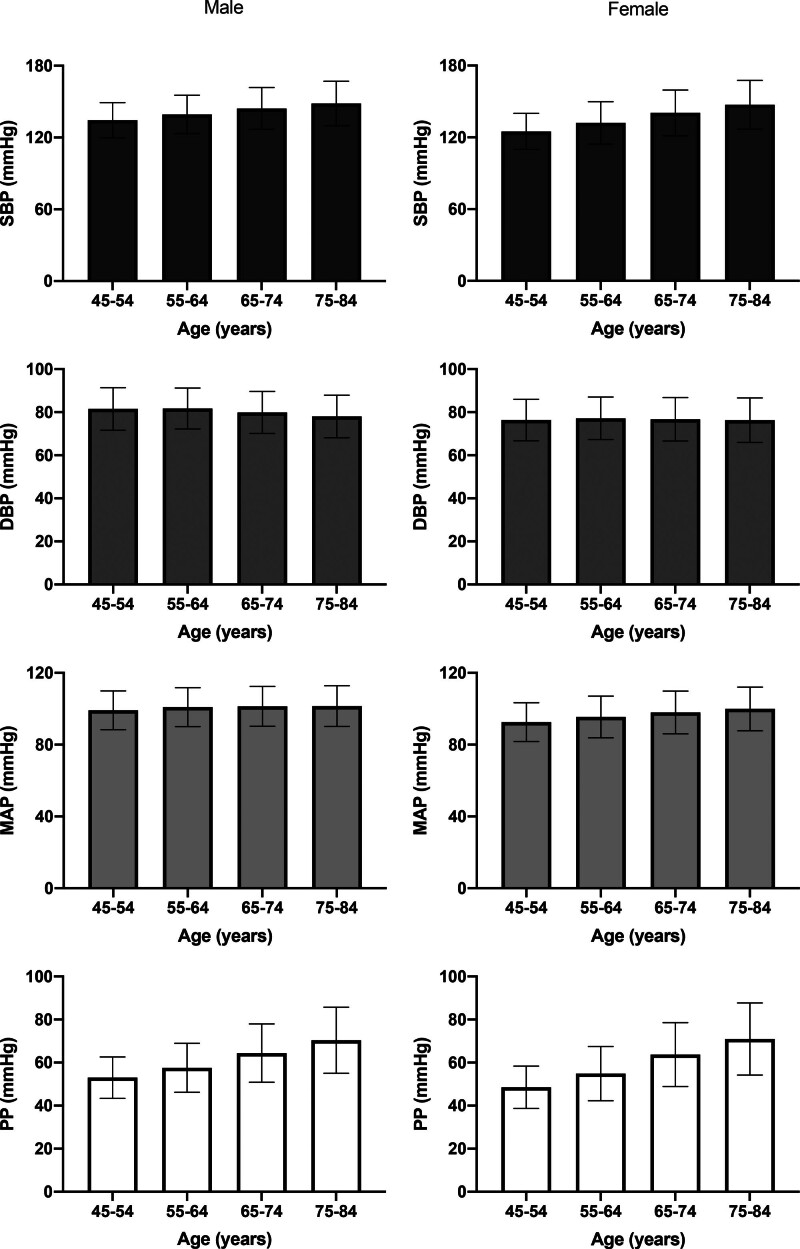
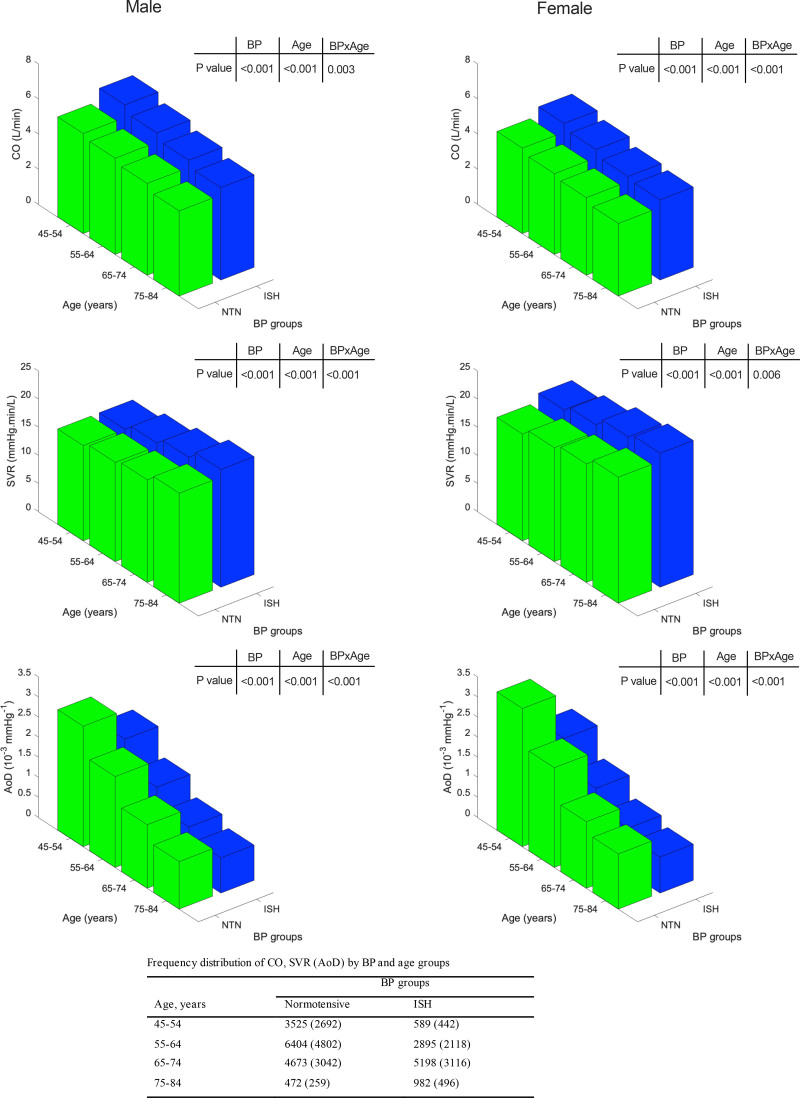
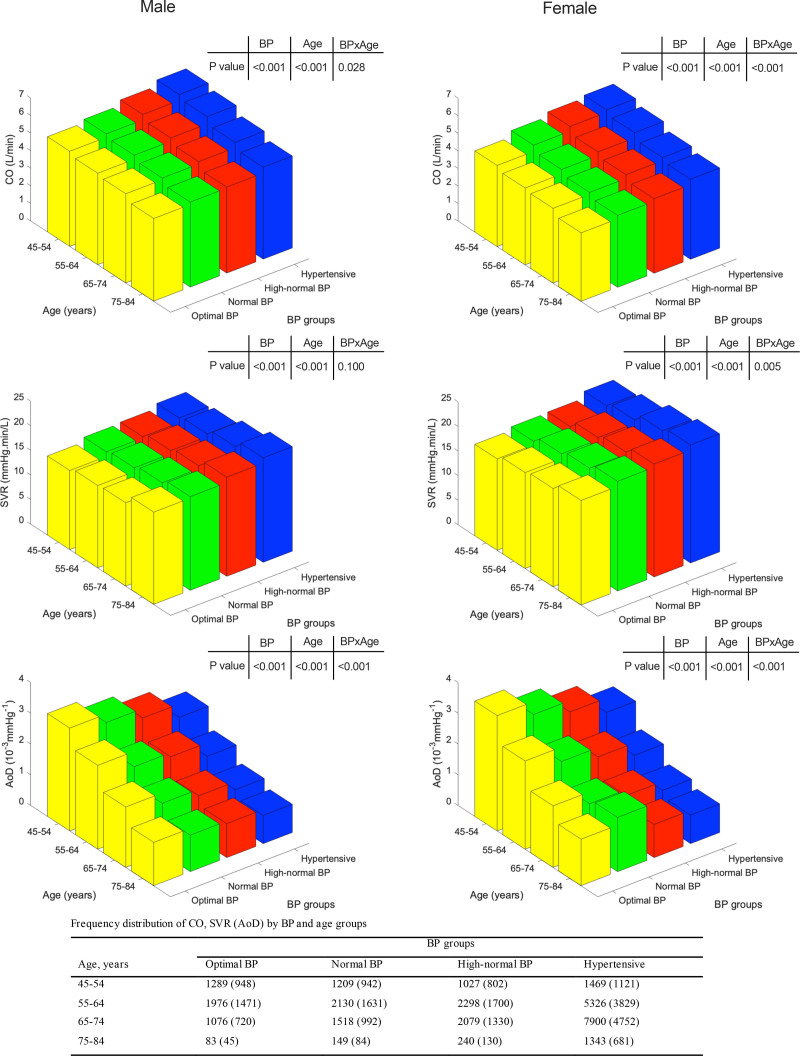
Participants with higher blood pressure had higher cardiac output (higher by 17.9±26.6% in hypertensive compared with those with optimal blood pressure) and higher systemic vascular resistance (higher by 11.4±27.9% in hypertensive compared with those with optimal blood pressure). These differences were little changed after adjustment for body size and adiposity. The contribution of cardiac output relative to systemic vascular resistance was more marked in younger compared with older subjects. Aortic distensibility decreased with age and was lower in participants with higher compared with lower blood pressure but with a greater difference in younger compared with older subjects.
In the middle to older-aged UK population, cardiac output plays an important role in contributing to elevated mean arterial blood pressure, particularly in younger compared with older subjects. Reduced aortic distensibility contributes to a rise in pulse pressure and systolic blood pressure at all ages.
全身性血管阻力增加,以及老年人的主动脉顺应性降低,被认为是原发性高血压的血流动力学决定因素,但心输出量也可能很重要。我们在参与英国生物银行影像研究的中年至老年英国人群中,检查了血压升高和高血压的血流动力学。
在 31112 名(顺应性为 21178 名)参与者(46.3%为男性,平均年龄±标准差 63±7 岁)中,通过心脏磁共振成像测量心输出量、全身血管阻力和主动脉顺应性。在 19645 名参与者中测量了身体成分,包括内脏脂肪组织体积和腹部皮下脂肪组织体积。
血压较高的参与者心输出量较高(高血压组比血压最佳组高 17.9±26.6%),全身血管阻力较高(高血压组比血压最佳组高 11.4±27.9%)。这些差异在调整了体型和肥胖程度后几乎没有变化。与老年人相比,心输出量相对于全身血管阻力的贡献在年轻人中更为明显。主动脉顺应性随年龄而降低,在血压较高的参与者中较低,但在年轻人和老年人之间的差异更大。
在中年至老年的英国人群中,心输出量在心输出量升高导致平均动脉血压升高中起着重要作用,特别是在年轻人中。主动脉顺应性降低会导致所有年龄段的脉压和收缩压升高。