Department of Immunology and Molecular Biology, School of Biomedical Sciences, College of Health Sciences, Makerere University, P.O Box 7072, Kampala, Uganda.
Department of Biochemistry and Bioinformatics, School of Pure and Applied Sciences, Pwani University, P.O Box 195-80108, Kilifi, Kenya.
BMC Infect Dis. 2023 Sep 7;23(1):587. doi: 10.1186/s12879-023-08579-0.
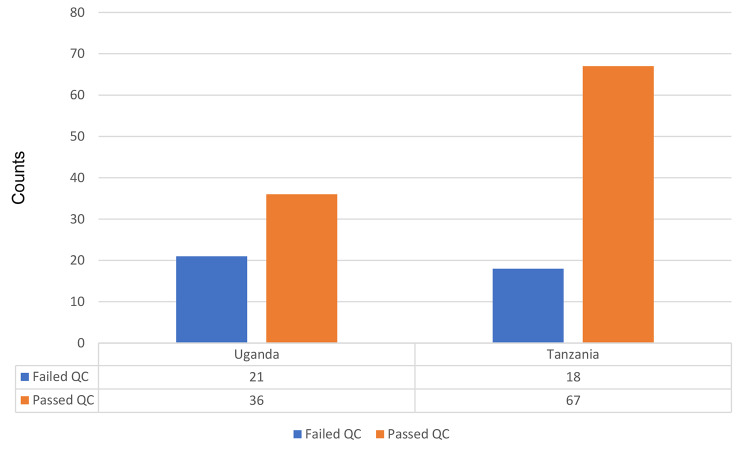
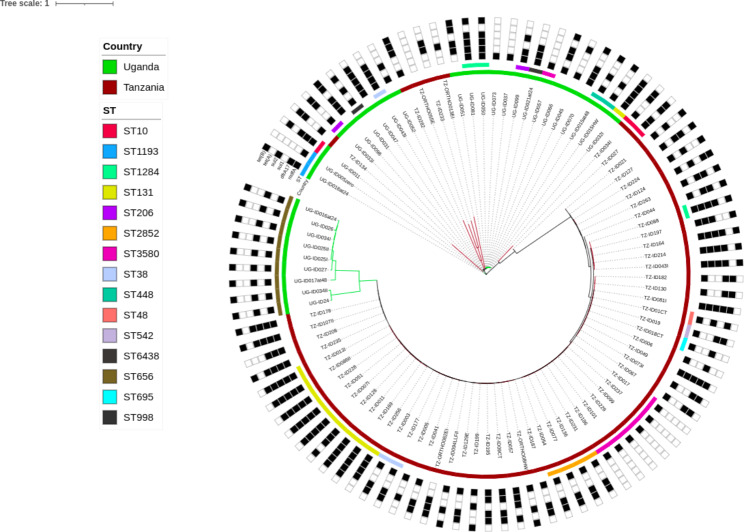
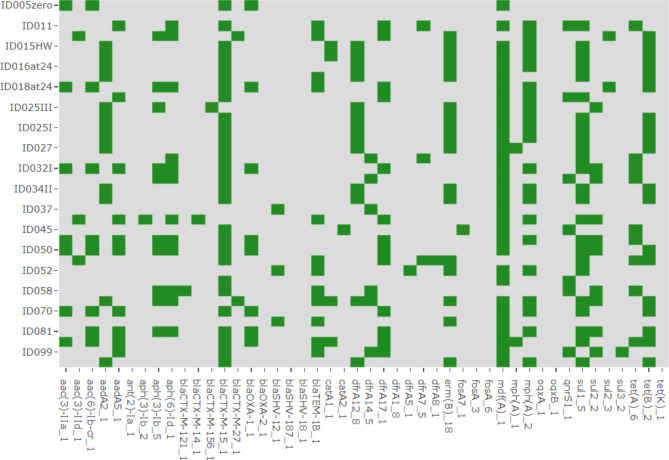
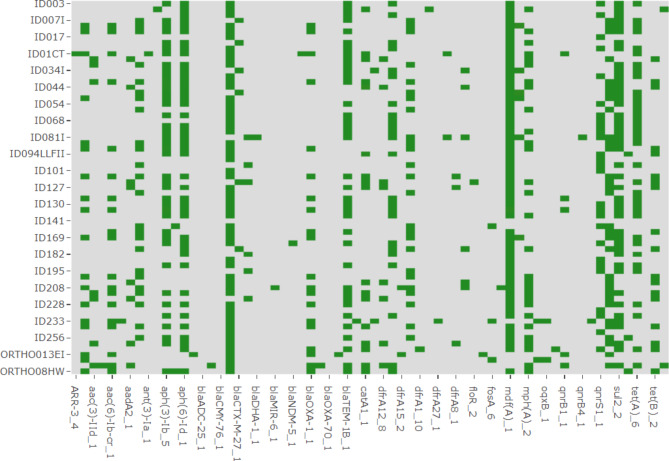
Escherichia coli significantly causes nosocomial infections and rampant spread of antimicrobial resistance (AMR). There is limited data on genomic characterization of extended-spectrum β-lactamase (ESBL)-producing E. coli from African clinical settings. This hospital-based longitudinal study unraveled the genetic resistance elements in ESBL E. coli isolates from Uganda and Tanzania using whole-genome sequencing (WGS). A total of 142 ESBL multi-drug resistant E. coli bacterial isolates from both Tanzania and Uganda were sequenced and out of these, 36/57 (63.1%) and 67/85 (78.8%) originated from Uganda and Tanzania respectively. Mutations in RarD, yaaA and ybgl conferring resistances to chloramphenicol, peroxidase and quinolones were observed from Ugandan and Tanzanian isolates. We reported very high frequencies for bla with 11/18(61.1%), and bla with 12/23 (52.1%), bla with 13/23 (56.5%) of isolates originating from Uganda and Tanzania respectively all conferring resistance to Beta-lactam-penicillin inhibitors. We observed chloramphenicol resistance-conferring gene mdfA in 21/23 (91.3%) of Tanzanian isolates. Extraintestinal E. coli sequence type (ST) 131 accounted for 5/59 (8.4%) of Tanzanian isolates while enterotoxigenic E. coli ST656 was reported in 9/34 (26.4%) of Ugandan isolates. Virulence factors originating from Shigella dysenteriae Sd197 (gspC, gspD, gspE, gspF, gspG, gspF, gspH, gspI), Yersinia pestis CO92 (irp1, ybtU, ybtX, iucA), Salmonella enterica subsp. enterica serovar Typhimurium str. LT2 (csgF and csgG), and Pseudomonas aeruginosa PAO1 (flhA, fliG, fliM) were identified in these isolates. Overall, this study highlights a concerning prevalence and diversity of AMR-conferring elements shaping the genomic structure of multi-drug resistant E. coli in clinical settings in East Africa. It underscores the urgent need to strengthen infection-prevention controls and advocate for the routine use of WGS in national AMR surveillance and monitoring programs.Availability of WGS analysis pipeline: the rMAP source codes, installation, and implementation manual can free be accessed via https://github.com/GunzIvan28/rMAP .
大肠埃希菌是引起医院感染和抗菌药物耐药(AMR)广泛传播的重要原因。关于非洲临床环境中产超广谱β-内酰胺酶(ESBL)大肠埃希菌的基因组特征,数据有限。这项基于医院的纵向研究使用全基因组测序(WGS)揭示了来自乌干达和坦桑尼亚的 ESBL 大肠埃希菌分离株中的遗传耐药元件。总共对来自乌干达和坦桑尼亚的 142 株 ESBL 多药耐药大肠埃希菌细菌分离株进行了测序,其中 36/57(63.1%)和 67/85(78.8%)分别来自乌干达和坦桑尼亚。在乌干达和坦桑尼亚分离株中观察到 rarD、yaaA 和 ybgl 突变,赋予氯霉素、过氧化物酶和喹诺酮类药物的耐药性。我们报告了非常高的 bla 频率,其中 18 个中的 11 个(61.1%),23 个中的 12 个(52.1%),23 个中的 13 个(56.5%)都来自乌干达和坦桑尼亚的分离株,均对β-内酰胺-青霉素抑制剂具有耐药性。我们在 23 个中的 21 个(91.3%)坦桑尼亚分离株中观察到氯霉素耐药基因 mdfA。肠外致病性大肠埃希菌 ST131 型占 59 个中的 5 个(8.4%),肠产毒性大肠埃希菌 ST656 型占 34 个中的 9 个(26.4%)。志贺氏痢疾杆菌 Sd197(gspC、gspD、gspE、gspF、gspG、gspF、gspH、gspI)、鼠疫耶尔森菌 CO92(irp1、ybtU、ybtX、iucA)、肠炎沙门氏菌亚属肠炎沙门氏菌血清型 Typhimurium str.LT2(csgF 和 csgG)和铜绿假单胞菌 PAO1(flhA、fliG、fliM)的毒力因子在这些分离株中被鉴定出来。总的来说,这项研究强调了令人担忧的 AMR 相关元素在东非临床环境中多药耐药大肠埃希菌基因组结构中的流行和多样性。它强调了迫切需要加强感染预防控制,并倡导在国家 AMR 监测和监测计划中常规使用 WGS。WGS 分析管道的可用性:rMAP 源代码、安装和实施手册可通过 https://github.com/GunzIvan28/rMAP 免费访问。