College of Pharmacy, Shandong University of Traditional Chinese Medicine, Jinan, China.
Shandong Center for Disease Control and Prevention, Jinan, China.
Front Cell Infect Microbiol. 2023 Aug 23;13:1218565. doi: 10.3389/fcimb.2023.1218565. eCollection 2023.
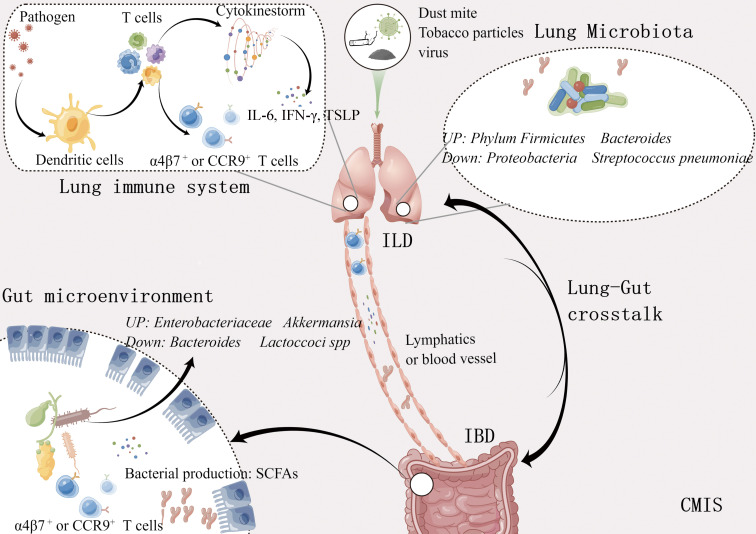
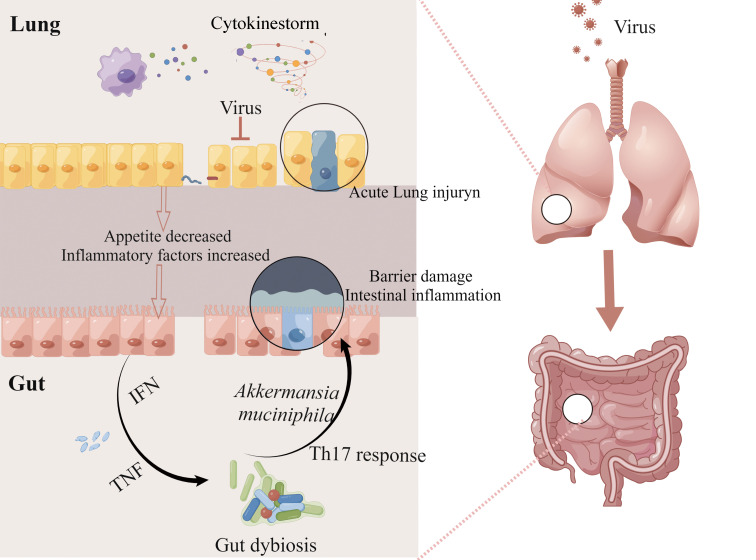
Both lung and gut belong to the common mucosal immune system (CMIS), with huge surface areas exposed to the external environment. They are the main defense organs against the invasion of pathogens and play a key role in innate and adaptive immunity. Recently, more and more evidence showed that stimulation of one organ can affect the other, as exemplified by intestinal complications during respiratory disease and , which is called lung-gut crosstalk. Intestinal microbiota plays an important role in respiratory and intestinal diseases. It is known that intestinal microbial imbalance is related to inflammatory bowel disease (IBD), this imbalance could impact the integrity of the intestinal epithelial barrier and leads to the persistence of inflammation, however, gut microbial disturbances have also been observed in respiratory diseases such as asthma, allergy, chronic obstructive pulmonary disease (COPD), and respiratory infection. It is not fully clarified how these disorders happened. In this review, we summarized the latest examples and possible mechanisms of lung-gut crosstalk in respiratory disease and IBD and discussed the strategy of shaping intestinal flora to treat respiratory diseases.
肺和肠道都属于共同黏膜免疫系统(CMIS),它们拥有巨大的暴露于外环境的表面面积。它们是抵抗病原体入侵的主要防御器官,并在先天和适应性免疫中发挥关键作用。最近,越来越多的证据表明,一个器官的刺激可以影响另一个器官,例如在呼吸道疾病期间发生的肠道并发症,这被称为肺肠串扰。肠道微生物群在呼吸道和肠道疾病中起着重要作用。已知肠道微生物失衡与炎症性肠病(IBD)有关,这种失衡可能会影响肠道上皮屏障的完整性,并导致炎症持续存在,然而,在哮喘、过敏、慢性阻塞性肺疾病(COPD)和呼吸道感染等呼吸道疾病中也观察到肠道微生物紊乱。这些紊乱是如何发生的尚不完全清楚。在这篇综述中,我们总结了呼吸道疾病和 IBD 中肺肠串扰的最新实例和可能的机制,并讨论了塑造肠道菌群治疗呼吸道疾病的策略。