Janilkarn-Urena Isis, Idrissova Alina, Zhang Mindy, VanDreal Masha, Sanghavi Neysa, Skinner Samantha G, Cheng Sydney, Zhang Zeyu, Watanabe Junji, Asatryan Liana, Cadenas Enrique, Davies Daryl L
Titus Family Department of Clinical Pharmacy, University of Southern California Alfred E. Mann School of Pharmacy and Pharmaceutical Sciences, Los Angeles, CA, United States.
Translational Research Lab, USC Alfred E. Mann School of Pharmacy and Pharmaceutical Sciences, University of Southern California, Los Angeles, CA, United States.
Front Nutr. 2023 Aug 23;10:1201007. doi: 10.3389/fnut.2023.1201007. eCollection 2023.
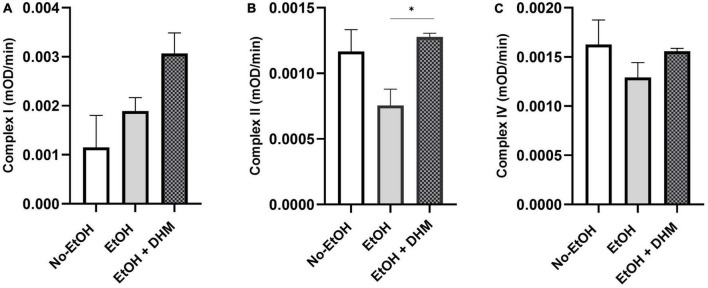
Excessive alcohol consumption leads to a myriad of detrimental health effects, including alcohol-associated liver disease (ALD). Unfortunately, no available treatments exist to combat the progression of ALD beyond corticosteroid administration and/or liver transplants. Dihydromyricetin (DHM) is a bioactive polyphenol and flavonoid that has traditionally been used in Chinese herbal medicine for its robust antioxidant and anti-inflammatory properties. It is derived from many plants, including and is found as the active ingredient in a variety of popular hangover remedies. Investigations utilizing DHM have demonstrated its ability to alleviate ethanol-induced disruptions in mitochondrial and lipid metabolism, while demonstrating hepatoprotective activity.
Female c57BL/6J mice ( = 12/group) were treated using the Lieber DeCarli forced-drinking and ethanol (EtOH) containing liquid diet, for 5 weeks. Mice were randomly divided into three groups: (1) No-EtOH, (2) EtOH [5% (v/v)], and (3) EtOH [5% (v/v)] + DHM (6 mg/mL). Mice were exposed to ethanol for 2 weeks to ensure the development of ALD pathology prior to receiving dihydromyricetin supplementation. Statistical analysis included one-way ANOVA along with Bonferroni multiple comparison tests, where ≤ 0.05 was considered statistically significant.
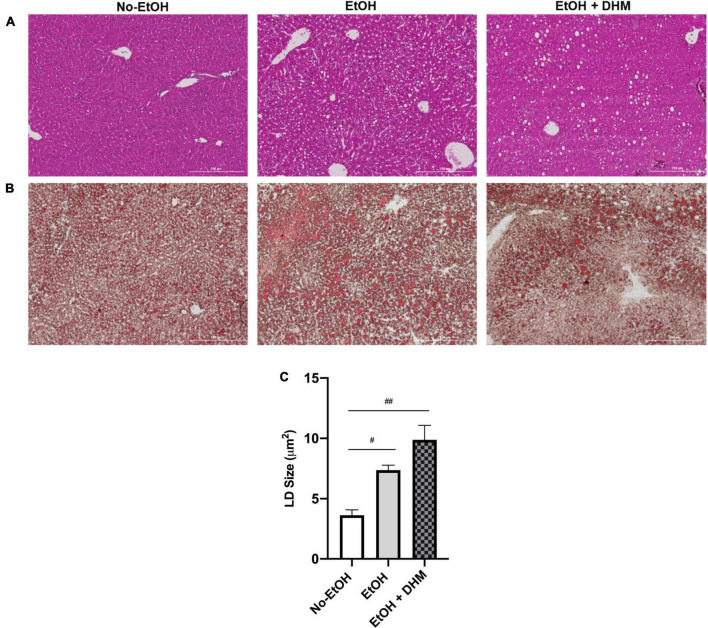
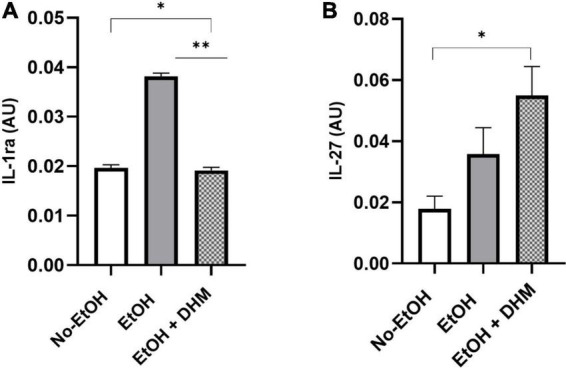
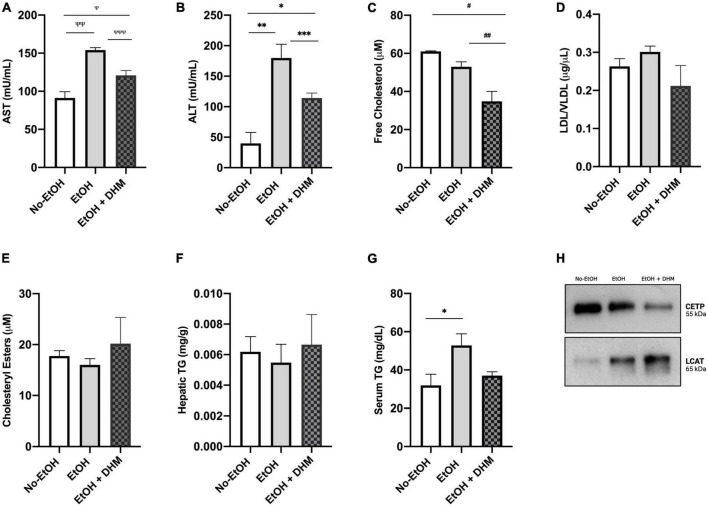
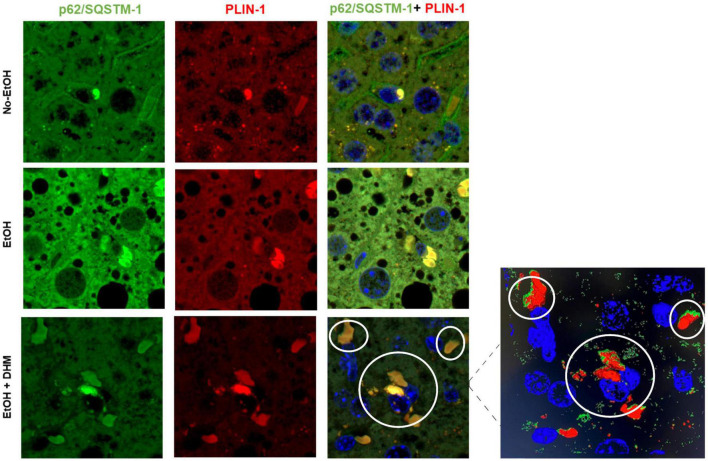
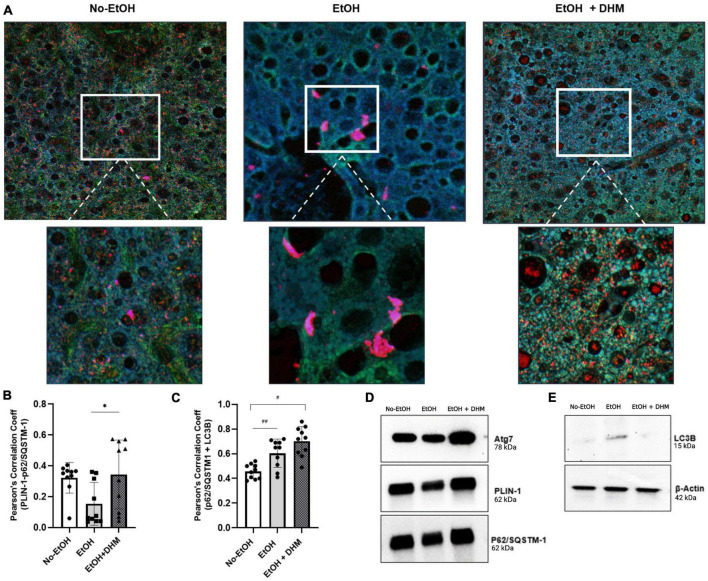
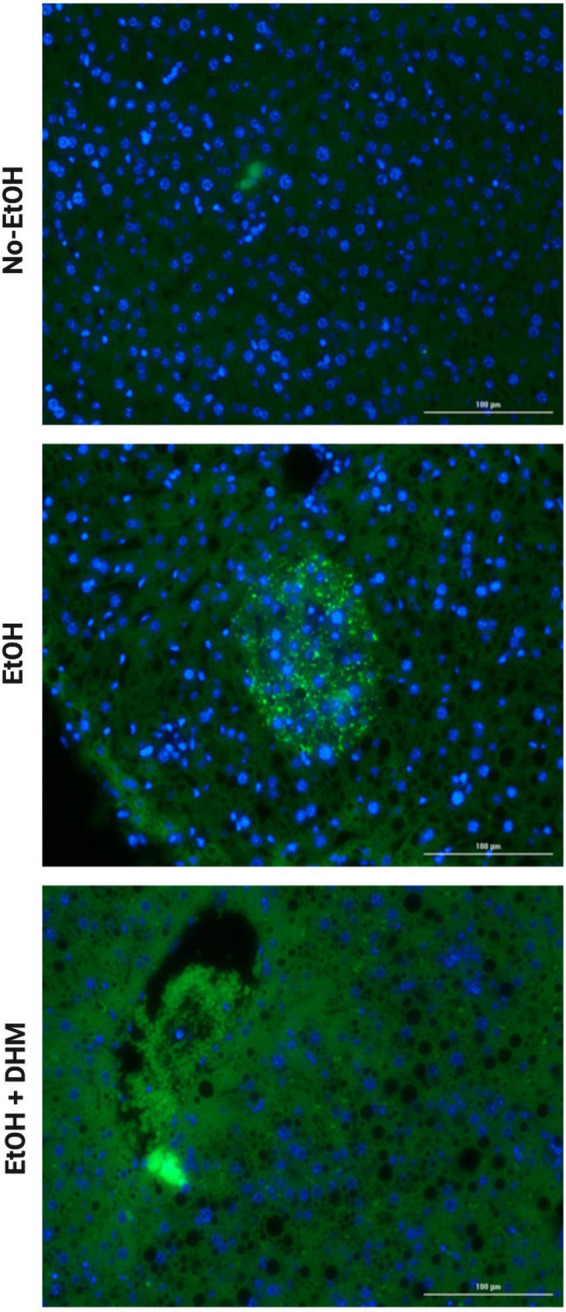
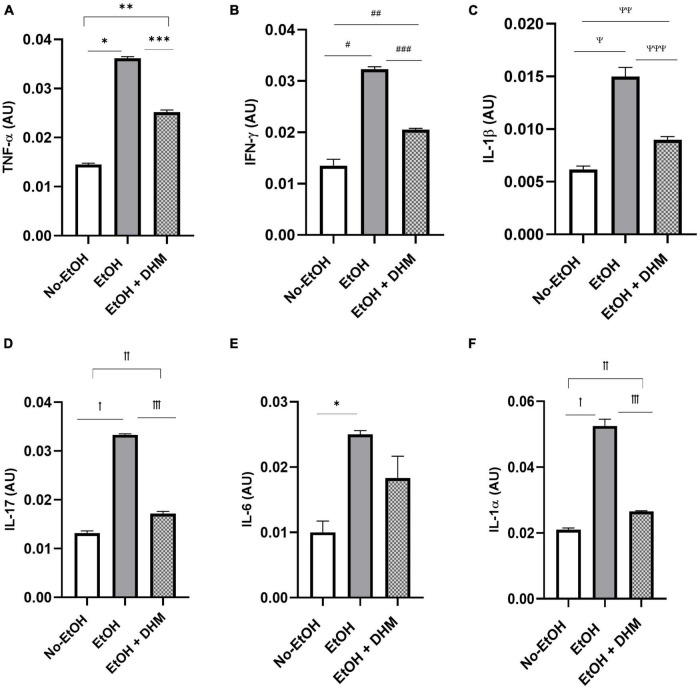
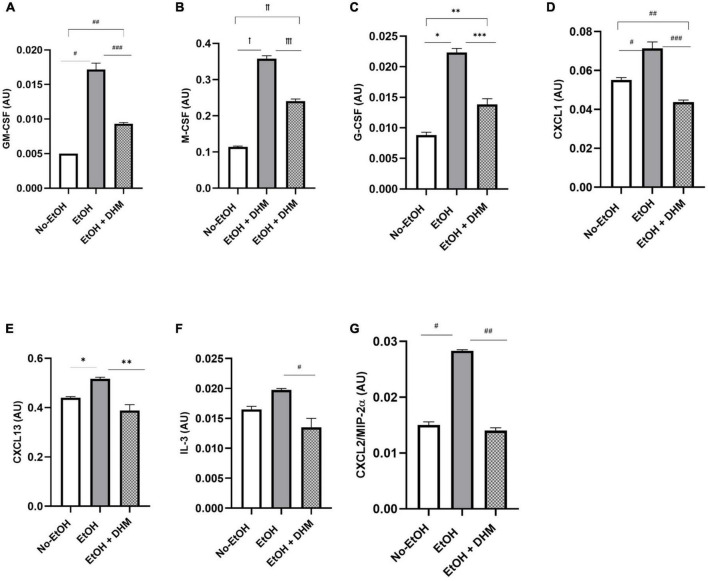
Dihydromyricetin administration significantly improved aminotransferase levels (AST/ALT) and reduced levels of circulating lipids including LDL/VLDL, total cholesterol (free cholesterol), and triglycerides. DHM demonstrated enhanced lipid clearance by way of increased lipophagy activity, shown as the increased interaction and colocalization of p62/SQSTM-1, LC3B, and PLIN-1 proteins. DHM-fed mice had increased hepatocyte-to-hepatocyte lipid droplet (LD) heterogeneity, suggesting increased neutralization and sequestration of free lipids into LDs. DHM administration significantly reduced prominent pro-inflammatory cytokines commonly associated with ALD pathology such as TNF-α, IL-6, and IL-17.
Dihydromyricetin is commercially available as a dietary supplement. The results of this proof-of-concept study demonstrate its potential utility and functionality as a cost-effective and safe candidate to combat inflammation and the progression of ALD pathology.
过量饮酒会导致众多有害的健康影响,包括酒精性肝病(ALD)。不幸的是,除了使用皮质类固醇和/或进行肝移植外,目前尚无有效的治疗方法来对抗ALD的进展。二氢杨梅素(DHM)是一种生物活性多酚和类黄酮,传统上因其强大的抗氧化和抗炎特性而被用于中药。它源自多种植物,包括[此处原文缺失相关植物信息],并且是多种流行的解酒药物中的活性成分。利用DHM进行的研究表明,它能够减轻乙醇诱导的线粒体和脂质代谢紊乱,同时具有肝脏保护活性。
使用Lieber DeCarli强制灌胃法和含乙醇(EtOH)的液体饲料对雌性C57BL/6J小鼠(每组n = 12)进行处理,持续5周。小鼠被随机分为三组:(1)无乙醇组,(2)乙醇组[5%(v/v)],(3)乙醇组[5%(v/v)]+ DHM(6 mg/mL)。在给予二氢杨梅素补充剂之前,让小鼠接触乙醇2周,以确保ALD病理状态的发展。统计分析包括单因素方差分析以及Bonferroni多重比较检验,其中p≤0.05被认为具有统计学意义。
给予二氢杨梅素可显著改善转氨酶水平(AST/ALT),并降低循环脂质水平,包括低密度脂蛋白/极低密度脂蛋白、总胆固醇(游离胆固醇)和甘油三酯。DHM通过增加自噬活性来增强脂质清除,表现为p62/SQSTM-1、LC3B和PLIN-1蛋白的相互作用和共定位增加。喂食DHM的小鼠肝细胞与肝细胞之间的脂滴(LD)异质性增加,表明游离脂质向LD的中和与隔离增加。给予DHM可显著降低通常与ALD病理相关的显著促炎细胞因子,如肿瘤坏死因子-α、白细胞介素-6和白细胞介素-17。
二氢杨梅素作为一种膳食补充剂可在市场上买到。这项概念验证研究的结果表明,它作为一种经济有效且安全的对抗炎症和ALD病理进展的候选物具有潜在的效用和功能。