Mandell Georgia A, Keating Matthew B, Khayal Inas S
Department of Computer Science, Dartmouth College, Hanover, NH, 03768.
The Dartmouth Institute and Biomedical Data Science, Geisel School of Medicine at Dartmouth, Department of Computer Science, Dartmouth College, Hanover, NH, USA.
Annu IEEE Syst Conf. 2022 Apr;2022. doi: 10.1109/syscon53536.2022.9773819. Epub 2022 May 16.
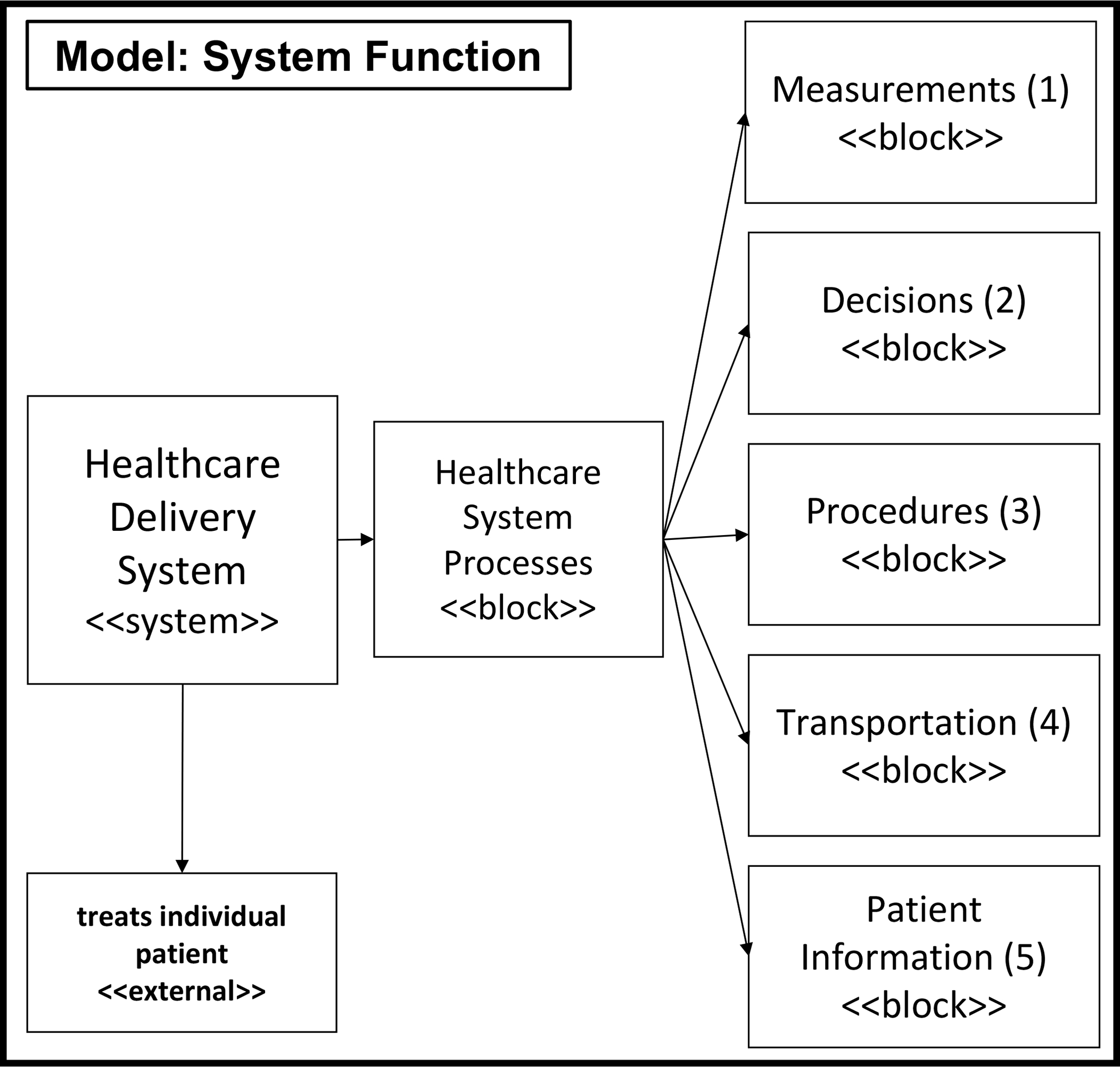
Healthcare delivery systems are widely accepted as socio-technical systems. Unlike other socio-technical systems, healthcare systems leave very little decision-making to technical automation and control. Instead, the healthcare delivery system relies on human healthcare resources for decision-making. Human decision-making is imperative to the clinical delivery of care to patients and to the operational processes that support care delivery, quality improvement, and other organizational management activities. For these clinical and operational activities, human resources make healthcare decisions using healthcare data typically housed in electronic medical records (EMRs). Unfortunately, EMR systems were first designed with the functional capability to store data, and, second to a lesser degree, to retrieve data. The literature recognizes the need to improve the retrieval of information from EMR systems. More specifically, there remains the need to directly view a patient's holistic health and healthcare trajectory. At this time, decision-makers are left to mentally build this holistic picture in their mind by sequentially clicking through many sections of the EMR. Therefore, in this paper, we develop a visualization tool to organize and present an individual's health and healthcare trajectory by describing a patient record holistically from a system architecture perspective. This approach is based on a previously developed system model for healthcare delivery and individual health outcomes.
医疗保健提供系统被广泛认为是社会技术系统。与其他社会技术系统不同,医疗保健系统几乎没有将决策留给技术自动化和控制。相反,医疗保健提供系统依靠人类医疗资源进行决策。人类决策对于向患者提供临床护理以及支持护理提供、质量改进和其他组织管理活动的运营流程至关重要。对于这些临床和运营活动,人力资源利用通常存储在电子病历(EMR)中的医疗数据做出医疗决策。不幸的是,EMR系统最初设计的功能是存储数据,其次才是在较小程度上检索数据。文献认识到需要改进从EMR系统中检索信息的方式。更具体地说,仍然需要直接查看患者的整体健康状况和医疗轨迹。目前,决策者只能通过依次点击EMR的许多部分在脑海中构建这幅整体图景。因此,在本文中,我们开发了一种可视化工具,从系统架构的角度整体描述患者记录,以组织和呈现个人的健康状况和医疗轨迹。这种方法基于先前开发的医疗保健提供和个人健康结果系统模型。