Division of Cancer Pathobiology, Children's Hospital of Philadelphia, Philadelphia, PA.
Center for Cellular Immunotherapies, University of Pennsylvania Perelman School of Medicine, Philadelphia, PA.
Blood. 2023 Nov 16;142(20):1724-1739. doi: 10.1182/blood.2023020400.
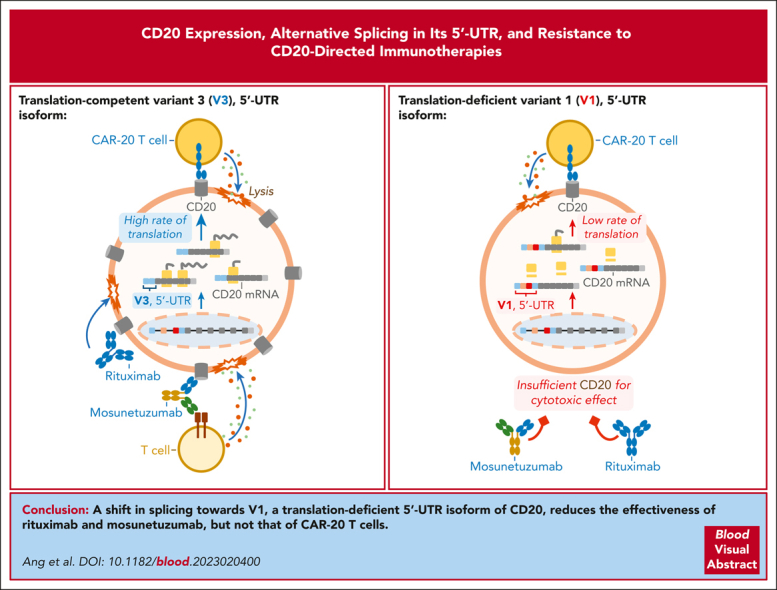
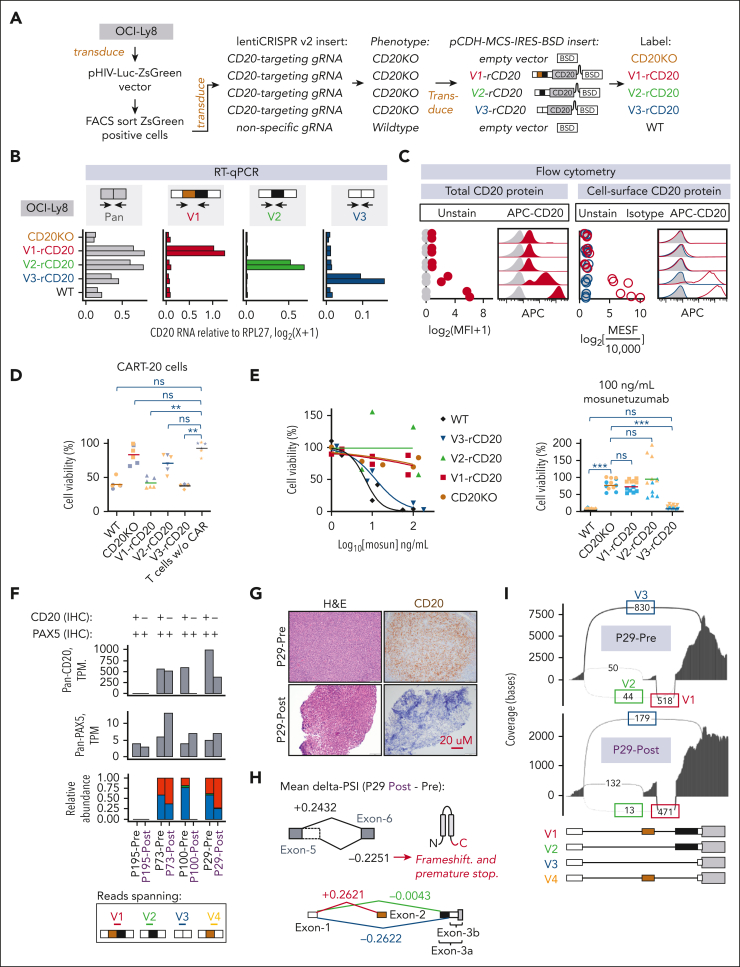
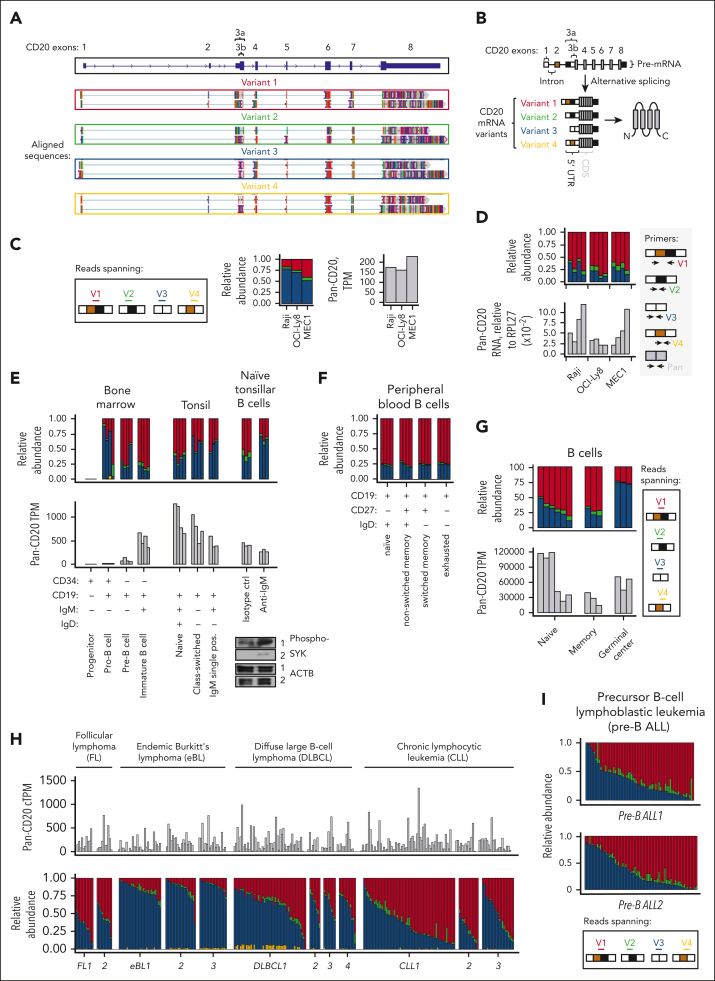
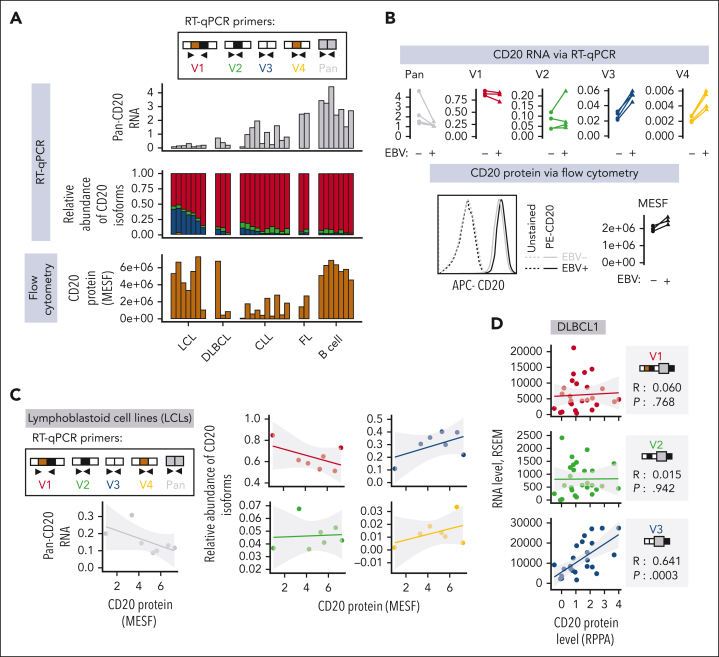
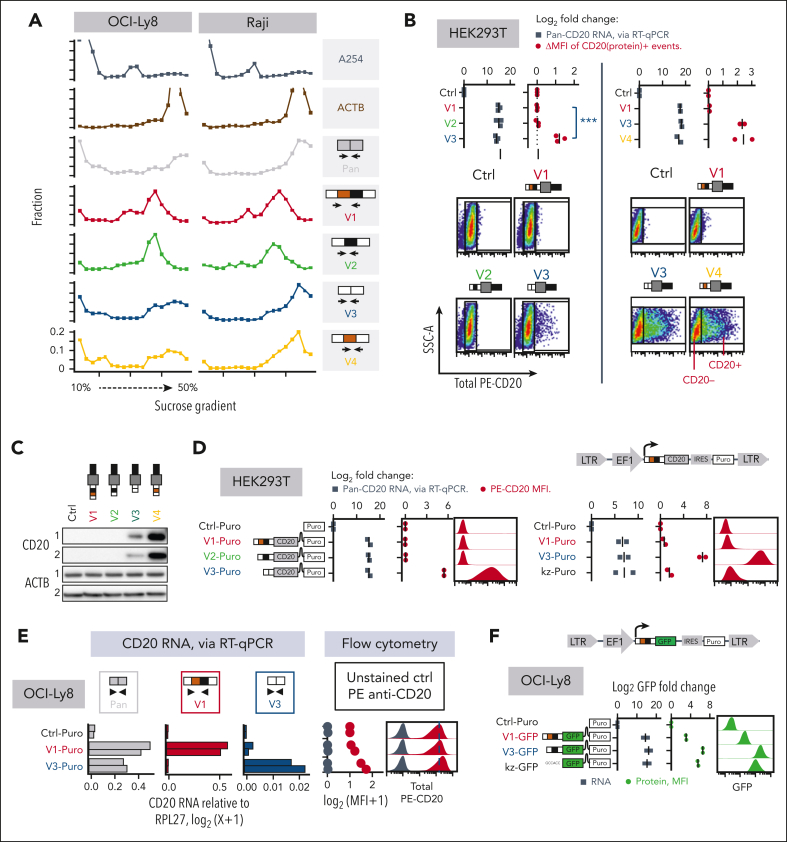
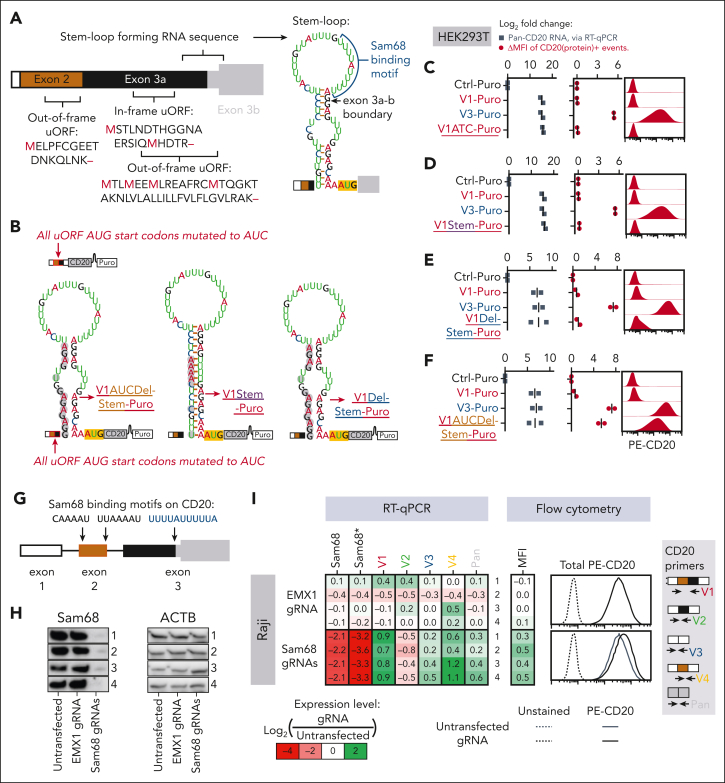
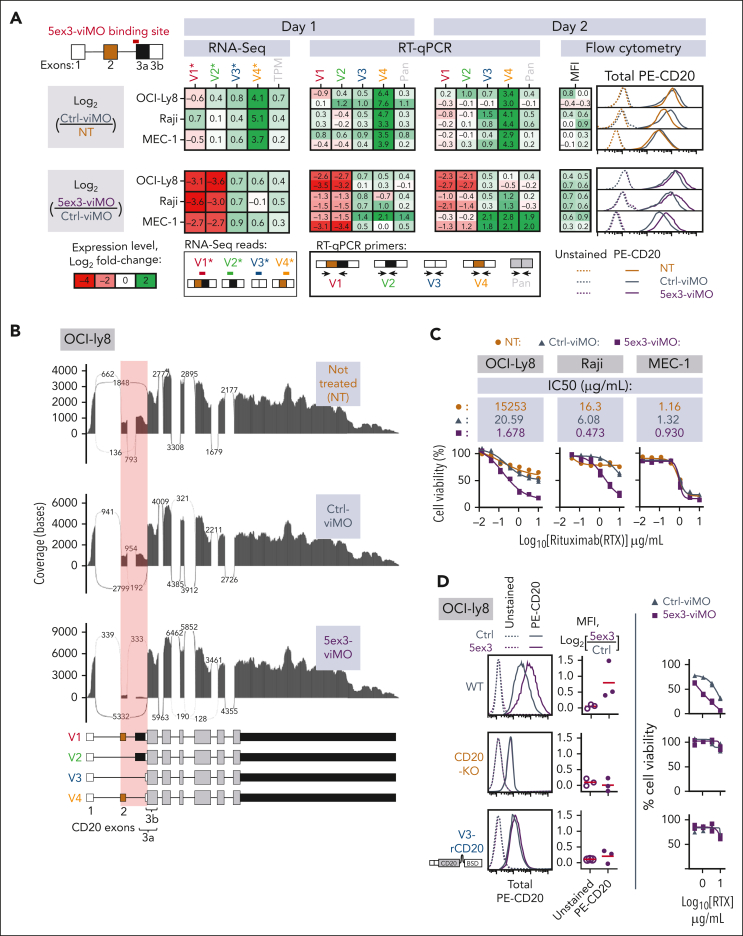
Aberrant skipping of coding exons in CD19 and CD22 compromises the response to immunotherapy in B-cell malignancies. Here, we showed that the MS4A1 gene encoding human CD20 also produces several messenger RNA (mRNA) isoforms with distinct 5' untranslated regions. Four variants (V1-4) were detected using RNA sequencing (RNA-seq) at distinct stages of normal B-cell differentiation and B-lymphoid malignancies, with V1 and V3 being the most abundant. During B-cell activation and Epstein-Barr virus infection, redirection of splicing from V1 to V3 coincided with increased CD20 positivity. Similarly, in diffuse large B-cell lymphoma, only V3, but not V1, correlated with CD20 protein levels, suggesting that V1 might be translation-deficient. Indeed, the longer V1 isoform contained upstream open reading frames and a stem-loop structure, which cooperatively inhibited polysome recruitment. By modulating CD20 isoforms with splice-switching morpholino oligomers, we enhanced CD20 expression and anti-CD20 antibody rituximab-mediated cytotoxicity in a panel of B-cell lines. Furthermore, reconstitution of CD20-knockout cells with V3 mRNA led to the recovery of CD20 positivity, whereas V1-reconstituted cells had undetectable levels of CD20 protein. Surprisingly, in vitro CD20-directed chimeric antigen receptor T cells were able to kill both V3- and V1-expressing cells, but the bispecific T-cell engager mosunetuzumab was only effective against V3-expressing cells. To determine whether CD20 splicing is involved in immunotherapy resistance, we performed RNA-seq on 4 postmosunetuzumab follicular lymphoma relapses and discovered that in 2 of them, the downregulation of CD20 was accompanied by a V3-to-V1 shift. Thus, splicing-mediated mechanisms of epitope loss extend to CD20-directed immunotherapies.
CD19 和 CD22 编码外显子的异常跳跃可导致 B 细胞恶性肿瘤对免疫治疗的反应受损。在这里,我们表明编码人类 CD20 的 MS4A1 基因也会产生几种具有不同 5'非翻译区的信使 RNA (mRNA) 异构体。使用 RNA 测序 (RNA-seq) 在正常 B 细胞分化和 B 淋巴细胞恶性肿瘤的不同阶段检测到四种变体 (V1-4),其中 V1 和 V3 最为丰富。在 B 细胞激活和 EBV 感染期间,从 V1 到 V3 的剪接重定向与 CD20 阳性增加一致。同样,在弥漫性大 B 细胞淋巴瘤中,只有 V3,而不是 V1,与 CD20 蛋白水平相关,这表明 V1 可能翻译不足。事实上,较长的 V1 异构体包含上游开放阅读框和茎环结构,它们协同抑制多核糖体募集。通过用剪接转换形态发生素寡核苷酸调节 CD20 异构体,我们增强了一组 B 细胞系中的 CD20 表达和抗 CD20 抗体利妥昔单抗介导的细胞毒性。此外,用 V3 mRNA 重建 CD20 敲除细胞导致 CD20 阳性恢复,而 V1 重建细胞的 CD20 蛋白水平无法检测到。令人惊讶的是,体外 CD20 定向嵌合抗原受体 T 细胞能够杀死表达 V3 和 V1 的细胞,但双特异性 T 细胞结合器 mosunetuzumab 仅对表达 V3 的细胞有效。为了确定 CD20 剪接是否参与免疫治疗抵抗,我们对 4 例 mosunetuzumab 滤泡性淋巴瘤复发进行了 RNA-seq 分析,发现其中 2 例 CD20 下调伴随着 V3 到 V1 的转变。因此,表位丢失的剪接介导机制扩展到 CD20 定向免疫疗法。