Riedel Jendrian, Klemm Melinda, Higham Timothy, Grismer L Lee, Ziegler Thomas, Russell Anthony, Rödder Dennis, Reinhold Klaus
Section Herpetology, Leibniz Institute for the Analysis of Biodiversity Change - Museum Koenig, Bonn, Germany.
Department of Evolutionary Biology, Bielefeld University, Bielefeld, Germany.
BMC Zool. 2023 Sep 8;8(1):19. doi: 10.1186/s40850-023-00180-x.
Ecomorphological studies of lizards have increasingly employed comparison of claw morphology among species in relation to spatial niche use. Typically, such studies focus on digit IV of the autopodia, especially the pes. Uniformity of claw morphology among digits is more often implicitly assumed than tested.
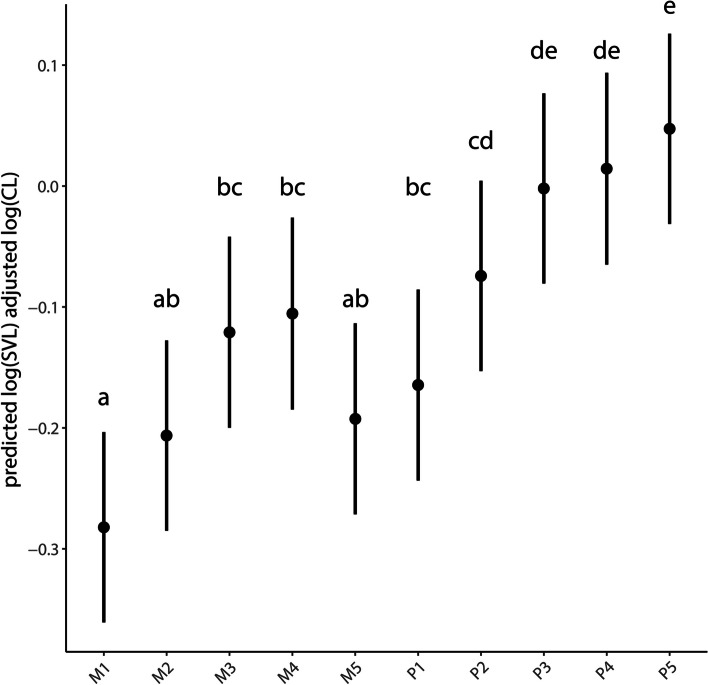
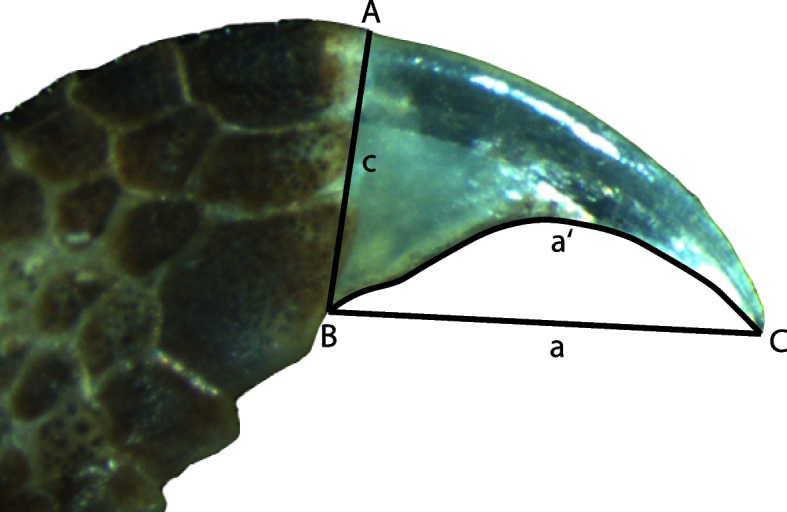
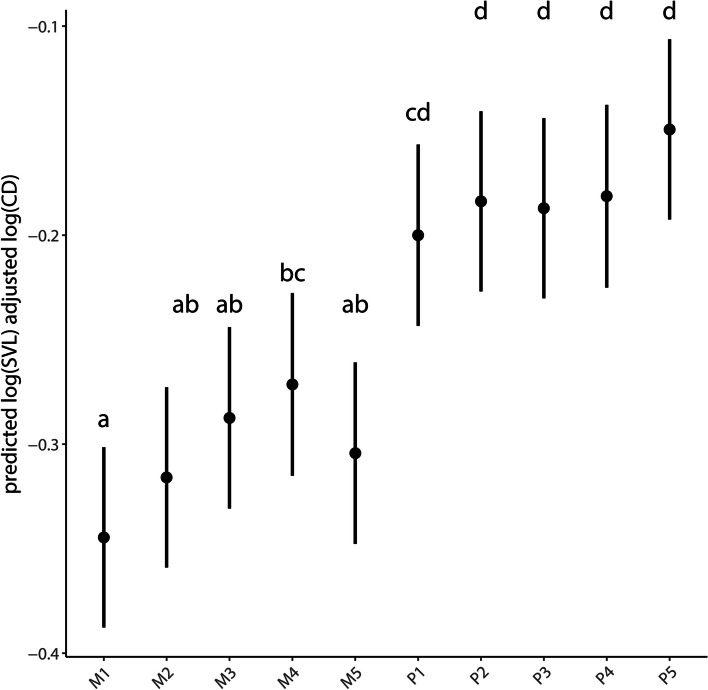
Using four species of Cyrtodactylus, comprising two generalist and two scansorial taxa that use different substrates, we examined whether claw morphology is uniform among digits and among species. We found that, within each species, ventral claw curvature is uniform across all digits whereas there are small but insignificant differences in ventral claw length and claw depth. The claws of the pes of each species are longer and deeper than those of the corresponding digits of the manus. The claw of digit I of each species is significantly shorter and shallower on both autopodia compared to those on digits IV and V (digit I, including its claw, is idiosyncratically variable among lizards in general).
We conclude that digit IV is an adequate representative of claw form in each species and exhibits variation among species, thereby serving as an exemplar for use in studies of potential discrimination between ecomorphological types in studies of Cyrtodactylus.
蜥蜴的生态形态学研究越来越多地采用比较物种间爪形态与空间生态位利用的关系。通常,此类研究聚焦于四肢的第四指,尤其是足部。相较于进行测试,研究者们更常隐含地假定各指爪形态的一致性。
我们以四种弯脚虎属物种为研究对象,其中包括两个泛化种和两个攀缘种,它们利用不同的基质,我们研究了爪形态在各指之间以及物种之间是否一致。我们发现,在每个物种中,腹侧爪曲率在所有指上是一致的,而腹侧爪长度和爪深度存在微小但不显著的差异。每个物种足部的爪比手部相应指的爪更长、更深。与第四指和第五指相比,每个物种第一指的爪在四肢上都明显更短、更浅(一般来说,包括其爪在内的第一指在蜥蜴中具有独特的变异性)。
我们得出结论,第四指足以代表每个物种的爪形态,并且在物种间存在差异,因此可作为一个范例,用于弯脚虎属生态形态类型潜在区分研究。