Rooney Michael K, Andring Lauren M, Corrigan Kelsey L, Bernard Vincent, Williamson Tyler D, Fuller Clifton D, Garden Adam S, Gunn Brandon, Lee Anna, Moreno Amy C, Morrison William H, Phan Jack, Rosenthal David I, Spiotto Michael, Frank Steven J
Department of Radiation Oncology, MD Anderson Cancer Center, Houston, TX 77030, USA.
Cancers (Basel). 2023 Aug 29;15(17):4321. doi: 10.3390/cancers15174321.
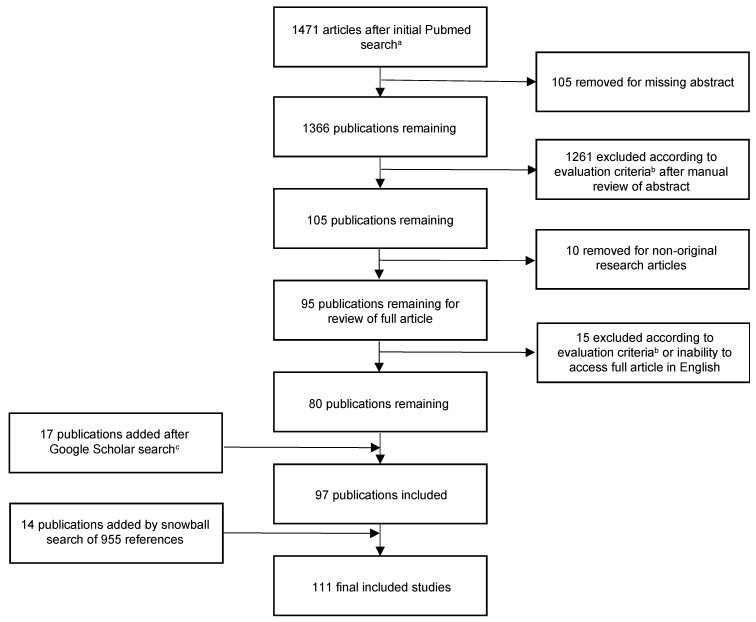
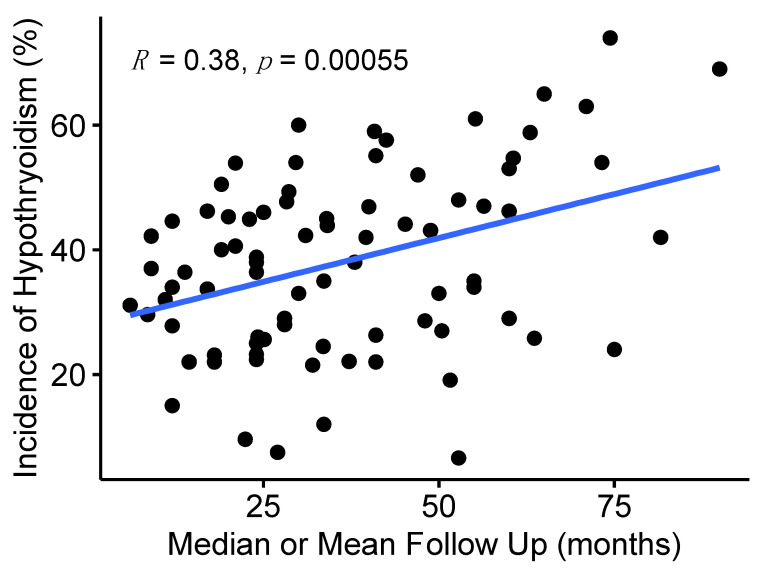
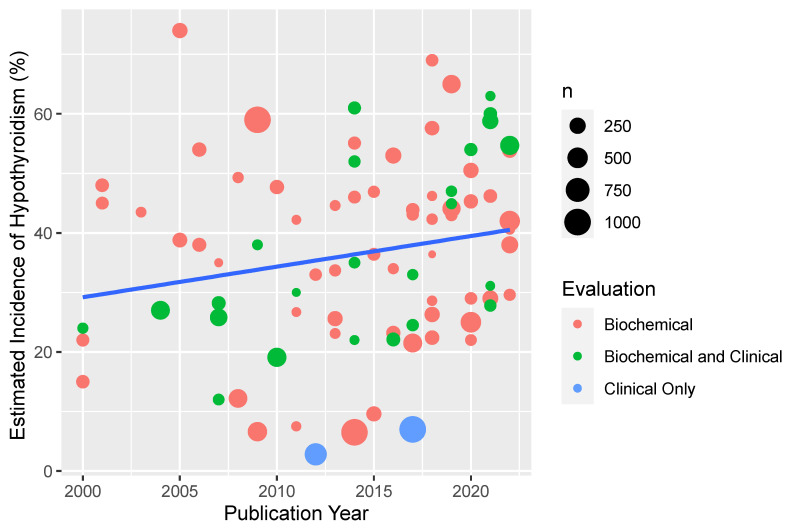
(1) Background: Radiotherapy (RT) is a central component for the treatment of many head and neck cancers. In this systematic review of the literature, we aimed to characterize and quantify the published evidence on RT-related hypothyroidism, including estimated incidence, clinical risk factors, and dosimetric parameters that may be used to guide clinical decision making. Furthermore, we aimed to identify potential areas of improvement in the prevention and clinical management of RT-induced hypothyroidism, including the role of modern advanced therapeutic techniques. (2) Methods: We conducted a systemic review of the literature in accordance with Preferred Reporting Items for Systematic Reviews and Meta-Analysis (PRISMA) guidelines. PubMed and Google Scholar were searched to identify original research articles describing the incidence, mechanism, dosimetry, treatment, or prevention of radiation-related hypothyroidism for adults receiving RT for the treatment of head and neck cancers. The snowball method was used to identify additional articles. For identified articles, we tabulated several datapoints, including publication date, patient sample size, estimated hypothyroidism incidence, cancer site/type, follow-up period, radiation modality and technique, use of multimodality therapy, method of thyroid function evaluation, and proposed dosimetric predictors of hypothyroidism. (3) Results: One hundred and eleven articles met inclusion criteria, reflecting a range of head and neck cancer subtypes. There was a large variation in the estimated incidence of RT-related hypothyroidism, with a median estimate of 36% (range 3% to 79%). Reported incidence increased in later publication dates, which was likely related to improved screening and longer follow up. There were a wide variety of predictive metrics used to identify patients at high risk of hypothyroidism, the most common of which were volumetric and mean dosimetrics related to the thyroid gland (Vxx%, Dmean). More recently, there has been increasing evidence to suggest that the thyroid gland volume itself and the volume of the thyroid gland spared from high-dose radiation (VSxx) may better predict thyroid function after RT. There were no identified studies investigating the role of advanced radiotherapeutic techniques such as MRI-guided RT or particle therapy to decrease RT-related hypothyroidism. Conclusions: Hypothyroidism is a common toxicity resulting from therapeutic radiation for head and neck cancer with recent estimates suggesting 40-50% of patients may experience hypothyroidism after treatment. Dosimetric predictive models are increasingly able to accurately identify patients at risk of hypothyroidism, especially those utilizing thyroid VS metrics. Further investigation regarding the potential for advanced radiotherapeutic therapies to decrease RT-induced thyroid dysfunction is needed.
(1)背景:放射治疗(RT)是许多头颈癌治疗的核心组成部分。在本系统文献综述中,我们旨在描述和量化已发表的关于放疗相关甲状腺功能减退的证据,包括估计发病率、临床风险因素以及可用于指导临床决策的剂量学参数。此外,我们旨在确定放疗诱发甲状腺功能减退的预防和临床管理方面潜在的改进领域,包括现代先进治疗技术的作用。(2)方法:我们按照系统评价和Meta分析的首选报告项目(PRISMA)指南对文献进行了系统综述。检索了PubMed和谷歌学术,以识别描述接受头颈癌放疗的成人放射性甲状腺功能减退的发病率、机制、剂量学、治疗或预防的原始研究文章。采用滚雪球法识别其他文章。对于已识别的文章,我们列出了几个数据点,包括发表日期、患者样本量、估计的甲状腺功能减退发病率、癌症部位/类型、随访期、放疗方式和技术、多模态治疗的使用、甲状腺功能评估方法以及提出的甲状腺功能减退剂量学预测指标。(3)结果:111篇文章符合纳入标准,反映了一系列头颈癌亚型。放疗相关甲状腺功能减退的估计发病率差异很大,中位估计值为36%(范围3%至79%)。报告的发病率在较晚的发表日期有所增加,这可能与筛查改善和随访时间延长有关。有多种预测指标用于识别甲状腺功能减退高危患者,其中最常见的是与甲状腺相关的容积和平均剂量学指标(Vxx%,Dmean)。最近,越来越多的证据表明,甲状腺体积本身以及未受高剂量辐射的甲状腺体积(VSxx)可能更好地预测放疗后的甲状腺功能。没有已识别的研究调查诸如MRI引导放疗或粒子治疗等先进放疗技术在降低放疗相关甲状腺功能减退方面的作用。结论:甲状腺功能减退是头颈癌治疗性放疗导致的常见毒性反应,最近的估计表明40 - 50%的患者在治疗后可能会出现甲状腺功能减退。剂量学预测模型越来越能够准确识别甲状腺功能减退高危患者,尤其是那些使用甲状腺VS指标的模型。需要进一步研究先进放疗疗法降低放疗诱发甲状腺功能障碍的潜力。