
测量用于吞咽障碍患者管理的浓稠纯品的流变学和质构特性。
Measuring the Rheological and Textural Properties of Thick Purees Used to Manage Patients with Swallowing Disorders.
机构信息
Gastrointestinal Physiology Laboratory, Hospital de Mataró, Universitat Autònoma de Barcelona, 08304 Mataro, Spain.
Institute of Agrochemistry and Food Technology (IATA-CISC), 46980 Valencia, Spain.
出版信息
Nutrients. 2023 Aug 28;15(17):3767. doi: 10.3390/nu15173767.
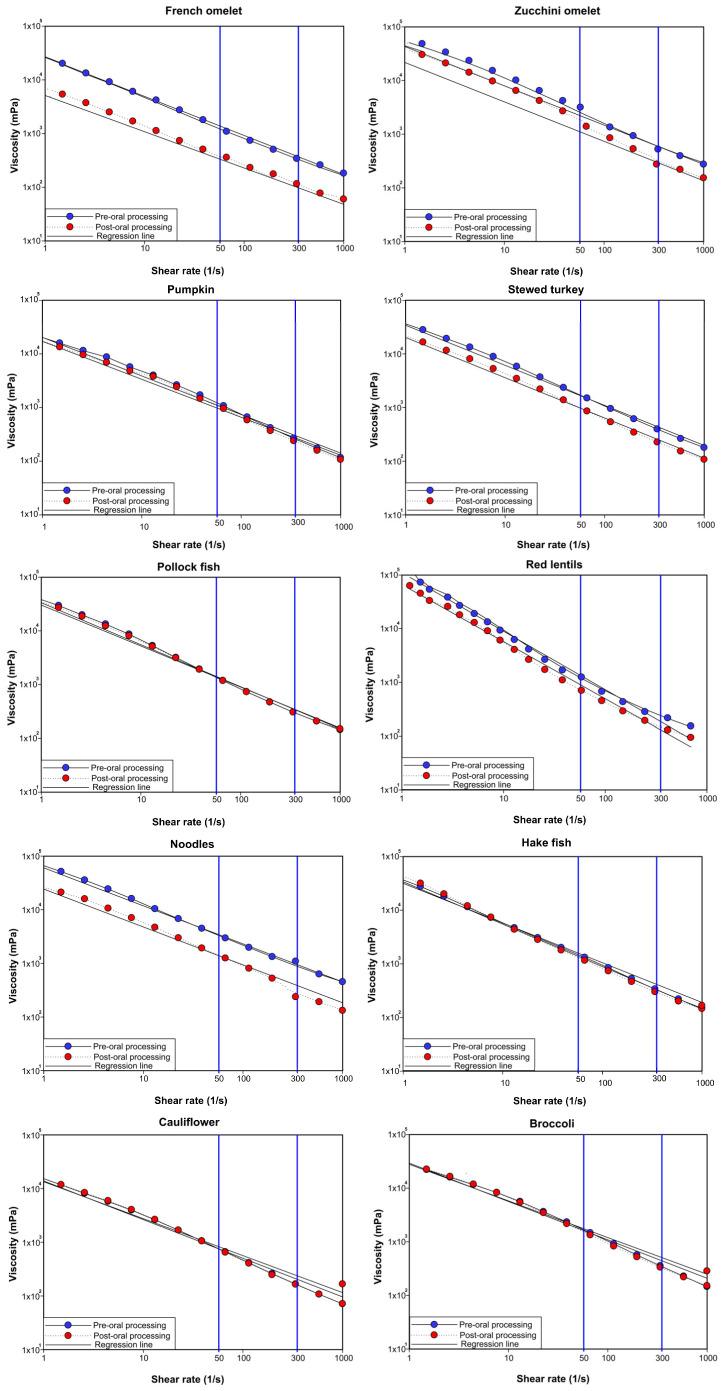
Texture-modified diets are the first-line compensatory strategy for older patients with swallowing and mastication disorders. However, the absence of a common protocol to assess textural properties inhibits their standardization and quality control and, thus, patient safety. This study aimed to (a) assess the rheological and textural properties of ten thick purees (Texture C, British Dietetic Association), (b) understand the effect of oral processing, and (c) measure the properties of the ready-to-swallow bolus after oral processing in healthy adults. Shear viscosity at 50 s and 300 s and textural properties (maximum force, cohesiveness, and adhesiveness) of boluses of ten thick purees were analyzed with a rheometer and a texture analyzer before and after oral processing (ready-to-swallow) in five healthy volunteers. Viscosity varied by 81.78% at 50 s (900-4800 mPa·s) among purees before oral processing. Maximum force varied by 60% (0.47-1.2 N); cohesiveness, 18% (0.66-0.82), and adhesiveness, 32% (0.74-1.1 N·s). The high variability of viscosity was also present in ready-to-swallow boluses, 70.32% among purees. Oral processing significantly reduced viscosity in most purees (French omelet, zucchini omelet, turkey stew, red lentils, noodles, and hake fish) and also significantly reduced maximum force (7-36%) and adhesiveness (17-51%) but hardly affected cohesiveness (<5%). All thick purees met the qualitative textural descriptors for Level C texture. However, all ten purees showed significant differences in all parameters measured instrumentally and were affected differently by oral processing. This study demonstrates the need to use instrumental quality control using standardized protocols and SI units to narrow the variability and provide the optimal values for patients with dysphagia who require texture-modified diets.
质地改良饮食是吞咽和咀嚼障碍老年患者的一线补偿策略。然而,缺乏评估质地特性的通用协议会阻碍其标准化和质量控制,从而危及患者安全。本研究旨在:(a) 评估十种浓稠纯品(英国饮食协会质地 C)的流变学和质地特性;(b) 了解口腔加工的影响;(c) 测量健康成年人口腔加工后即食团块的特性。使用流变仪和质地分析仪分析五种健康志愿者在口腔加工(即食)前后十种浓稠纯品的剪切粘度(50 s 和 300 s)和质地特性(最大力、内聚性和粘性)。在口腔加工前,十种浓稠纯品的粘度在 50 s 时变化 81.78%(900-4800 mPa·s)。最大力变化 60%(0.47-1.2 N);内聚性变化 18%(0.66-0.82),粘性变化 32%(0.74-1.1 N·s)。即食团块的粘度也存在高变异性,十种纯品之间变化 70.32%。口腔加工使大多数纯品的粘度显著降低(法式煎蛋、西葫芦煎蛋、火鸡炖肉、红扁豆、面条和鳕鱼),也显著降低最大力(7-36%)和粘性(17-51%),但对内聚性的影响较小(<5%)。所有浓稠纯品均符合 C 级质地的定性质地描述符。然而,所有十种纯品在仪器测量的所有参数上均表现出显著差异,且受口腔加工的影响方式不同。本研究表明,需要使用标准化协议和 SI 单位进行仪器质量控制,以缩小变异性并为需要质地改良饮食的吞咽障碍患者提供最佳值。




 Zotero 插件