Azizidoost Shirin, Nasrolahi Ava, Sheykhi-Sabzehpoush Mohadeseh, Anbiyaiee Amir, Khoshnam Seyed Esmaeil, Farzaneh Maryam, Uddin Shahab
Atherosclerosis Research Center, Ahvaz Jundishapur University of Medical Sciences, Ahvaz 6193673111, Iran.
Infectious Ophthalmologic Research Center, Ahvaz Jundishapur University of Medical Sciences, Ahvaz 6193673111, Iran.
Genes Dis. 2023 Mar 23;11(2):830-846. doi: 10.1016/j.gendis.2023.01.008. eCollection 2024 Mar.
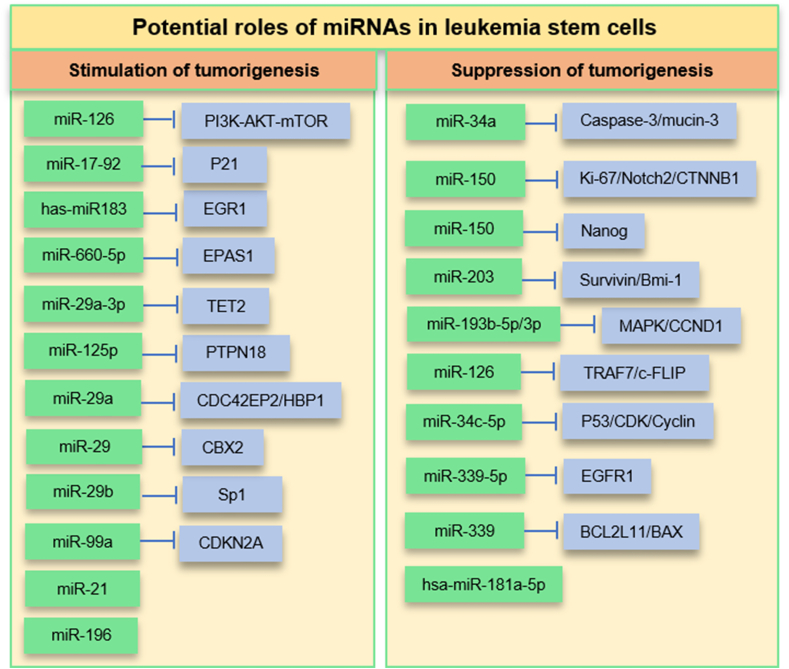
Leukemia is a malignancy in the blood that develops from the lymphatic system and bone marrow. Although various treatment options have been used for different types of leukemia, understanding the molecular pathways involved in the development and progression of leukemia is necessary. Recent studies showed that leukemia stem cells (LSCs) play essential roles in the pathogenesis of leukemia by targeting several signaling pathways, including Notch, Wnt, Hedgehog, and STAT3. LSCs are highly proliferative cells that stimulate tumor initiation, migration, EMT, and drug resistance. This review summarizes cellular pathways that stimulate and prevent LSCs' self-renewal, metastasis, and tumorigenesis.
白血病是一种起源于淋巴系统和骨髓的血液恶性肿瘤。尽管针对不同类型的白血病已经采用了多种治疗方案,但了解白血病发生和发展过程中涉及的分子途径是必要的。最近的研究表明,白血病干细胞(LSCs)通过靶向多种信号通路,包括Notch、Wnt、Hedgehog和STAT3,在白血病的发病机制中发挥着重要作用。LSCs是高度增殖性细胞,可刺激肿瘤起始、迁移、上皮-间质转化(EMT)和耐药性。本综述总结了刺激和阻止LSCs自我更新、转移和肿瘤发生的细胞途径。