Phung Cao Dai, Nguyen Bao Loc, Jeong Jee-Heon, Chang Jae-Hoon, Jin Sung Giu, Choi Han-Gon, Ku Sae Kwang, Kim Jong Oh
College of Pharmacy Yeungnam University Gyeongsan Republic of Korea.
Department of Precision Medicine, School of Medicine Sungkyunkwan University Suwon Republic of Korea.
Bioeng Transl Med. 2022 Aug 11;8(5):e10392. doi: 10.1002/btm2.10392. eCollection 2023 Sep.
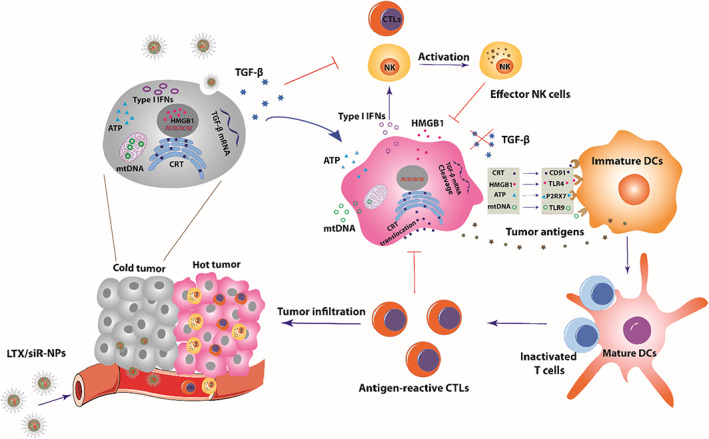
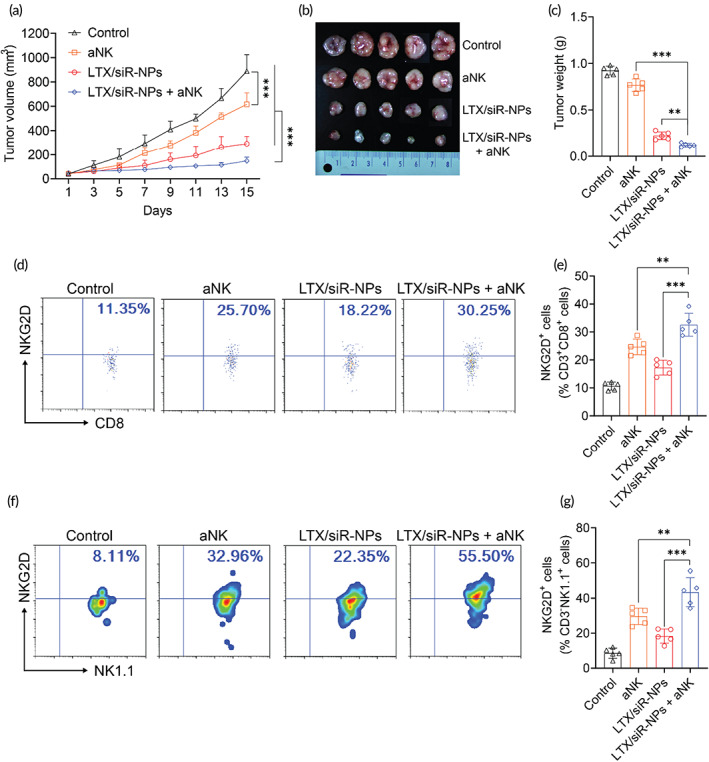
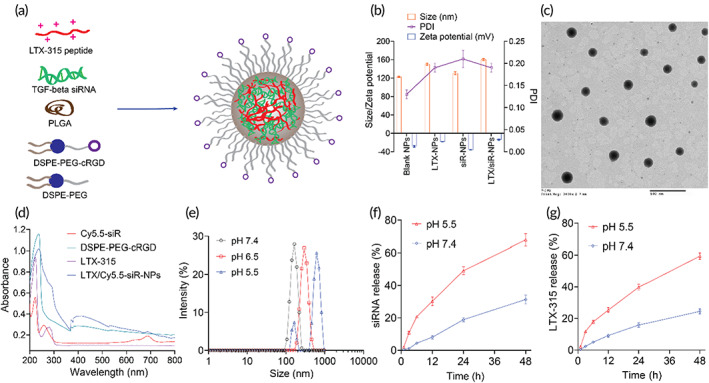
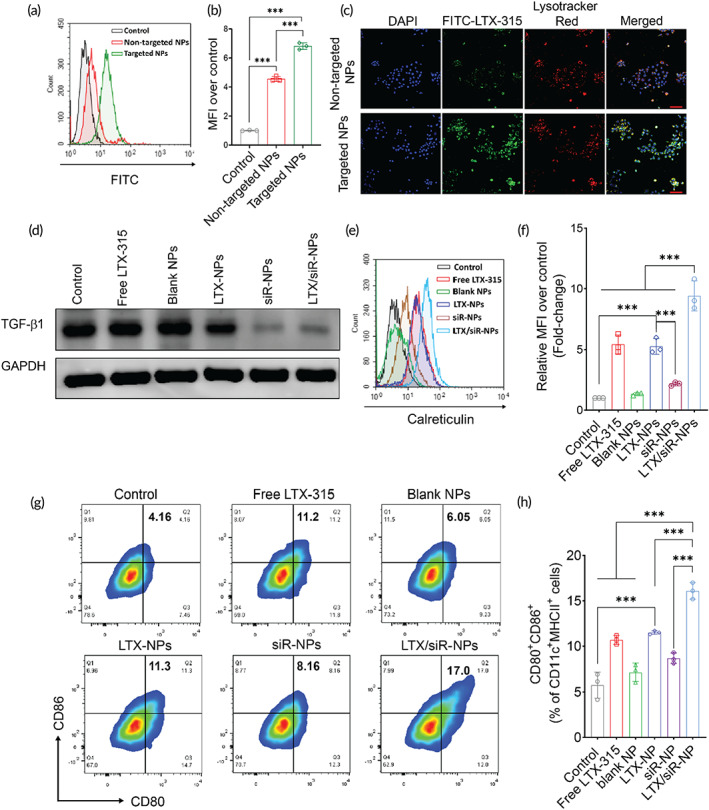
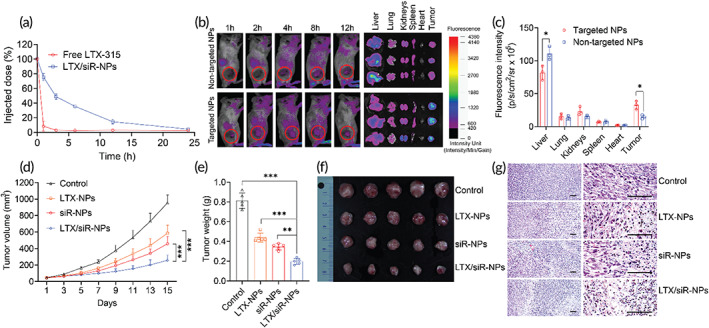
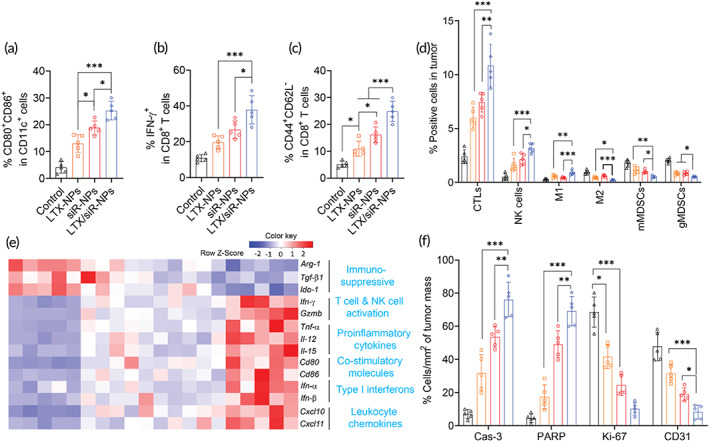
Induction of potent immune responses toward tumors remains challenging in cancer immunotherapy, in which it only showed benefits in a minority of patients with "hot" tumors, which possess pre-existing effector immune cells within the tumor. In this study, we proposed a nanoparticle-based strategy to fire up the "cold" tumor by upregulating the components associated with T and NK cell recruitment and activation and suppressing TGF-β1 secretion by tumor cells. Specifically, LTX-315, a first-in-class oncolytic cationic peptide, and TGF-β1 siRNA were co-entrapped in a polymer-lipid hybrid nanoparticle comprising PLGA, DSPE-mPEG, and DSPE-PEG-conjugated with cRGD peptide (LTX/siR-NPs). The LTX/siR-NPs showed significant inhibition of TGF-β1 expression, induction of type I interferon release, and triggering immunogenic cell death (ICD) in treated tumor cells, indicated via the increased levels of danger molecules, an in vitro setting. The in vivo data showed that the LTX/siR-NPs could effectively protect the LTX-315 peptide from degradation in serum, which highly accumulated in tumor tissue. Consequently, the LTX/siR-NPs robustly suppressed TGF-β1 production by tumor cells and created an immunologically active tumor with high infiltration of antitumor effector immune cells. As a result, the combination of LTX/siR-NP treatment with NKG2A checkpoint inhibitor therapy remarkably increased numbers of CD8NKG2D and NK1.1NKG2D within tumor masses, and importantly, inhibited the tumor growth and prolonged survival rate of treated mice. Taken together, this study suggests the potential of the LTX/siR-NPs for inflaming the "cold" tumor for potentiating the efficacy of cancer immunotherapy.
在癌症免疫治疗中,诱导针对肿瘤的强效免疫反应仍然具有挑战性,其中该疗法仅在少数具有“热”肿瘤的患者中显示出益处,这些“热”肿瘤在肿瘤内已存在效应免疫细胞。在本研究中,我们提出了一种基于纳米颗粒的策略,通过上调与T细胞和NK细胞募集及激活相关的成分,并抑制肿瘤细胞分泌TGF-β1来激活“冷”肿瘤。具体而言,将一流的溶瘤阳离子肽LTX-315和TGF-β1 siRNA共同包裹在一种由PLGA、DSPE-mPEG和与cRGD肽偶联的DSPE-PEG组成的聚合物-脂质杂化纳米颗粒(LTX/siR-NPs)中。在体外环境中,通过危险分子水平的升高表明,LTX/siR-NPs对TGF-β1表达有显著抑制作用,可诱导I型干扰素释放,并在处理后的肿瘤细胞中引发免疫原性细胞死亡(ICD)。体内数据表明,LTX/siR-NPs能有效保护LTX-315肽在血清中不被降解,且该纳米颗粒在肿瘤组织中高度蓄积。因此,LTX/siR-NPs强烈抑制肿瘤细胞产生TGF-β1,并形成具有高抗肿瘤效应免疫细胞浸润的免疫活性肿瘤。结果,LTX/siR-NP治疗与NKG2A检查点抑制剂疗法联合使用,显著增加了肿瘤块内CD8+NKG2D和NK1.1+NKG2D的数量,重要的是,抑制了肿瘤生长并延长了治疗小鼠的存活率。综上所述,本研究表明LTX/siR-NPs在激活“冷”肿瘤以增强癌症免疫治疗疗效方面具有潜力。