Department of Surgery, Tenwek Hospital, PO Box 39, Bomet, 20400, Kenya.
College of Surgeons of East, Central, and Southern Africa, Arusha, Tanzania.
World J Surg. 2023 Dec;47(12):3032-3039. doi: 10.1007/s00268-023-07164-5. Epub 2023 Sep 11.
Operative experience is a necessary part of surgical training. The College of Surgeons of East, Central, and Southern Africa (COSECSA), which oversees general surgery training programs in the region, has implemented guidelines for the minimum necessary case volumes upon completion of two (Membership) and five (Fellowship) years of surgical training. We aimed to review trainee experience to determine whether guidelines are being met and examine the variation of cases between countries.
Operative procedures were categorized from a cohort of COSECSA general surgery trainees and compared to the guideline minimum case volumes for Membership and Fellowship levels. The primary and secondary outcomes were total observed case volumes and cases within defined categories. Variations by country and development indices were explored.
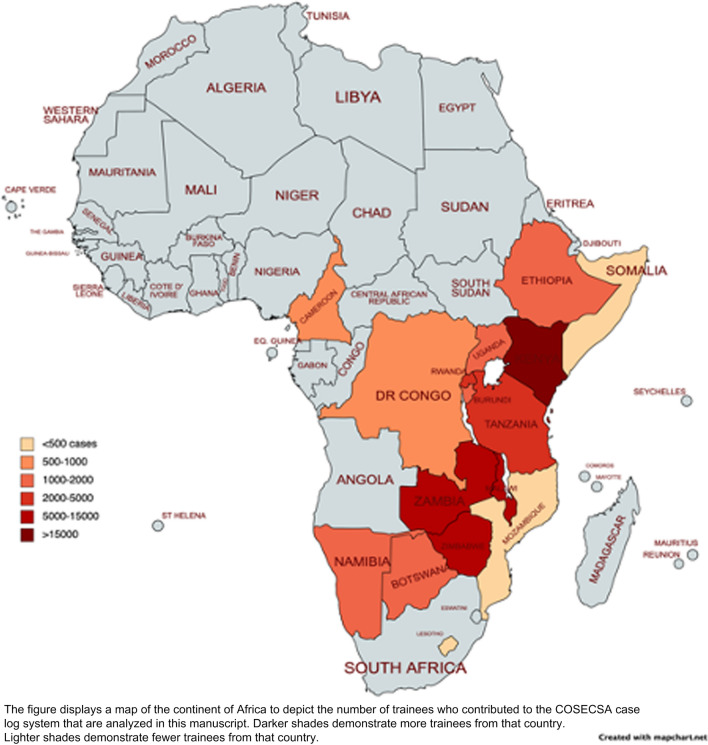
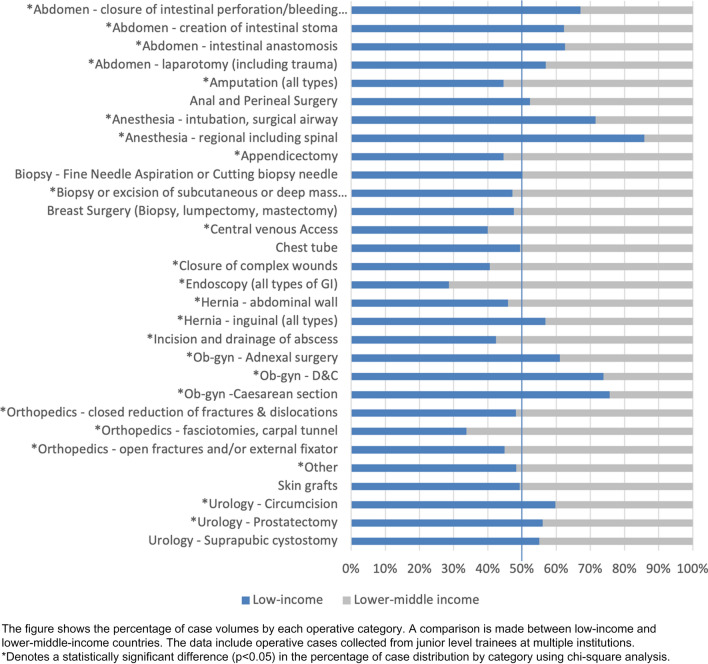
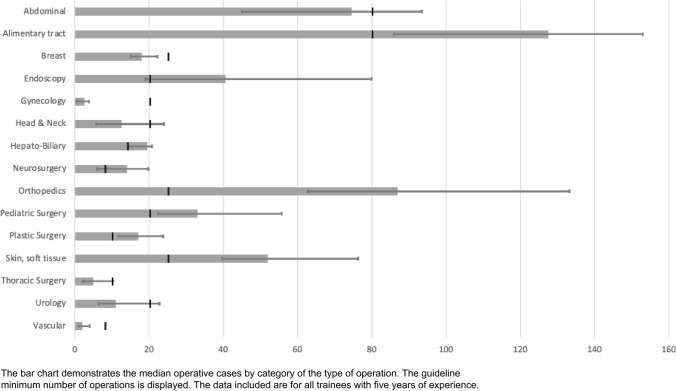
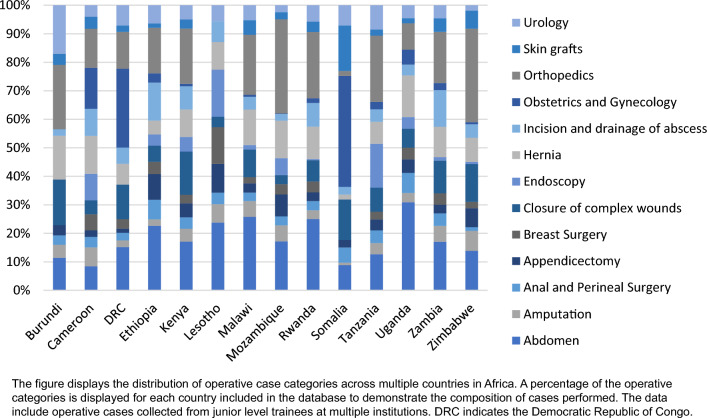
One hundred ninety-four trainees performed 69,283 unique procedures related to general surgery training. The review included 70 accredited hospitals and sixteen countries within Africa. Eighty percent of MCS trainees met the guideline minimum of 200 overall cases; however, numerous trainees did not meet the guideline minimum for each procedure. All FCS trainees met the volume target for total cases and orthopedics; however, many did not meet the guideline minimums for other categories, especially breast, head and neck, urology, and vascular surgery. The operative experience of trainees varied significantly by location and national income level.
Surgical trainees in East, Central, and Southern Africa have diverse operative training experience. Most trainees fulfill the overall case volume requirements; however, further exploration of how to meet the demands of specific categories and procedures is necessary.
手术经验是外科培训的必要组成部分。东、中、南部非洲外科学院(COSECSA)负责监督该地区的普通外科培训计划,已经为完成两年(会员)和五年(研究员)外科培训后的最低必要病例量制定了指南。我们旨在审查学员的经验,以确定是否符合指南,并检查各国之间病例的差异。
对 COSECSA 普通外科培训学员的手术操作进行了分类,并与会员和研究员级别最低病例量指南进行了比较。主要和次要结局是总观察病例量和特定类别中的病例数。探讨了国家和发展指数的差异。
194 名学员完成了 69283 例与普通外科培训相关的独特手术。该审查包括 70 家认可的医院和非洲的 16 个国家。80%的 MCS 学员达到了 200 例总病例的指南最低要求;然而,许多学员没有达到每项手术的指南最低要求。所有 FCS 学员都达到了总病例和骨科的数量目标;然而,许多学员没有达到其他类别(尤其是乳房、头颈部、泌尿科和血管外科)的指南最低要求。学员的手术经验因地点和国家收入水平而异。
东、中、南部非洲的外科学员具有不同的手术培训经验。大多数学员满足总病例量的要求;然而,需要进一步探讨如何满足特定类别和手术的要求。