Department of Anatomical, Histological, Forensic and Orthopedic Sciences, Section of Histology and Embryology, Sapienza University of Rome, Rome, Italy.
COU of Neurology, Fondazione Policlinico Universitario A. Gemelli IRCCS, Rome, Italy.
Stem Cell Res Ther. 2023 Sep 12;14(1):246. doi: 10.1186/s13287-023-03492-4.
Inflammatory memory or trained immunity is a recently described process in immune and non-immune tissue resident cells, whereby previous exposure to inflammation mediators leads to a faster and stronger responses upon secondary challenge. Whether previous muscle injury is associated with altered responses to subsequent injury by satellite cells (SCs), the muscle stem cells, is not known.
We used a mouse model of repeated muscle injury, in which intramuscular cardiotoxin (CTX) injections were administered 50 days apart in order to allow for full recovery of the injured muscle before the second injury. The effect of prior injury on the phenotype, proliferation and regenerative potential of satellite cells following a second injury was examined in vitro and in vivo by immunohistochemistry, RT-qPCR and histological analysis.
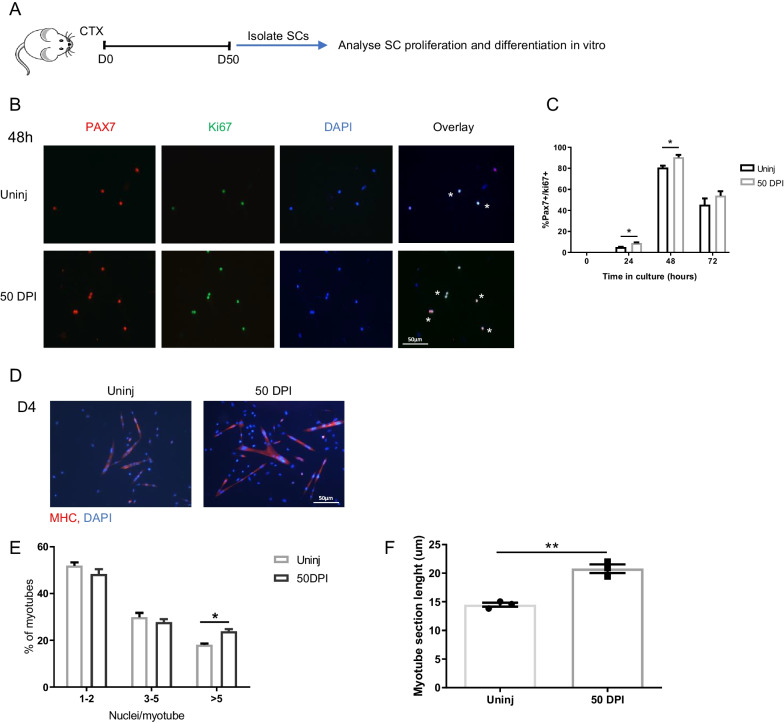
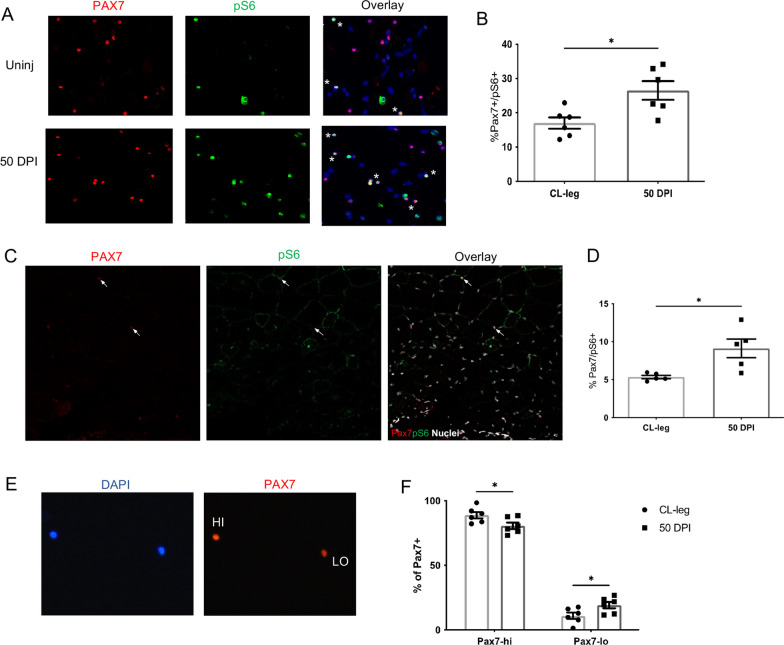
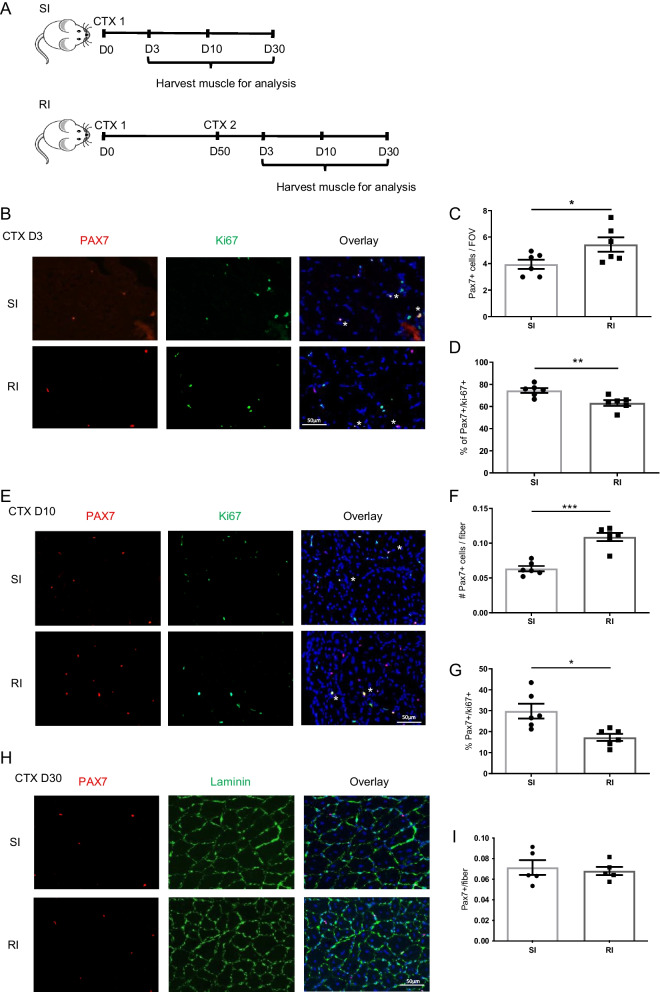
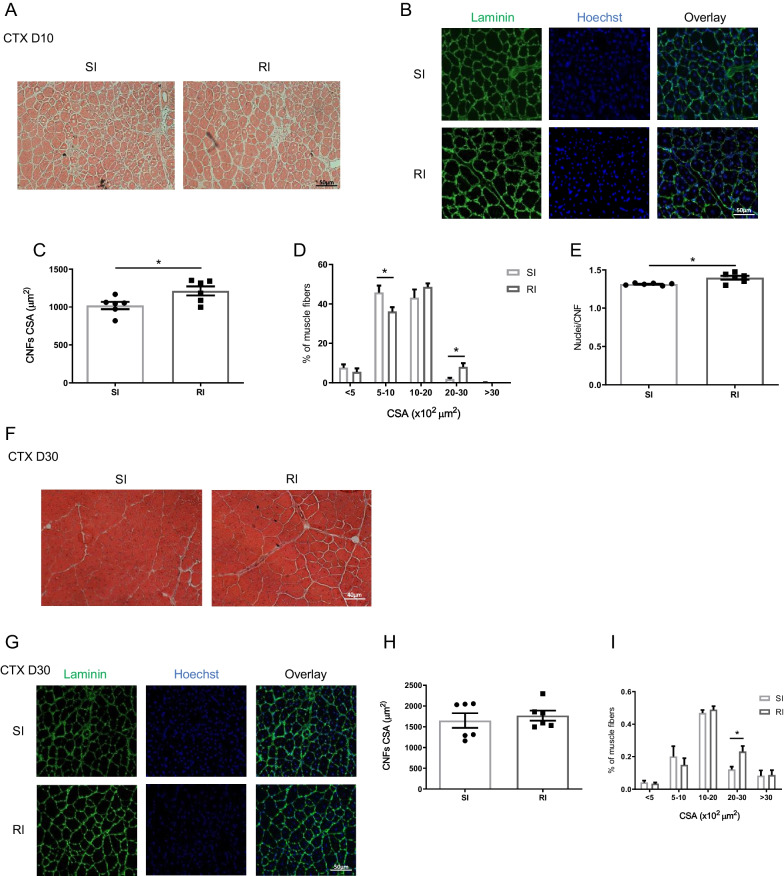
We show that SCs isolated from muscle at 50 days post-injury (injury-experienced SCs (ieSCs)) enter the cell cycle faster and form bigger myotubes when cultured in vitro, compared to control SCs isolated from uninjured contralateral muscle. Injury-experienced SCs were characterized by the activation of the mTORC 1 signaling pathway, suggesting they are poised to activate sooner following a second injury. Consequently, upon second injury, SCs accumulate in greater numbers in muscle at 3 and 10 days after injury. These changes in SC phenotype and behavior were associated with accelerated muscle regeneration, as evidenced by an earlier appearance of bigger fibers and increased number of myonuclei per fiber at day 10 after the second injury.
Overall, we show that skeletal muscle injury has a lasting effect on SC function priming them to respond faster to a subsequent injury. The ieSCs have long-term enhanced regenerative properties that contribute to accelerated regeneration following a secondary challenge.
炎症记忆或训练免疫是一种最近在免疫和非免疫组织常驻细胞中描述的过程,即先前暴露于炎症介质会导致在二次刺激时更快、更强的反应。先前的肌肉损伤是否与卫星细胞(SCs),即肌肉干细胞对随后损伤的反应改变有关尚不清楚。
我们使用了一种重复肌肉损伤的小鼠模型,其中在相隔 50 天的时间内肌内注射心脏毒素(CTX),以便在第二次损伤前让受伤的肌肉有充分的恢复时间。通过免疫组织化学、RT-qPCR 和组织学分析,在体外和体内研究了先前的损伤对第二次损伤后卫星细胞表型、增殖和再生潜力的影响。
我们发现,与从未受伤的对侧肌肉中分离的对照 SC 相比,在损伤后 50 天(即损伤经历的 SC(ieSCs))分离的 SC 进入细胞周期更快,并在体外培养时形成更大的肌管。损伤经历的 SC 表现出 mTORC1 信号通路的激活,这表明它们在第二次损伤后更快地被激活。因此,第二次损伤后,3 天和 10 天后损伤肌肉中 SC 的数量增加更多。SC 表型和行为的这些变化与肌肉再生的加速有关,这表现在第二次损伤后第 10 天更大的纤维出现较早,每个纤维的肌核数量增加。
总体而言,我们表明,骨骼肌损伤对 SC 功能具有持久影响,使它们对随后的损伤更快做出反应。ieSCs 具有长期增强的再生特性,有助于在二次挑战后加速再生。