Department of Traditional Chinese Medicine, The First Medical Center of Chinese People's Liberation Army (PLA) General Hospital, Fuxing Road 28th, Haidian District, Beijing, 10038, China.
Chinese PLA Medical School, Chinese People's Liberation Army (PLA) General Hospital, Fuxing Road 28th, Haidian District, Beijing, 10038, China.
J Radiat Res. 2023 Nov 21;64(6):880-892. doi: 10.1093/jrr/rrad065.
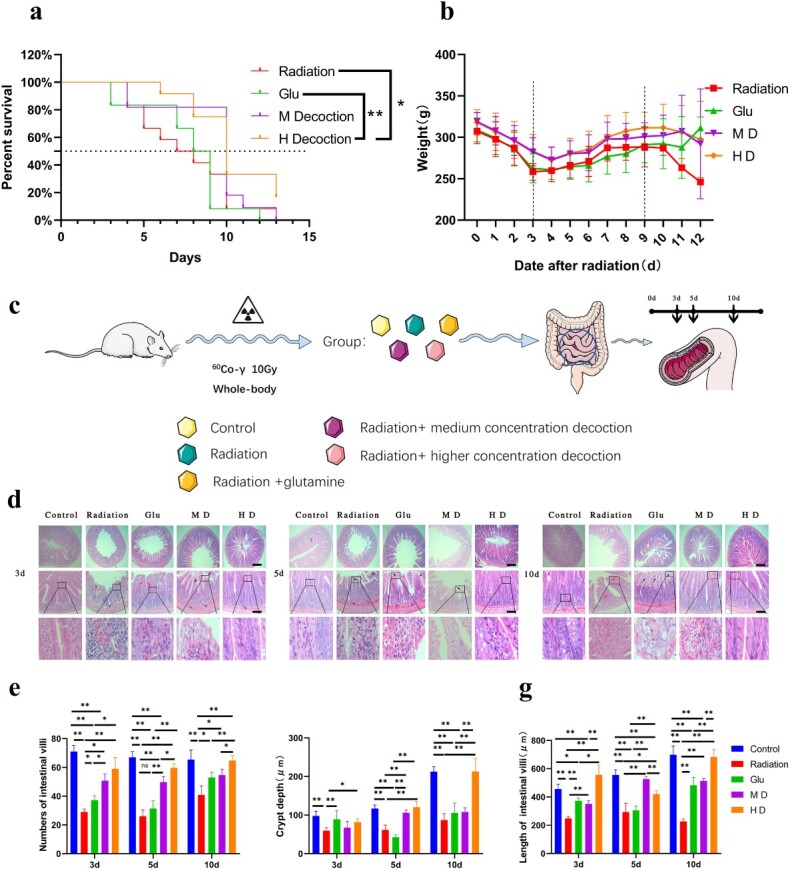
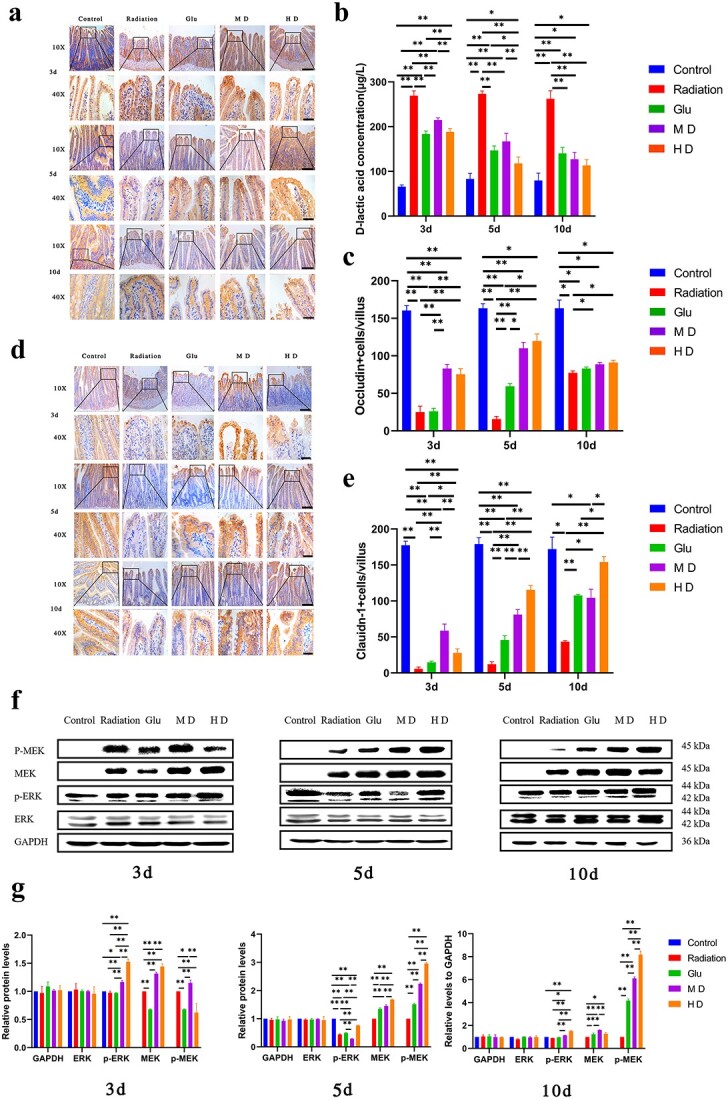
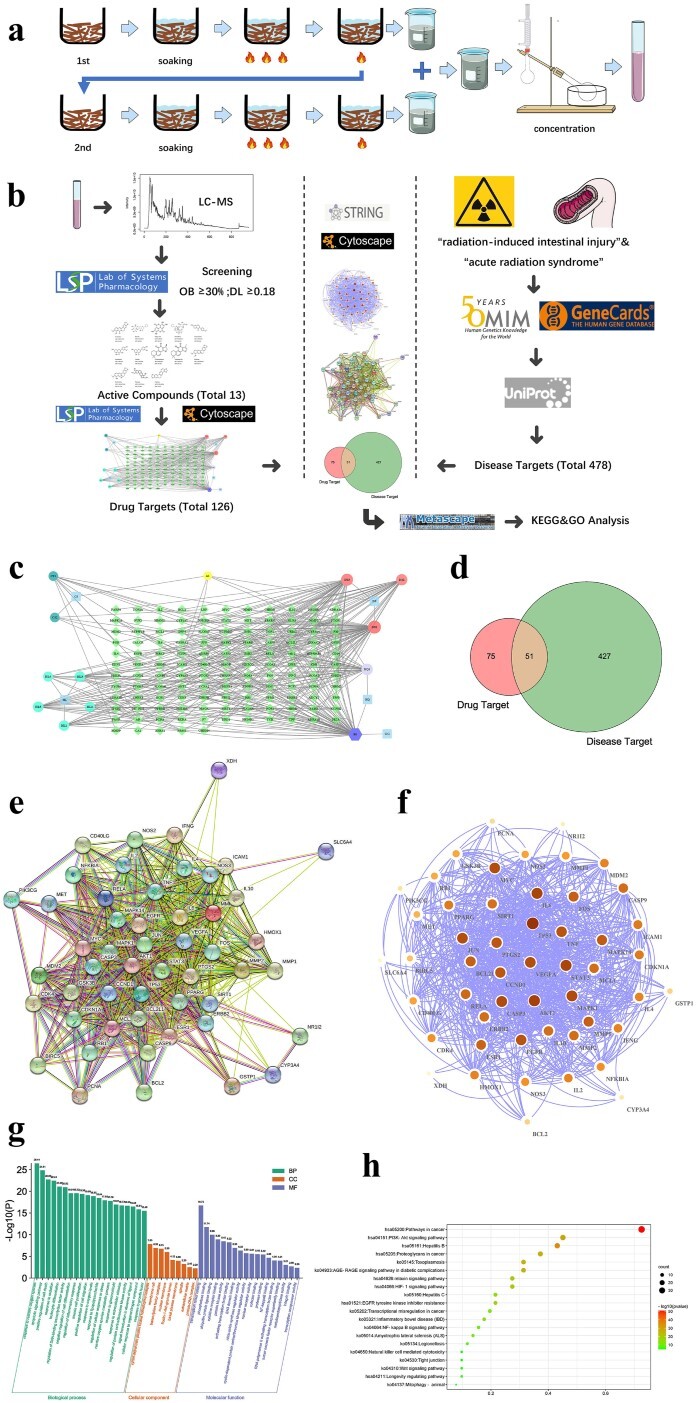
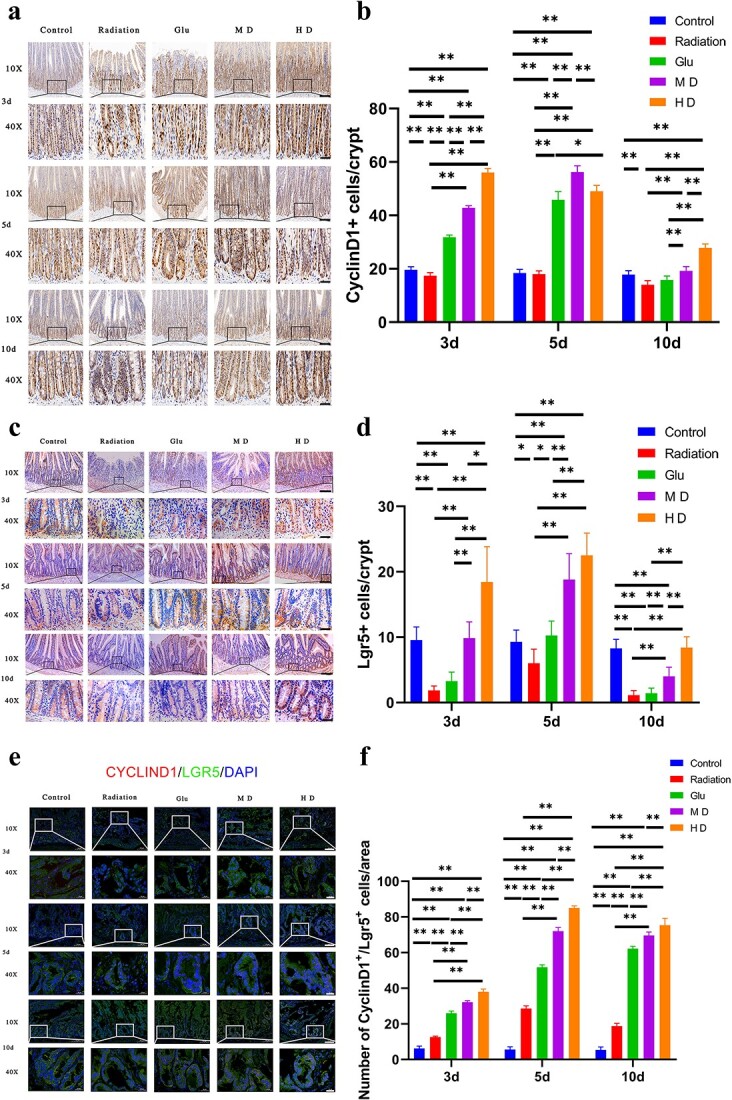
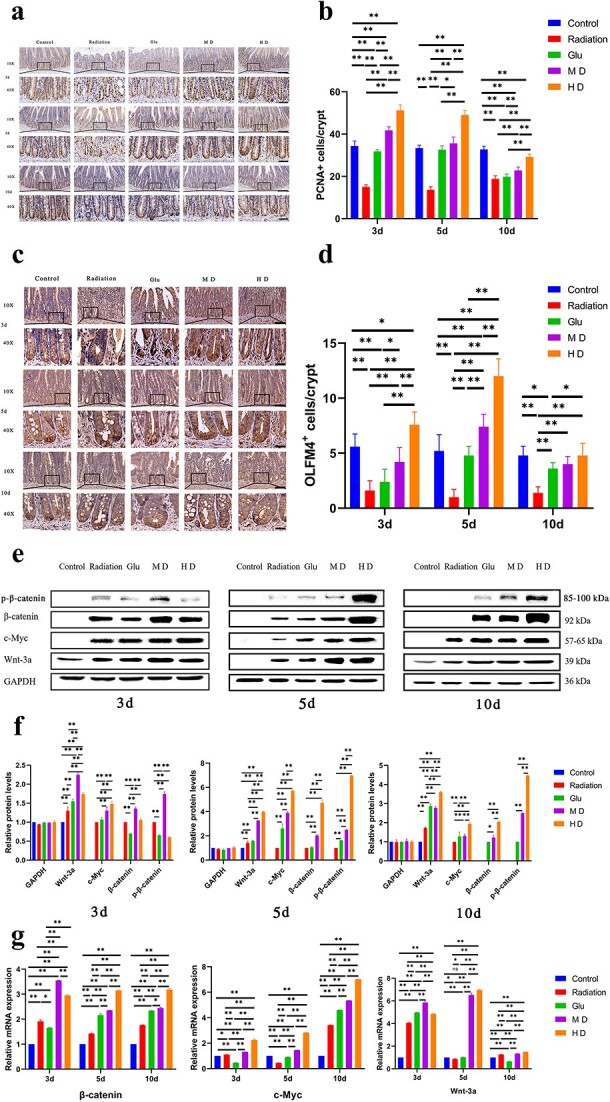
On the basis of the previous research, the Traditional Chinese Medicine theory was used to improve the drug composition for gastrointestinal acute radiation syndrome (GI-ARS). The purpose of this study was to study the therapeutic mechanism of Liangxue-Guyuan-Yishen decoction (LGYD) on GI-ARS and to provide a new scheme for the treatment of radiation injury. Here, we investigated the effects of LGYD on intestinal stem cells (ISCs) in a GI-ARS rat model. Rat health and survival and the protective efficacy of LGYD on the intestines were analyzed. The active principles in LGYD were detected using liquid chromatography-mass spectrometry (LC-MS). ISC proliferation, intestinal epithelial tight junction (TJ) protein expression and regulatory pathways were explored using immunohistochemistry, western blotting (WB) and reverse transcription quantitative polymerase chain reaction (RT-qPCR), respectively. Involvement of the WNT and MEK/ERK pathways in intestinal recovery was screened using network pharmacology analysis and validated by WB and RT-qPCR. LGYD administration significantly improved health and survival in GI-ARS rats. Pathological analysis showed that LGYD ameliorated radiation-induced intestinal injury and significantly promoted LGR5+ stem cell regeneration in the intestinal crypts, upregulated TJ protein, and accelerated crypt reconstruction in the irradiated rats. LC-MS revealed ≥13 constituents that might contribute to LGYD's protective effects. Collectively, LGYD can promote crypt cell proliferation and ISCs after radiation damage, the above effect may be related to WNT and MEK/ERK pathway.
在以往研究的基础上,运用中医理论对胃肠道急性放射病(GI-ARS)的药物组成进行了改良。本研究旨在探讨凉血贯元益肾汤(LGYD)对 GI-ARS 的治疗机制,为辐射损伤的治疗提供新方案。在这里,我们研究了 LGYD 在 GI-ARS 大鼠模型中对肠干细胞(ISCs)的影响。分析了 LGYD 对肠道的保护作用、大鼠的健康状况和存活率。采用液相色谱-质谱联用(LC-MS)检测 LGYD 中的活性成分。采用免疫组织化学、蛋白质印迹(WB)和逆转录定量聚合酶链反应(RT-qPCR)分别探索 ISC 增殖、肠上皮紧密连接(TJ)蛋白表达和调控途径。通过网络药理学分析筛选参与肠道恢复的 WNT 和 MEK/ERK 途径,并通过 WB 和 RT-qPCR 进行验证。LGYD 给药可显著改善 GI-ARS 大鼠的健康状况和存活率。病理分析表明,LGYD 可改善辐射引起的肠道损伤,并显著促进辐射大鼠肠隐窝中 LGR5+干细胞的再生,上调 TJ 蛋白,并加速隐窝重建。LC-MS 显示≥13 种成分可能有助于 LGYD 的保护作用。综上所述,LGYD 可促进辐射损伤后隐窝细胞增殖和 ISC,其作用可能与 WNT 和 MEK/ERK 途径有关。