Dale Maria, Eccles Fiona J R, Melvin Katie, Khan Zaynah, Jones Lee, Zarotti Nicolò, Kiani Reza, Johnson Jenny, Wells Robert, Simpson Jane
Leicestershire Partnership NHS Trust, Mill Lodge, Narborough, Leicestershire, LE19 4SL, Leicester, UK.
Division of Health Research, Faculty of Health and Medicine, Lancaster University, Lancaster, LA1 4AH, UK.
Pilot Feasibility Stud. 2023 Sep 12;9(1):159. doi: 10.1186/s40814-023-01364-5.
Huntington's disease (HD) is an adult-onset genetic neurodegenerative condition associated with cognitive decline, motor impairments, and emotional difficulties. Anxiety affects up to 71% of HD gene expansion carriers (i.e., those with the version of the gene that causes HD) and can negatively impact quality of life, worsen other HD symptoms, and increase suicide risk. Therefore, helping people with their anxiety should be a clinical priority. A significant evidence base now exists for low-cost talking therapies for anxiety, such as guided self-help, and with people with other neurodegenerative conditions (e.g., Parkinson's disease). However, this type of intervention has not been specifically assessed with HD gene expansion carriers.
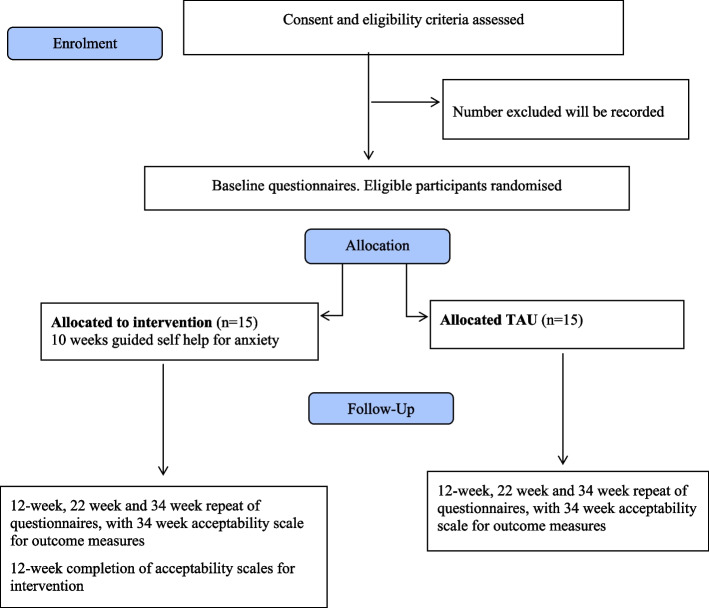
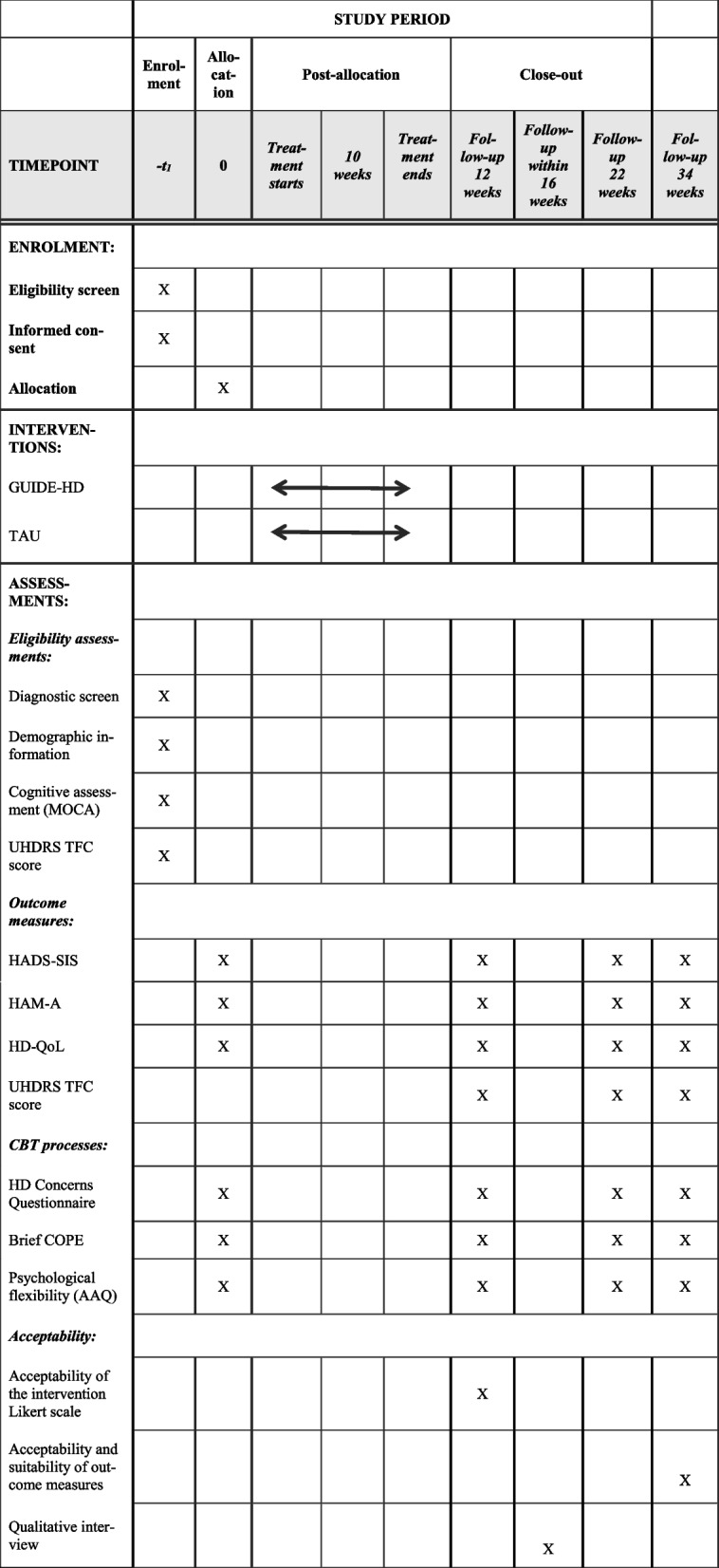
This protocol describes an exploratory randomised controlled feasibility study of a psychological intervention for anxiety for HD gene expansion carriers. The 10 session guided self-help intervention ('GUIDE-HD') is based on a blend of second and third wave cognitive behavioural models of anxiety (cognitive behaviour therapy [CBT] and acceptance and commitment therapy [ACT]) and is adapted to meet the specific needs of an HD population. This study will compare guided self-help with treatment as usual (TAU), with 15 HD gene expansion carriers randomly allocated to each group. Participants will be recruited across the UK. Quantitative data will be collected pre-intervention, immediately post-intervention, 3-month post-intervention and 6-month post-intervention. Qualitative data will be collected at one month post-intervention from participants, including HD carers. The data will be analysed to assess whether the current intervention and study design are feasible to progress to a larger randomised controlled trial. Feasibility has been defined in terms of recruitment rate, retention rate to both trial arms, intervention adherence, and acceptability of the intervention and measurement tools.
Given the lack of evidenced interventions to date to support the wellbeing of people with the expanded Huntington's gene, this study will assess the feasibility of progressing this particular intervention to a full trial. To try and increase the acceptability of the intervention, a number of stakeholders, including those affected by HD and in caring roles, have been fundamental to the creation of the intervention (e.g., therapy manual, planned therapy process) to date.
Trial ID: ISRCTN47330596 . Date registered: 28/09/2022. Protocol version and date: Version 2, 09/06/22. Trial sponsor organisation and contact: Leicestershire Partnership NHS Trust (Dave Clarke). Role of sponsor: Overall responsibility for the conduct and governance of the trial. Role of funder: Review of initial research proposal.
亨廷顿舞蹈症(HD)是一种成年起病的遗传性神经退行性疾病,与认知能力下降、运动障碍和情绪问题相关。焦虑症影响着高达71%的HD基因扩展携带者(即携带导致HD的基因版本的人),会对生活质量产生负面影响,使其他HD症状恶化,并增加自杀风险。因此,帮助人们缓解焦虑应是临床工作的重点。目前,有大量证据支持针对焦虑症的低成本谈话疗法,如引导式自助疗法,且该疗法已应用于其他神经退行性疾病患者(如帕金森病患者)。然而,尚未针对HD基因扩展携带者对这类干预措施进行专门评估。
本方案描述了一项针对HD基因扩展携带者焦虑症的心理干预探索性随机对照可行性研究。这项为期10节的引导式自助干预(“GUIDE-HD”)基于第二波和第三波焦虑认知行为模型(认知行为疗法 [CBT] 和接纳与承诺疗法 [ACT])的融合,并进行了调整以满足HD患者群体的特殊需求。本研究将引导式自助疗法与常规治疗(TAU)进行比较,每组随机分配15名HD基因扩展携带者。参与者将在英国各地招募。将在干预前、干预后即刻、干预后3个月和干预后6个月收集定量数据。将在干预后1个月从参与者(包括HD患者护理人员)处收集定性数据。将对数据进行分析,以评估当前的干预措施和研究设计是否可行,能否推进到更大规模的随机对照试验。可行性已根据招募率、两个试验组的保留率、干预依从性以及干预措施和测量工具的可接受性来定义。
鉴于目前缺乏支持亨廷顿基因扩展携带者福祉的循证干预措施,本研究将评估将这一特定干预措施推进到全面试验的可行性。为了提高干预措施的可接受性,包括受HD影响者和护理人员在内的一些利益相关者,在迄今为止干预措施的创建(如治疗手册、计划的治疗过程)中发挥了重要作用。
试验编号:ISRCTN47330596。注册日期:2022年9月28日。方案版本和日期:版本2,2022年6月9日。试验主办组织及联系人:莱斯特郡国民保健服务信托基金(戴夫·克拉克)。主办者的职责:对试验的实施和管理负总责。资助者的职责:对初始研究提案进行审查。