Department of Marine Science, Marine Science Institute, University of Texas at Austin , Port Aransas, Texas, USA.
Instituto de Ciencias del Mar y Limnologia Universidad Nacional Autónoma de Mexico, Unidad Académica de Ecologia y Biodiversidad Acuática , Mexico City, Mexico.
mSystems. 2023 Oct 26;8(5):e0061923. doi: 10.1128/msystems.00619-23. Epub 2023 Sep 13.
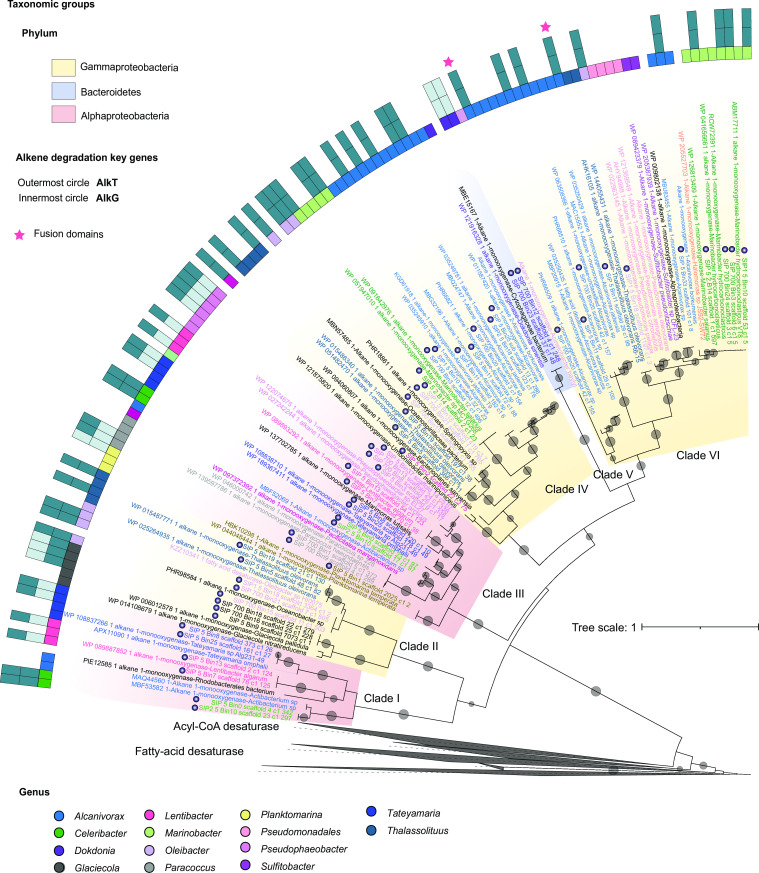
Petroleum pollution in the ocean has increased because of rapid population growth and modernization, requiring urgent remediation. Our understanding of the metabolic response of native microbial communities to oil spills is not well understood. Here, we explored the baseline hydrocarbon-degrading communities of a subarctic Atlantic region to uncover the metabolic potential of the bacteria that inhabit the surface and subsurface water. We conducted enrichments with a C-labeled hydrocarbon to capture the fraction of the community actively using the hydrocarbon. We then combined this approach with metagenomics to identify the metabolic potential of this hydrocarbon-degrading community. This revealed previously undescribed uncultured bacteria with unique metabolic mechanisms involved in aerobic hydrocarbon degradation, indicating that temperature may be pivotal in structuring hydrocarbon-degrading baseline communities. Our findings highlight gaps in our understanding of the metabolic complexity of hydrocarbon degradation by native marine microbial communities.
由于人口的快速增长和现代化,海洋中的石油污染增加了,这需要紧急补救。我们对本地微生物群落对石油泄漏的代谢反应的理解还不够清楚。在这里,我们探索了亚北极大西洋地区的基线碳氢化合物降解群落,以揭示栖息在地表水和地下水的细菌的代谢潜力。我们用 C 标记的碳氢化合物进行了富集,以捕获社区中积极使用碳氢化合物的部分。然后,我们将这种方法与宏基因组学相结合,以确定这种碳氢化合物降解群落的代谢潜力。这揭示了以前未被描述的、具有独特代谢机制的未培养细菌,这些细菌参与了好氧碳氢化合物的降解,这表明温度可能是构建碳氢化合物降解基线群落的关键因素。我们的研究结果突出了我们对本地海洋微生物群落对碳氢化合物降解的代谢复杂性的理解存在差距。