Division of Epidemiology and Biostatistics, University of California, Berkeley, Berkeley, CA, USA.
Department of Epidemiology and Population Health, Stanford University, Stanford, CA, USA.
Nature. 2023 Sep;621(7979):568-576. doi: 10.1038/s41586-023-06501-x. Epub 2023 Sep 13.
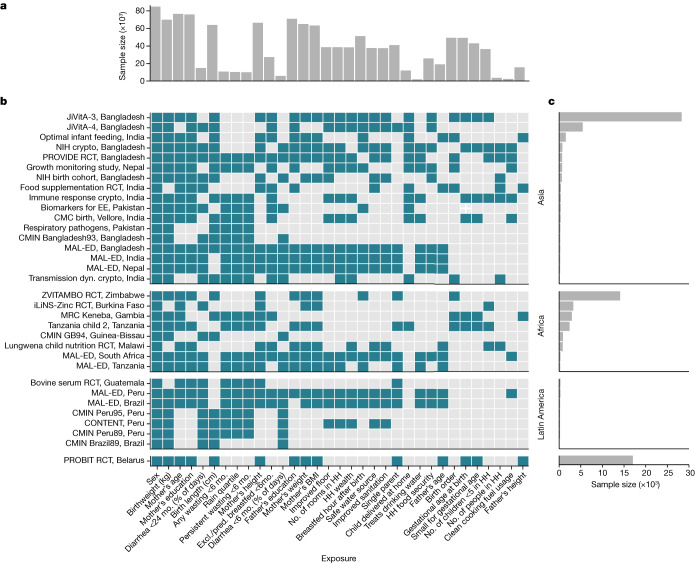
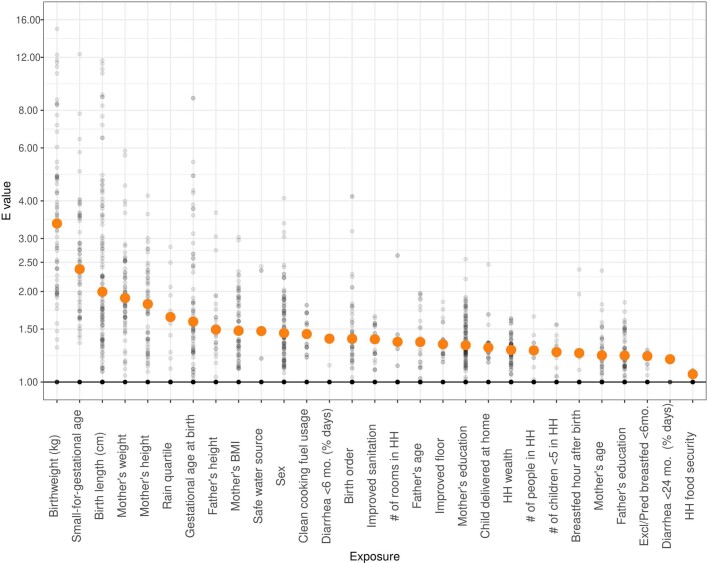
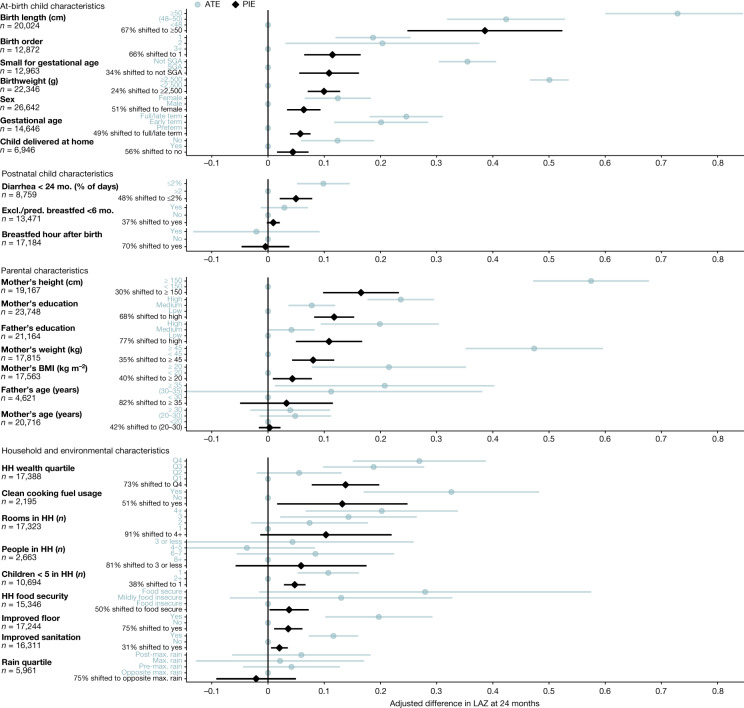
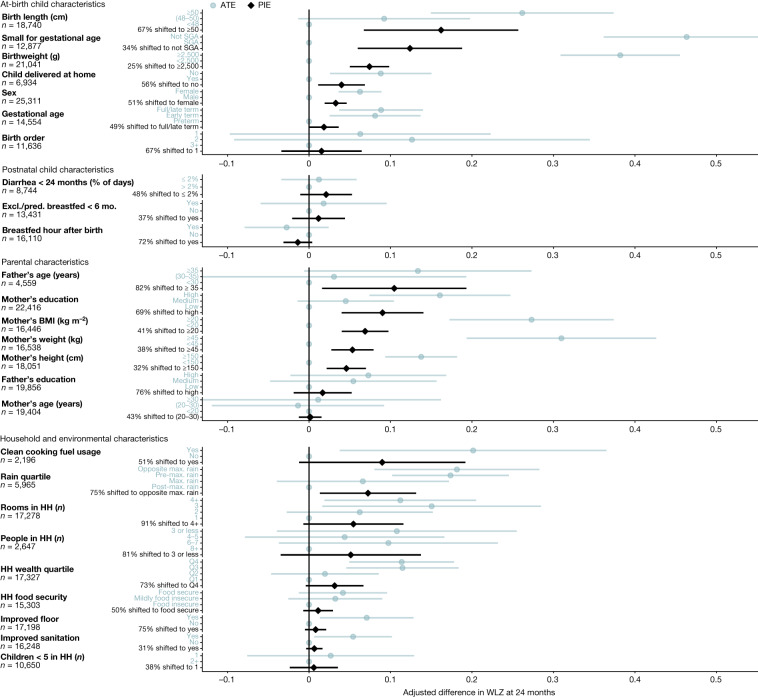
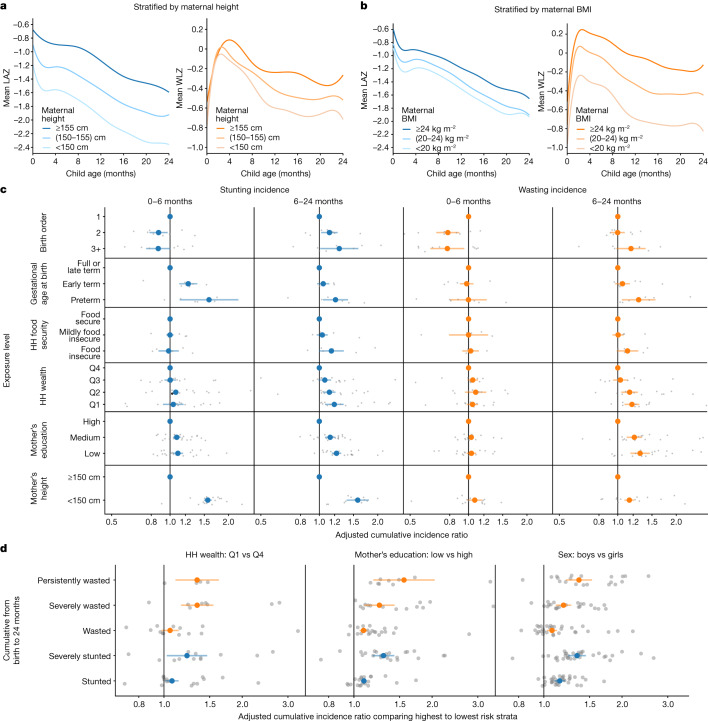
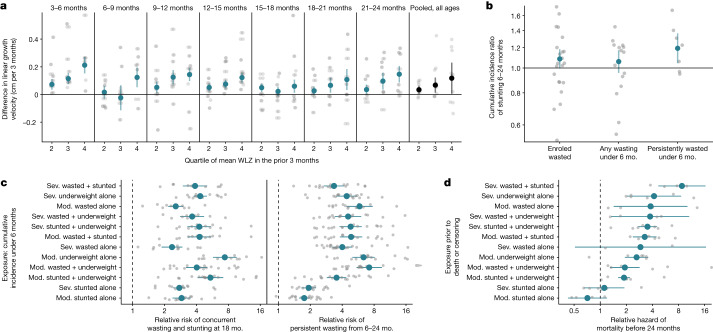
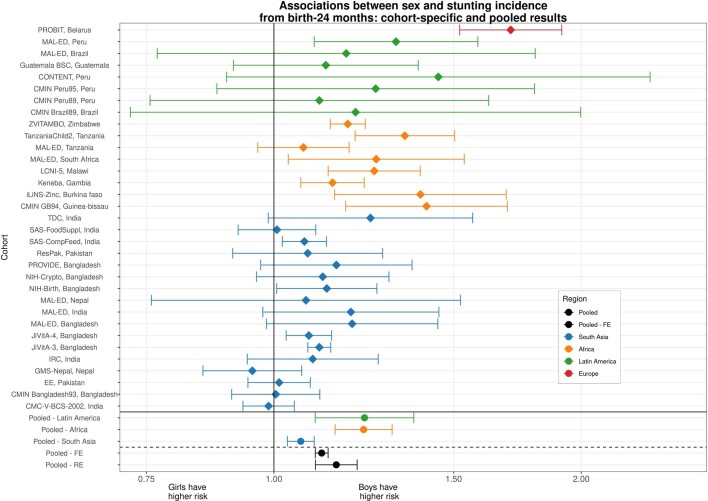
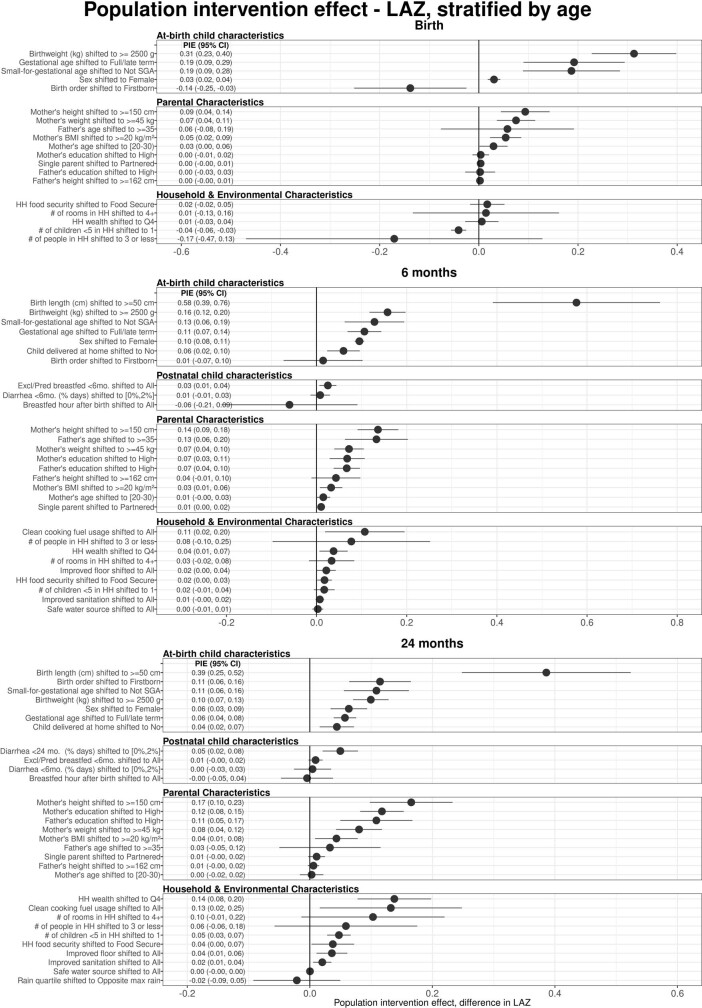
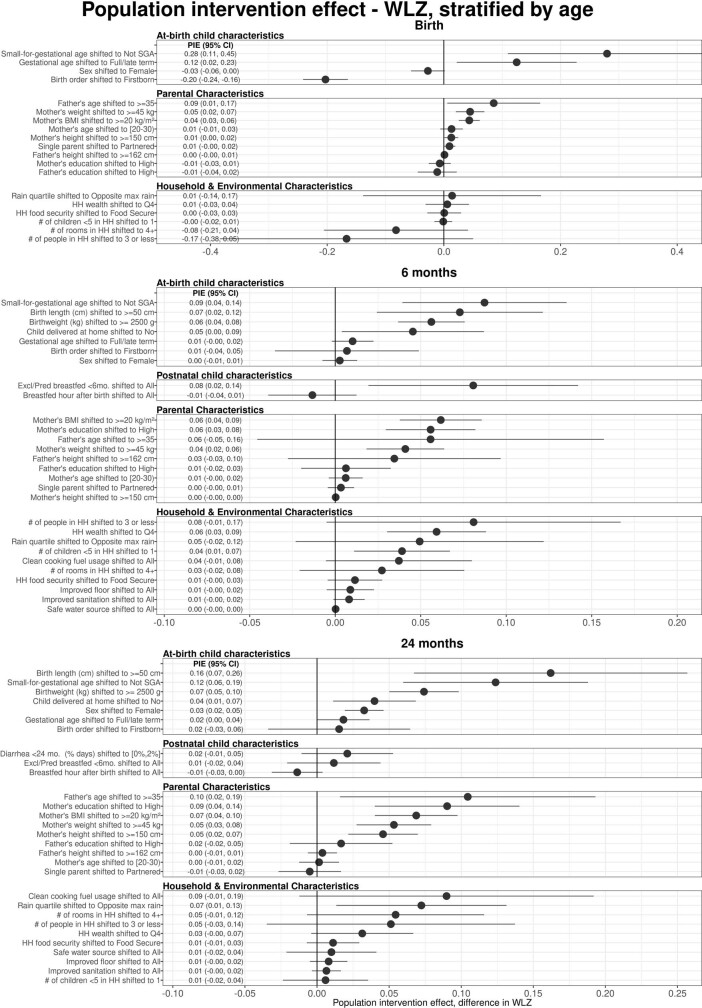
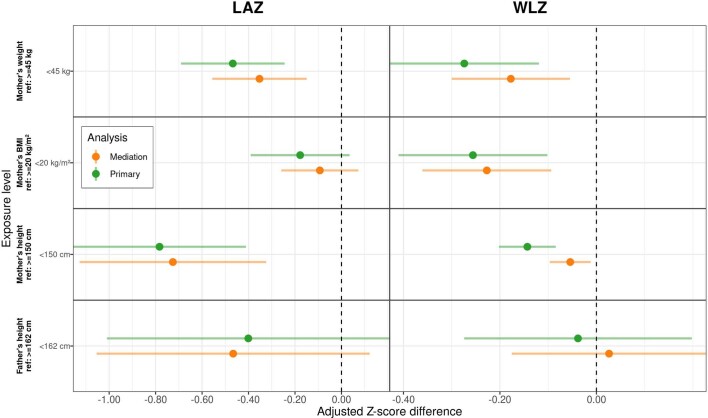
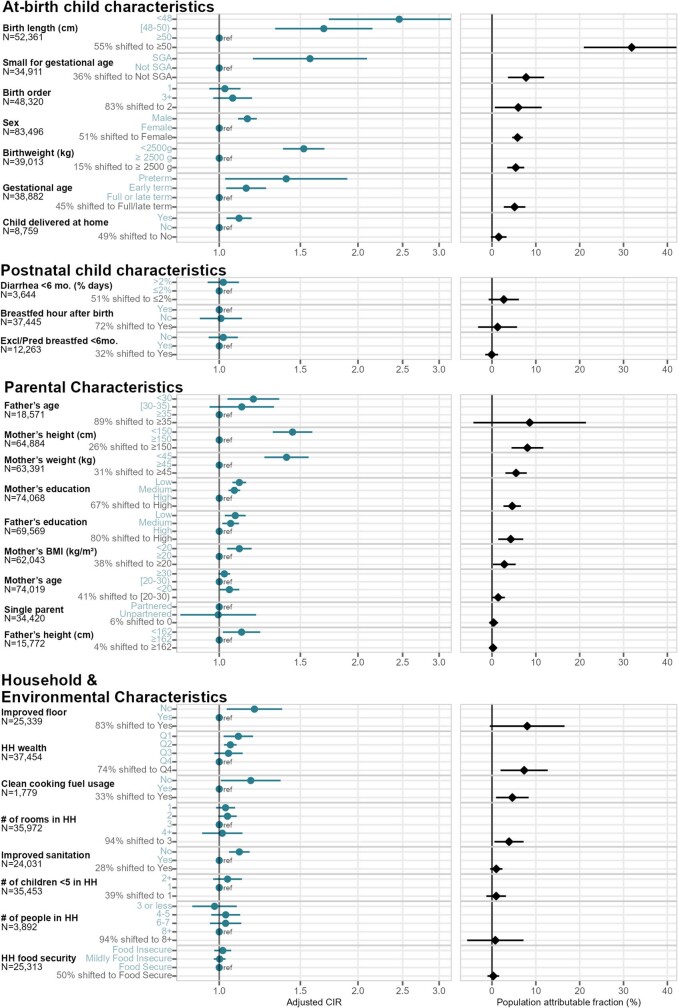
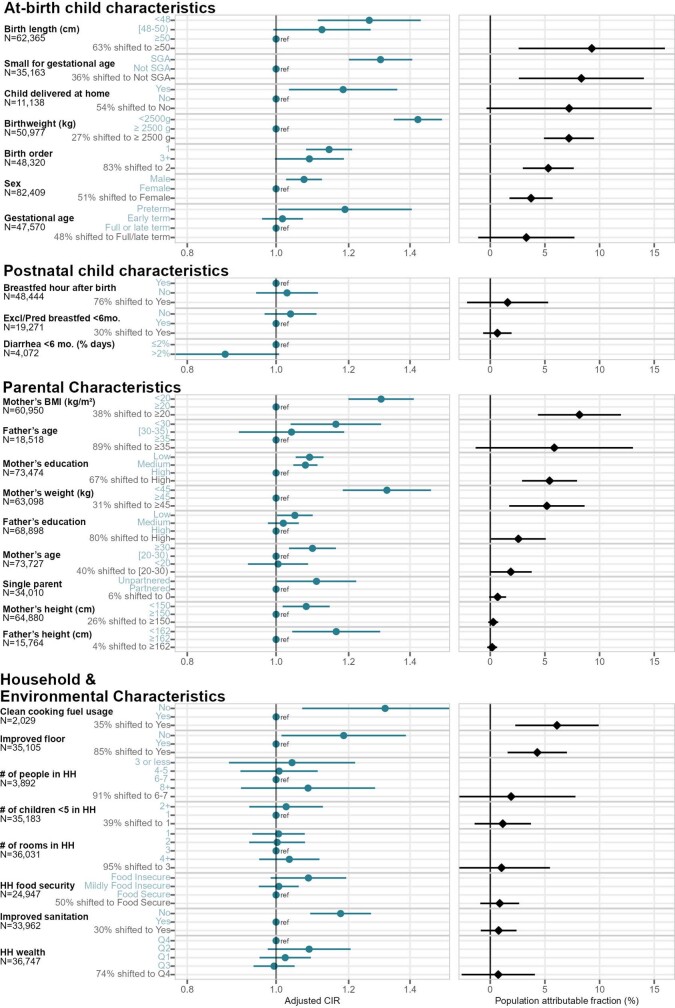
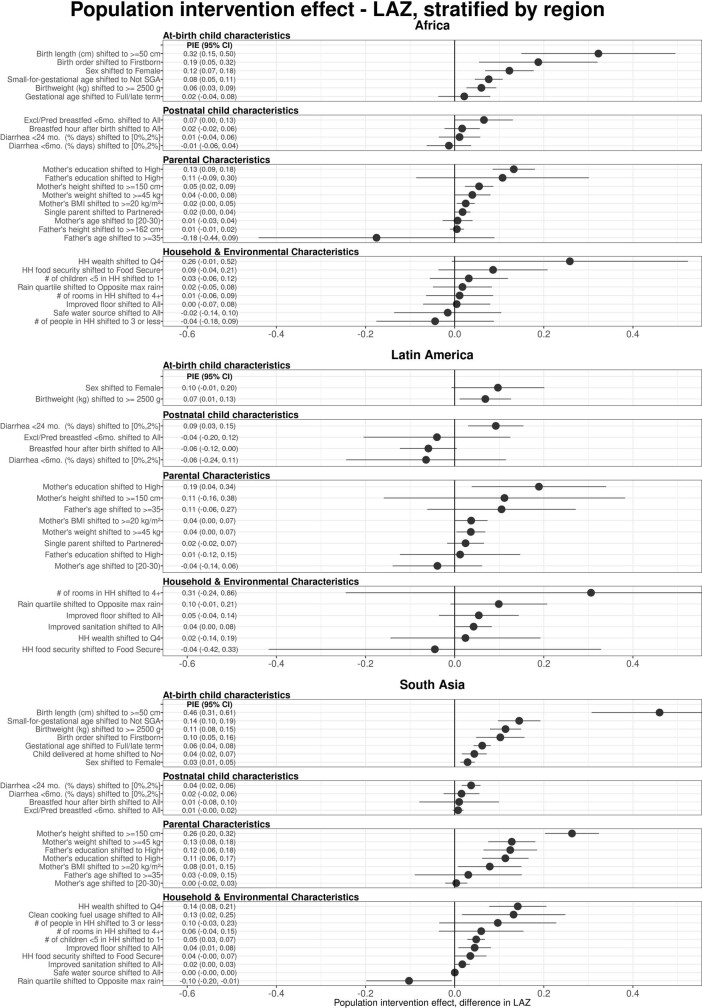
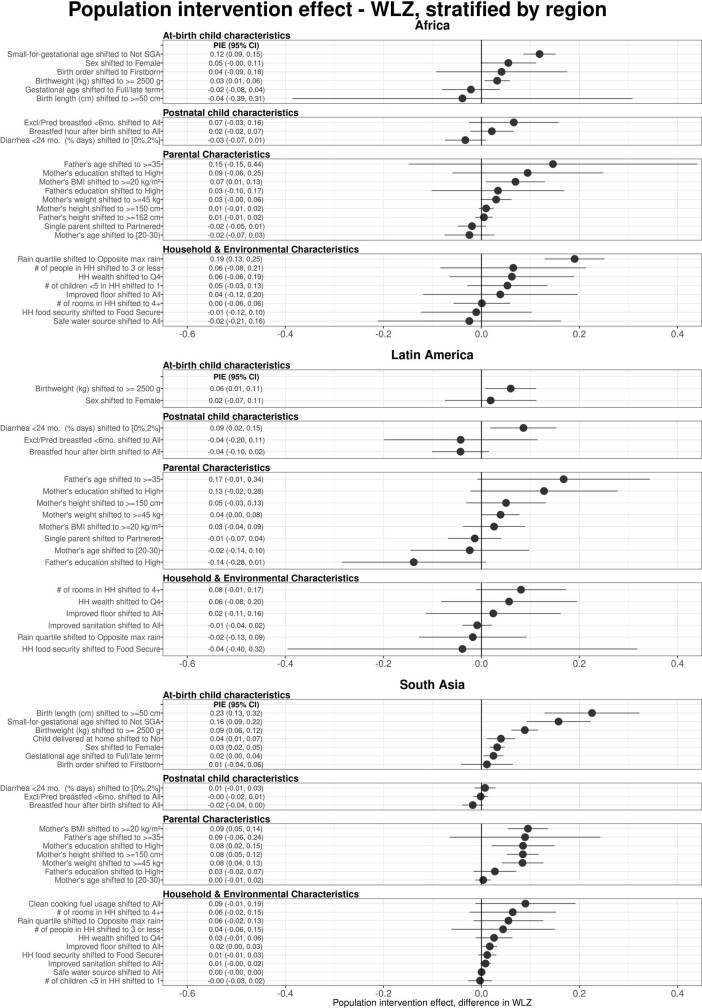
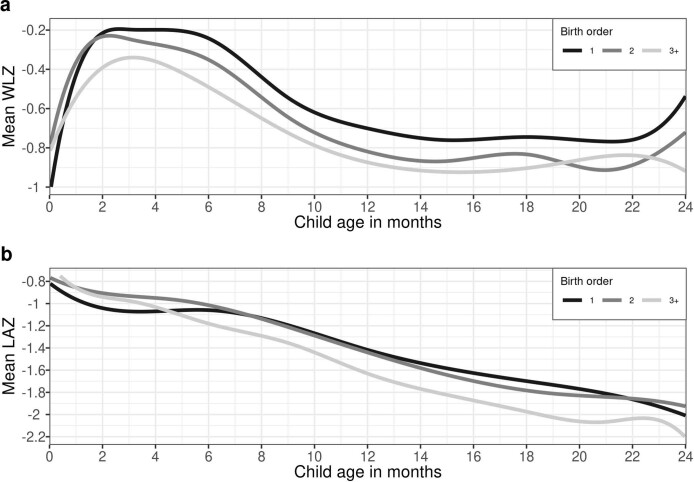
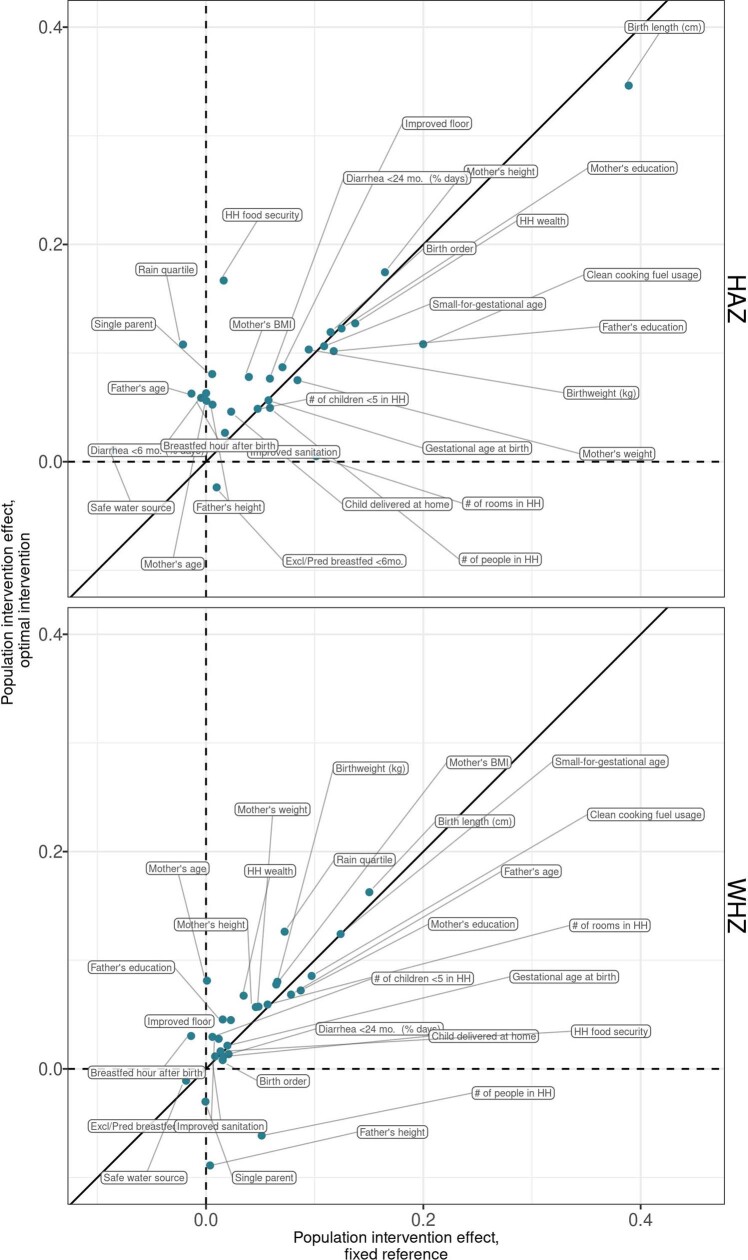
Growth faltering in children (low length for age or low weight for length) during the first 1,000 days of life (from conception to 2 years of age) influences short-term and long-term health and survival. Interventions such as nutritional supplementation during pregnancy and the postnatal period could help prevent growth faltering, but programmatic action has been insufficient to eliminate the high burden of stunting and wasting in low- and middle-income countries. Identification of age windows and population subgroups on which to focus will benefit future preventive efforts. Here we use a population intervention effects analysis of 33 longitudinal cohorts (83,671 children, 662,763 measurements) and 30 separate exposures to show that improving maternal anthropometry and child condition at birth accounted for population increases in length-for-age z-scores of up to 0.40 and weight-for-length z-scores of up to 0.15 by 24 months of age. Boys had consistently higher risk of all forms of growth faltering than girls. Early postnatal growth faltering predisposed children to subsequent and persistent growth faltering. Children with multiple growth deficits exhibited higher mortality rates from birth to 2 years of age than children without growth deficits (hazard ratios 1.9 to 8.7). The importance of prenatal causes and severe consequences for children who experienced early growth faltering support a focus on pre-conception and pregnancy as a key opportunity for new preventive interventions.
生命最初 1000 天(从受孕到 2 岁)中儿童生长迟缓(身高低于年龄标准或体重低于身长标准)会影响短期和长期健康和生存。营养补充等干预措施可以帮助预防生长迟缓,但在中低收入国家,方案行动不足以消除发育迟缓症和消瘦症的高负担。确定重点关注的年龄窗口和人群亚组将有利于未来的预防工作。在这里,我们使用 33 个纵向队列(83671 名儿童,662763 次测量)的人群干预效果分析和 30 个单独的暴露因素,结果表明,改善母婴人体测量指标和儿童出生时的状况,可使 24 月龄时的身高年龄 Z 评分增加高达 0.40,体重长度 Z 评分增加高达 0.15。男孩所有形式的生长迟缓风险始终高于女孩。出生后早期的生长迟缓使儿童随后和持续生长迟缓的风险增加。与没有生长缺陷的儿童相比,有多方面生长缺陷的儿童在出生至 2 岁期间的死亡率更高(危险比为 1.9 至 8.7)。考虑到产前原因以及对经历早期生长迟缓的儿童的严重后果,支持将受孕前和孕期作为新的预防干预的关键机会。