Bhatia Divya
E-Cog: Emotion & Cognition Psychology Research Centre, Jindal School of Psychology and Counselling, O.P. Jindal Global University, Sonipat, Haryana, India.
Ann Neurosci. 2023 Apr;30(2):119-123. doi: 10.1177/09727531231176122. Epub 2023 Jul 27.
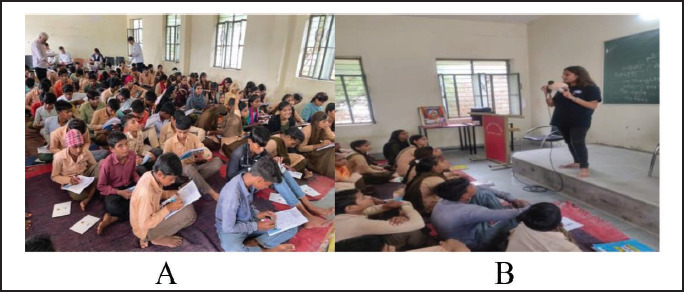
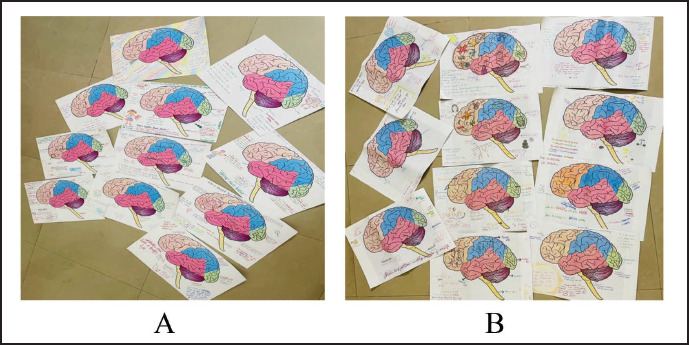
The current project was funded by the Global Engagement Seed Grant from the International Brain Research Organisation (IBRO) as part of the IBRO-led Global Engagement Initiative. The project was focused on public awareness about neurodevelopmental disorders (NDDs) as well as neuroscience engagement. Thus, the project had two specific aims: (a) public awareness about epidemiology, diagnosis, risk factors, prevention of NDDs and relevant government guidelines and available policies (b) public engagement in neuroscience. Therefore, the current project report with an emphasis on the requirement of neuroscience engagement and outreach at the societal level, highlights several activities such as population-based workshops and webinars, carried out as part of the project in both rural and urban areas to enhance the public engagement in neuroscience and awareness on several NDDs.
India is an extremely diverse country with significant variations in cultural, educational, financial, socioeconomic status and linguistic aspects. With about 27% of its population living below the poverty line, India accounts for about 23 million children suffering from a disability, most of whom do not seek medical help. These data highlight the gravity of the situation which calls for urgent actions from governments, healthcare professionals, researchers and policymakers to design adequate public awareness programs regarding several prevalent NDDs. Therefore, the current project was an effort to bring public awareness about brain health and the epidemiology, diagnosis and prevention of NDDs and relevant government guidelines and available policies.
当前项目由国际脑研究组织(IBRO)的全球参与种子基金资助,作为IBRO牵头的全球参与倡议的一部分。该项目专注于提高公众对神经发育障碍(NDDs)的认识以及促进神经科学参与。因此,该项目有两个具体目标:(a)提高公众对NDDs的流行病学、诊断、风险因素、预防以及相关政府指南和现有政策的认识;(b)促进公众参与神经科学。因此,本项目报告强调了社会层面神经科学参与和推广的必要性,突出了一些活动,如以社区为基础的研讨会和网络研讨会,这些活动是该项目在农村和城市地区开展的一部分,旨在增强公众对神经科学的参与以及对多种NDDs的认识。
印度是一个极其多样化的国家,在文化、教育、金融、社会经济地位和语言方面存在显著差异。印度约27%的人口生活在贫困线以下,约有2300万残疾儿童,其中大多数没有寻求医疗帮助。这些数据凸显了形势的严峻性,呼吁政府、医疗保健专业人员、研究人员和政策制定者立即采取行动,设计有关几种常见NDDs的适当公众意识项目。因此,当前项目旨在提高公众对脑健康以及NDDs的流行病学、诊断和预防以及相关政府指南和现有政策的认识。