Department of Medicine, Division of Pulmonary and Critical Care Medicine, UCSF, San Francisco, California, USA
Department of Medicine, Division of Critical Care Medicine, Montefiore Medical Center, Bronx, New York, USA.
BMJ Health Care Inform. 2023 Sep;30(1). doi: 10.1136/bmjhci-2023-100782.
To identify the risk of acute respiratory distress syndrome (ARDS) and in-hospital mortality using long short-term memory (LSTM) framework in a mechanically ventilated (MV) non-COVID-19 cohort and a COVID-19 cohort.
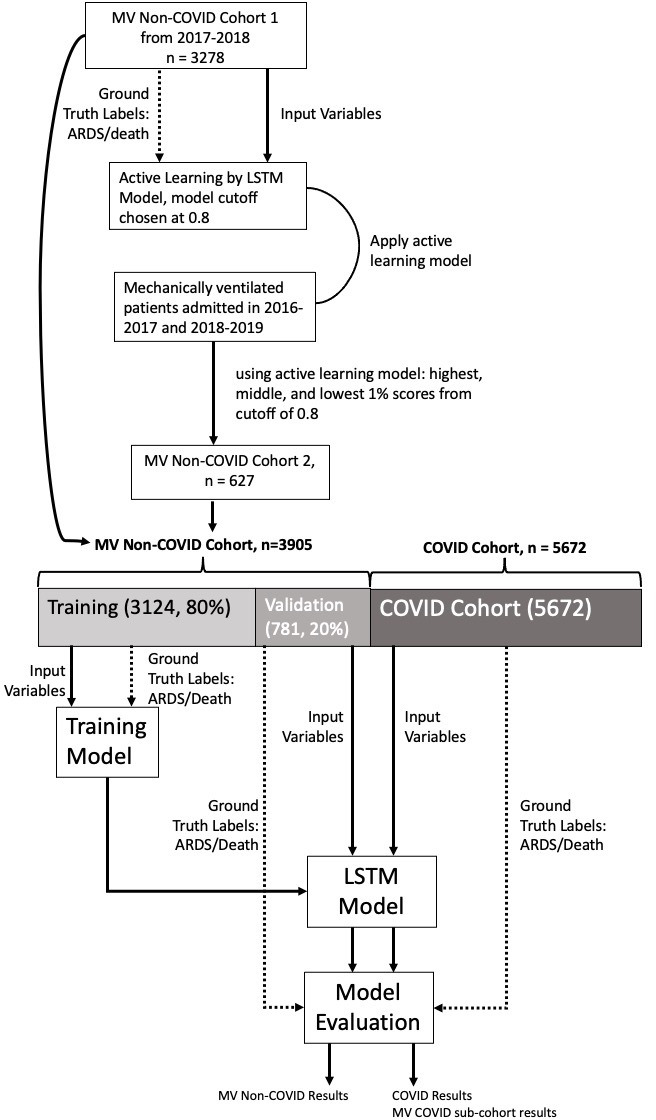
We included MV ICU patients between 2017 and 2018 and reviewed patient records for ARDS and death. Using active learning, we enriched this cohort with MV patients from 2016 to 2019 (MV non-COVID-19, n=3905). We collected a second validation cohort of hospitalised patients with COVID-19 in 2020 (COVID+, n=5672). We trained an LSTM model using 132 structured features on the MV non-COVID-19 training cohort and validated on the MV non-COVID-19 validation and COVID-19 cohorts.
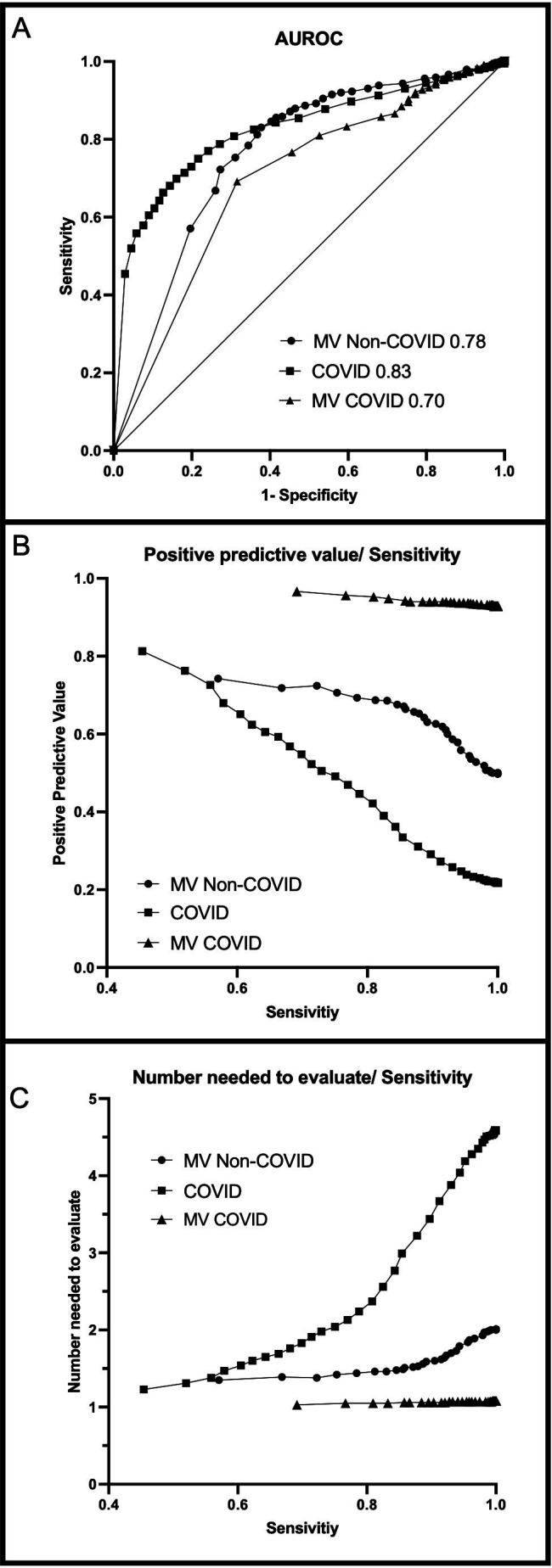
Applying LSTM (model score 0.9) on the MV non-COVID-19 validation cohort had a sensitivity of 86% and specificity of 57%. The model identified the risk of ARDS 10 hours before ARDS and 9.4 days before death. The sensitivity (70%) and specificity (84%) of the model on the COVID-19 cohort are lower than MV non-COVID-19 cohort. For the COVID-19 + cohort and MV COVID-19 + patients, the model identified the risk of in-hospital mortality 2.4 days and 1.54 days before death, respectively.
Our LSTM algorithm accurately and timely identified the risk of ARDS or death in MV non-COVID-19 and COVID+ patients. By alerting the risk of ARDS or death, we can improve the implementation of evidence-based ARDS management and facilitate goals-of-care discussions in high-risk patients.
Using the LSTM algorithm in hospitalised patients identifies the risk of ARDS or death.
使用长短期记忆(LSTM)框架在机械通气(MV)非 COVID-19 队列和 COVID-19 队列中识别急性呼吸窘迫综合征(ARDS)和住院死亡率的风险。
我们纳入了 2017 年至 2018 年间 MV ICU 患者,并查阅了患者的 ARDS 和死亡记录。通过主动学习,我们用 2016 年至 2019 年的 MV 患者丰富了这个队列(MV 非 COVID-19,n=3905)。我们收集了 2020 年 COVID-19 住院患者的第二个验证队列(COVID+,n=5672)。我们使用 132 个结构特征在 MV 非 COVID-19 训练队列上训练 LSTM 模型,并在 MV 非 COVID-19 验证队列和 COVID-19 队列上进行验证。
在 MV 非 COVID-19 验证队列上应用 LSTM(模型评分 0.9)的敏感性为 86%,特异性为 57%。该模型在 ARDS 前 10 小时和死亡前 9.4 天识别出 ARDS 的风险。该模型在 COVID-19 队列中的敏感性(70%)和特异性(84%)低于 MV 非 COVID-19 队列。对于 COVID-19 +队列和 MV COVID-19 +患者,该模型分别在死亡前 2.4 天和 1.54 天识别出住院死亡率的风险。
我们的 LSTM 算法准确且及时地识别出 MV 非 COVID-19 和 COVID+患者发生 ARDS 或死亡的风险。通过提醒 ARDS 或死亡的风险,我们可以改进基于证据的 ARDS 管理的实施,并为高危患者的治疗目标讨论提供便利。
在住院患者中使用 LSTM 算法可识别 ARDS 或死亡的风险。