Faculty of Biology, Medicine, and Health, Centre for Health Informatics, School of Health Sciences, The University of Manchester, Manchester, M13 9PL, UK.
Health Education England, Manchester, M1 3BN, UK.
Antimicrob Resist Infect Control. 2023 Sep 16;12(1):102. doi: 10.1186/s13756-023-01280-6.
There is concern that the COVID-19 pandemic altered the management of common infections in primary care. This study aimed to evaluate infection-coded consultation rates and antibiotic use during the pandemic and how any change may have affected clinical outcomes.
With the approval of NHS England, a retrospective cohort study using the OpenSAFELY platform analysed routinely collected electronic health data from GP practices in England between January 2019 and December 2021. Infection coded consultations and antibiotic prescriptions were used estimate multiple measures over calendar months, including age-sex adjusted prescribing rates, prescribing by infection and antibiotic type, infection consultation rates, coding quality and rate of same-day antibiotic prescribing for COVID-19 infections. Interrupted time series (ITS) estimated the effect of COVID-19 pandemic on infection-coded consultation rates. The impact of the pandemic on non- COVID-19 infection-related hospitalisations was also estimated.
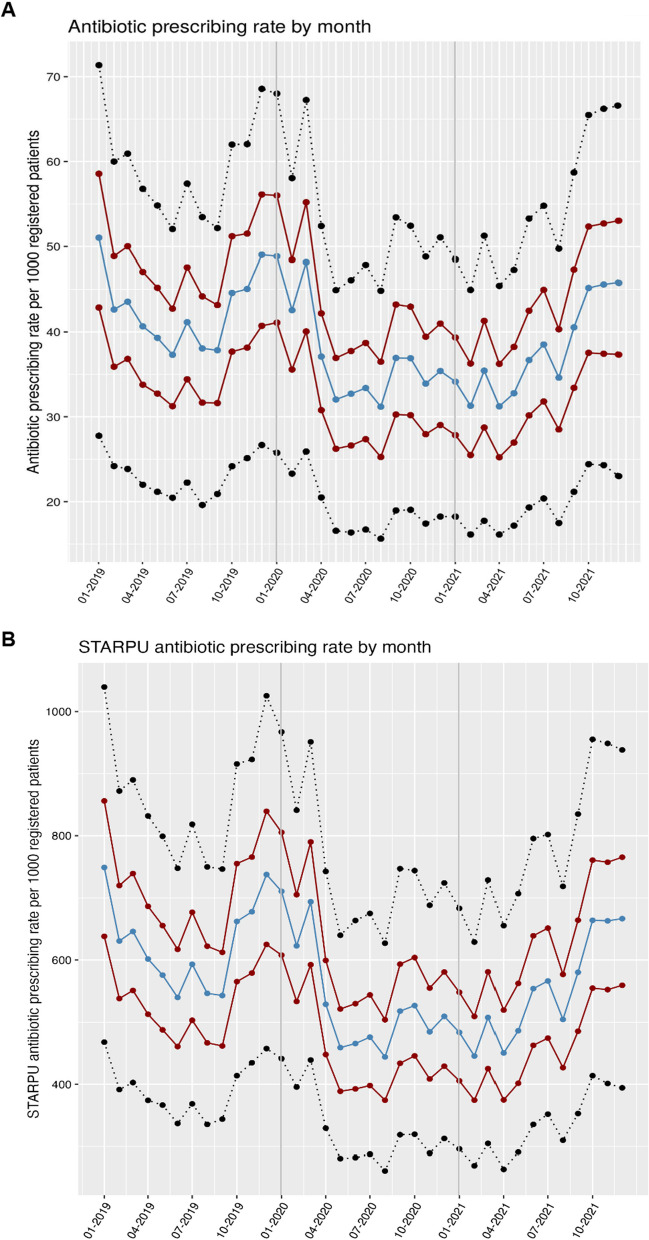
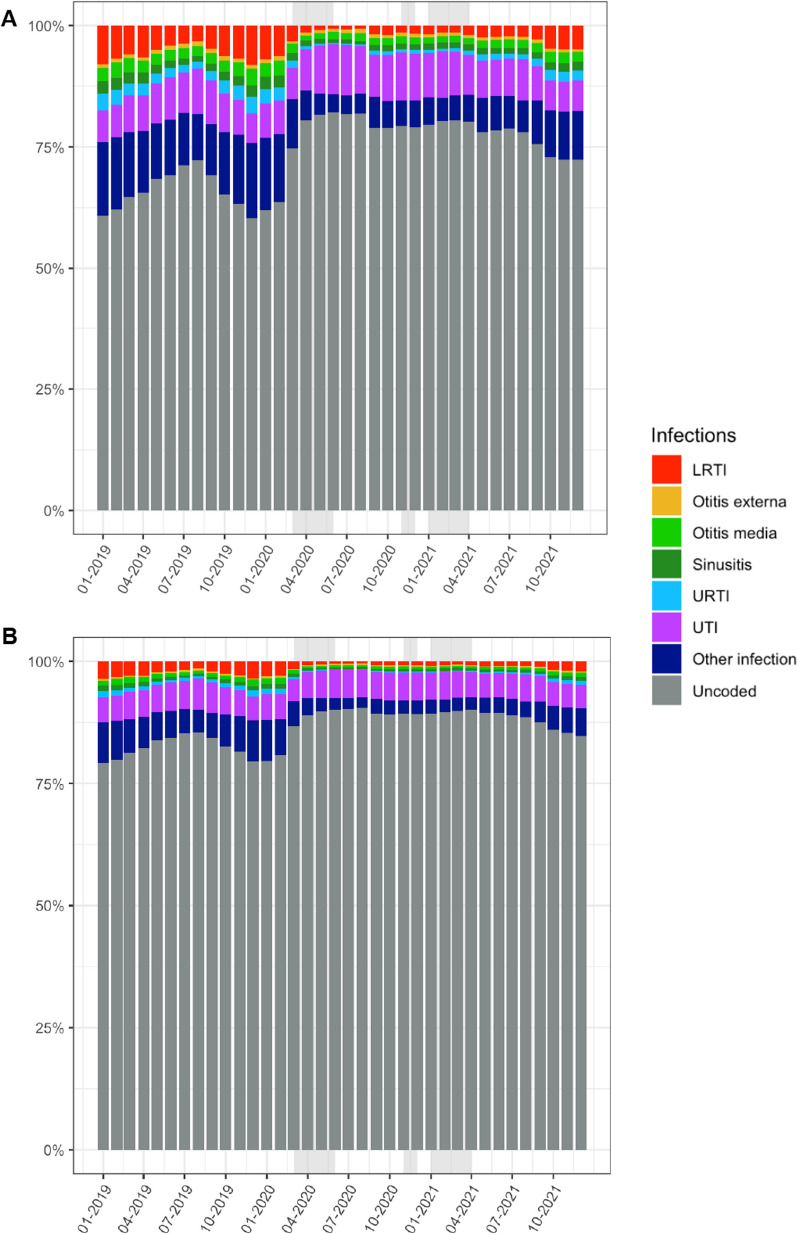
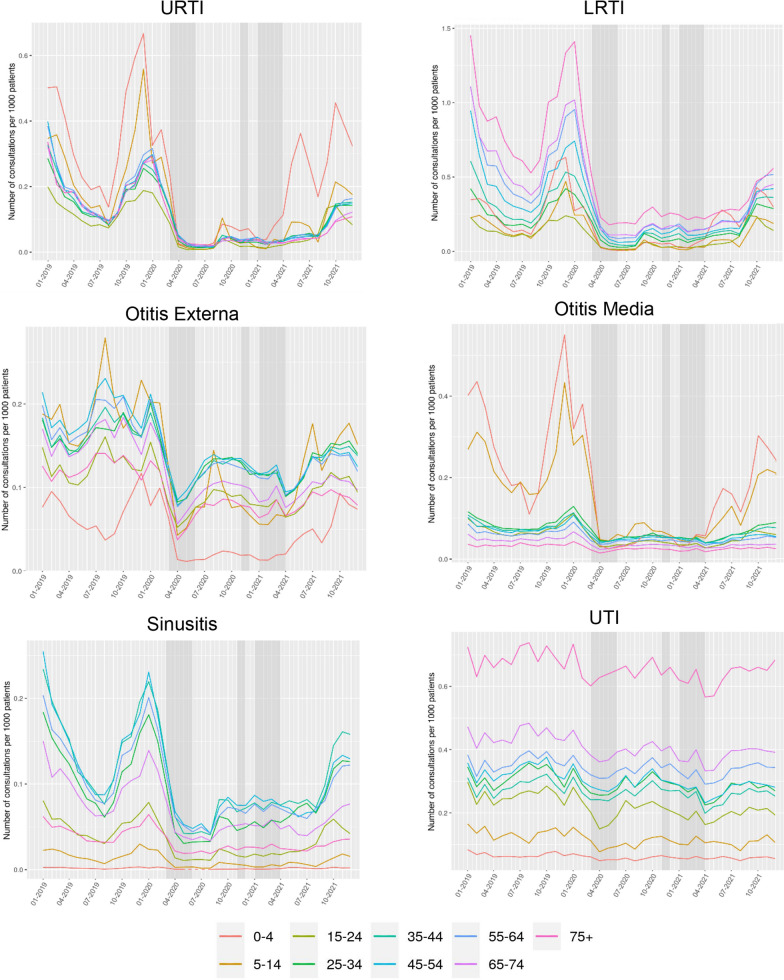
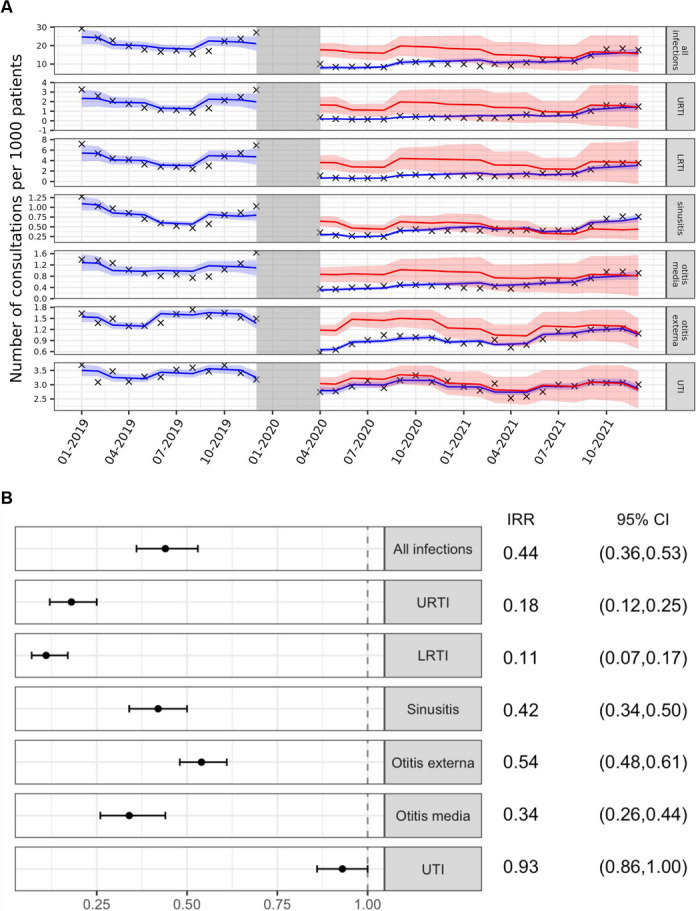
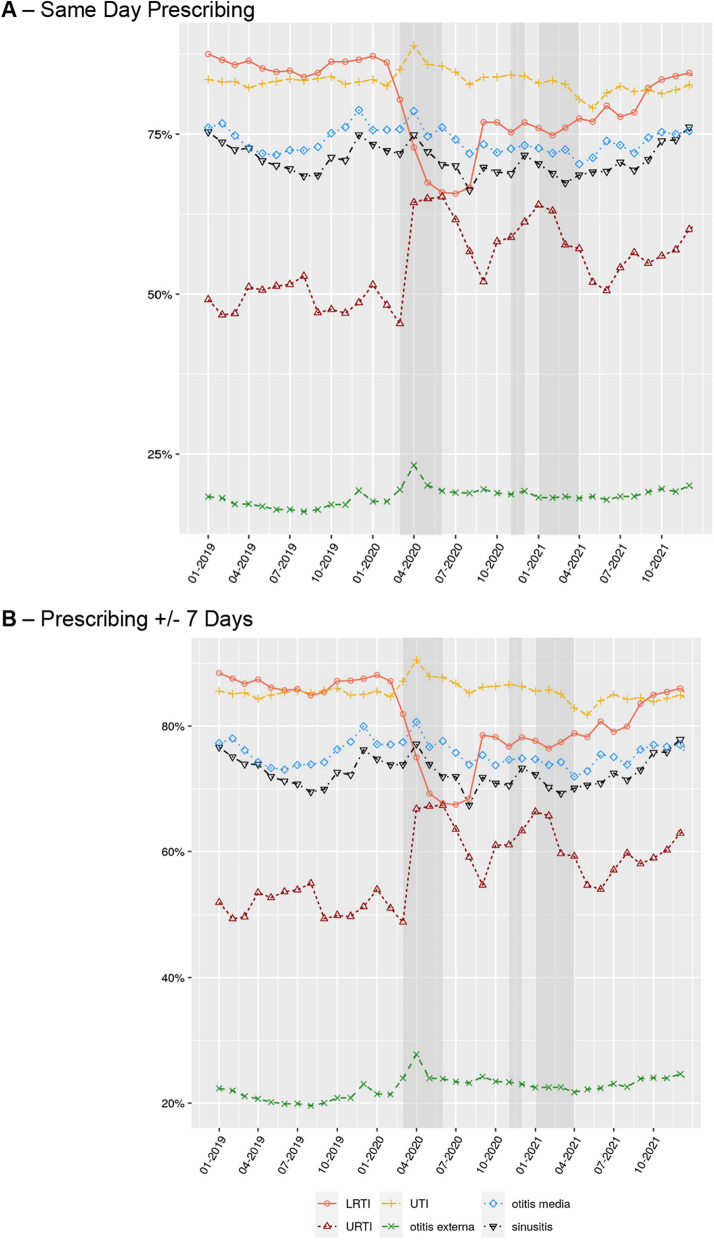
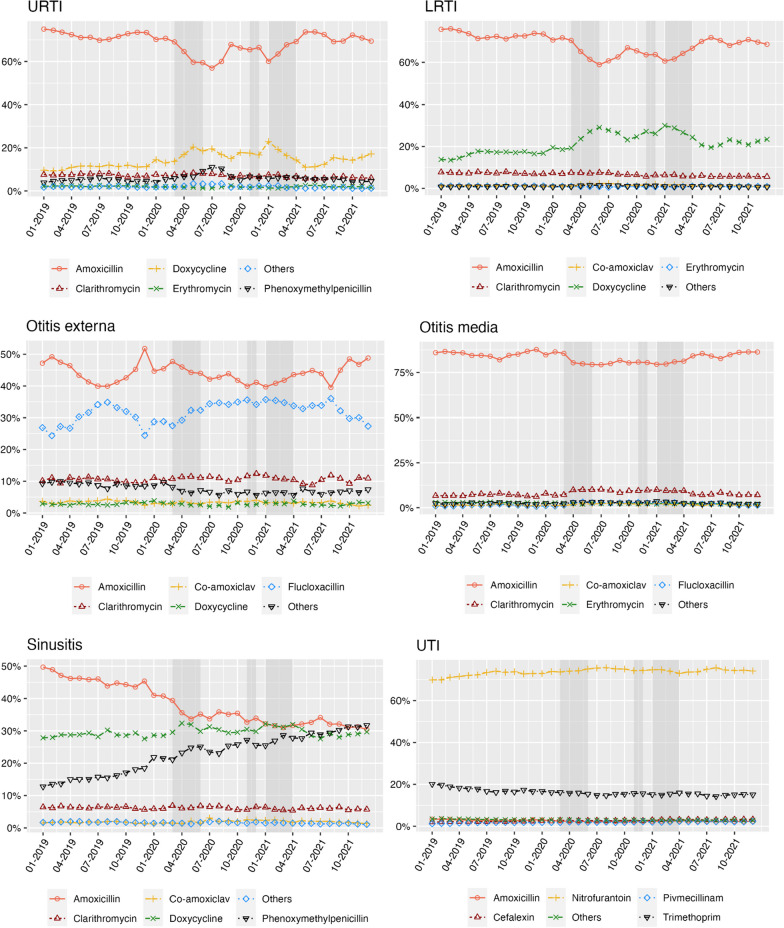
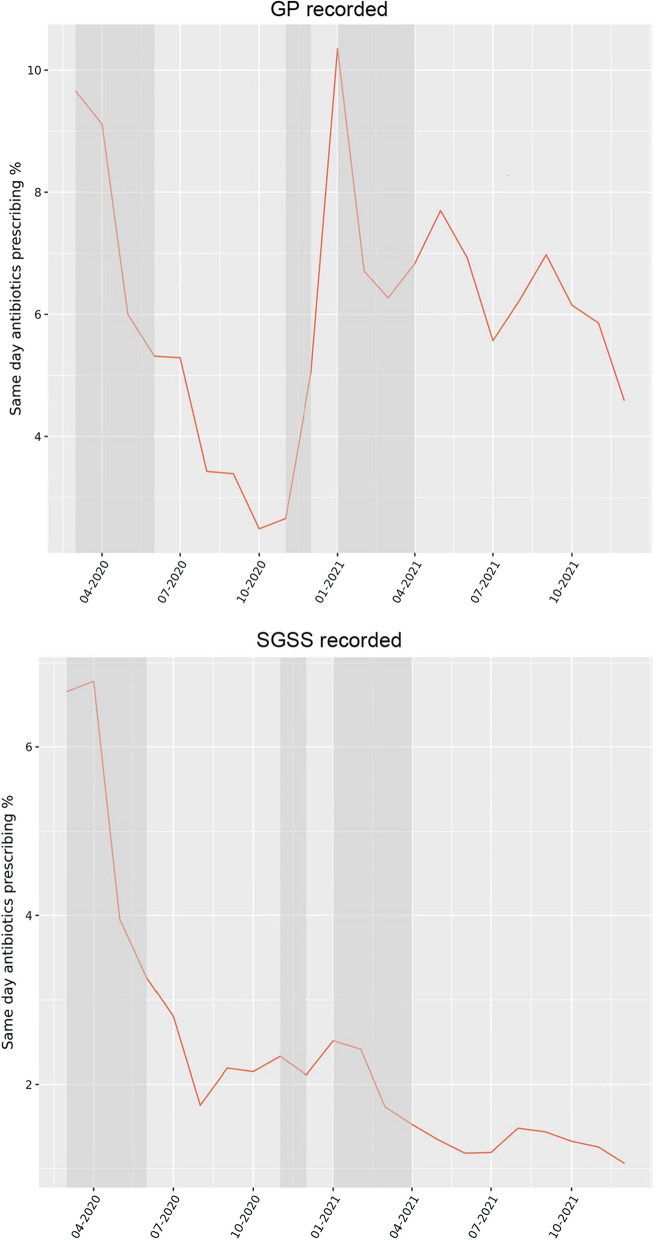
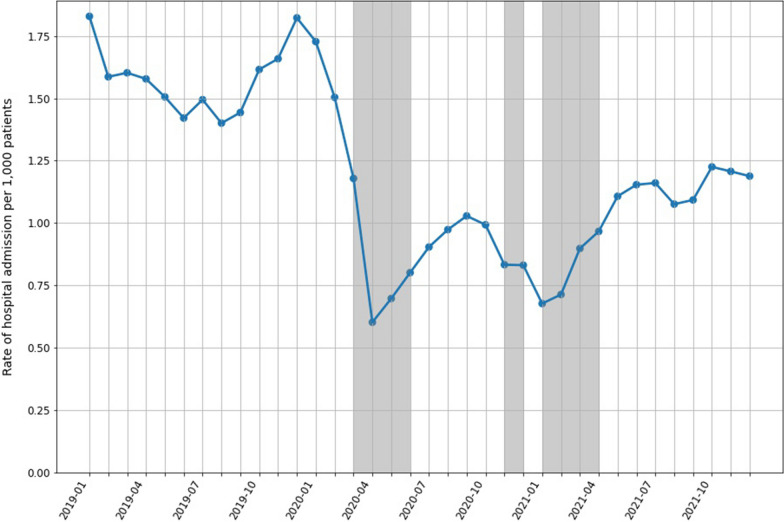
Records from 24 million patients were included. The rate of infection-related consultations fell for all infections (mean reduction of 39% in 2020 compared to 2019 mean rate), except for UTI which remained stable. Modelling infection-related consultation rates highlighted this with an incidence rate ratio of 0.44 (95% CI 0.36-0.53) for incident consultations and 0.43 (95% CI 0.33-0.54) for prevalent consultations. Lower respiratory tract infections (LRTI) saw the largest reduction of 0.11 (95% CI 0.07-0.17). Antibiotic prescribing rates fell with a mean reduction of 118.4 items per 1000 patients in 2020, returning to pre-pandemic rates by summer 2021. Prescribing for LRTI decreased 20% and URTI increased 15.9%. Over 60% of antibiotics were issued without an associated same-day infection code, which increased during the pandemic. Infection-related hospitalisations reduced (by 62%), with the largest reduction observed for pneumonia infections (72.9%). Same-day antibiotic prescribing for COVID-19 infection increased from 1 to 10.5% between the second and third national lockdowns and rose again during 2022.
Changes to consultations and hospital admissions may be driven by reduced transmission of non-COVID-19 infections due to reduced social mixing and lockdowns. Inconsistencies in coding practice emphasises the need for improvement to inform new antibiotic stewardship policies and prevent resistance to novel infections.
人们担心 COVID-19 大流行改变了初级保健中的常见感染的管理。本研究旨在评估大流行期间感染编码咨询率和抗生素的使用情况,以及任何变化如何影响临床结果。
在 NHS England 的批准下,使用 OpenSAFELY 平台进行了一项回顾性队列研究,分析了 2019 年 1 月至 2021 年 12 月期间英格兰的 GP 实践中常规收集的电子健康数据。使用感染编码咨询和抗生素处方来估计日历月的多个指标,包括年龄性别调整的处方率、按感染和抗生素类型进行的处方、感染咨询率、编码质量和 COVID-19 感染的当日抗生素处方率。中断时间序列 (ITS) 估计了 COVID-19 大流行对感染编码咨询率的影响。还估计了大流行对非 COVID-19 感染相关住院的影响。
共纳入 2400 万患者的记录。所有感染的感染相关咨询率均下降(与 2019 年平均水平相比,2020 年的平均降幅为 39%),除尿路感染外,尿路感染保持稳定。感染相关咨询率的建模突出了这一点,新发病例的发病率比为 0.44(95%CI 0.36-0.53),现患病例的发病率比为 0.43(95%CI 0.33-0.54)。下呼吸道感染 (LRTI) 的降幅最大,为 0.11(95%CI 0.07-0.17)。抗生素处方率下降,2020 年每 1000 名患者平均减少 118.4 项,2021 年夏季恢复到大流行前的水平。LRTI 处方减少 20%,URTI 增加 15.9%。超过 60%的抗生素在没有相关当日感染编码的情况下开具,这一比例在大流行期间有所增加。感染相关住院人数减少(减少 62%),肺炎感染的降幅最大(72.9%)。COVID-19 感染的当日抗生素处方从第二和第三次全国封锁期间的 1%增加到 10.5%,并在 2022 年再次上升。
咨询和住院人数的变化可能是由于社交活动减少和封锁导致非 COVID-19 感染的传播减少所致。编码实践中的不一致性强调了需要改进,以告知新的抗生素管理政策并防止对新感染的耐药性。