MMWR Morb Mortal Wkly Rep. 2020 Sep 11;69(36):1250-1257. doi: 10.15585/mmwr.mm6936a4.
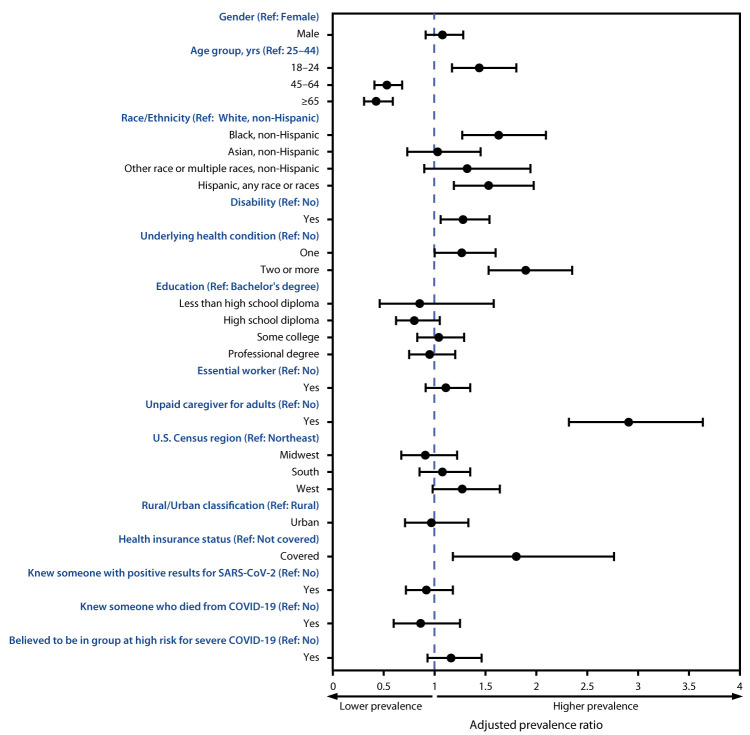
Temporary disruptions in routine and nonemergency medical care access and delivery have been observed during periods of considerable community transmission of SARS-CoV-2, the virus that causes coronavirus disease 2019 (COVID-19) (1). However, medical care delay or avoidance might increase morbidity and mortality risk associated with treatable and preventable health conditions and might contribute to reported excess deaths directly or indirectly related to COVID-19 (2). To assess delay or avoidance of urgent or emergency and routine medical care because of concerns about COVID-19, a web-based survey was administered by Qualtrics, LLC, during June 24-30, 2020, to a nationwide representative sample of U.S. adults aged ≥18 years. Overall, an estimated 40.9% of U.S. adults have avoided medical care during the pandemic because of concerns about COVID-19, including 12.0% who avoided urgent or emergency care and 31.5% who avoided routine care. The estimated prevalence of urgent or emergency care avoidance was significantly higher among the following groups: unpaid caregivers for adults* versus noncaregivers (adjusted prevalence ratio [aPR] = 2.9); persons with two or more selected underlying medical conditions versus those without those conditions (aPR = 1.9); persons with health insurance versus those without health insurance (aPR = 1.8); non-Hispanic Black (Black) adults (aPR = 1.6) and Hispanic or Latino (Hispanic) adults (aPR = 1.5) versus non-Hispanic White (White) adults; young adults aged 18-24 years versus adults aged 25-44 years (aPR = 1.5); and persons with disabilities versus those without disabilities (aPR = 1.3). Given this widespread reporting of medical care avoidance because of COVID-19 concerns, especially among persons at increased risk for severe COVID-19, urgent efforts are warranted to ensure delivery of services that, if deferred, could result in patient harm. Even during the COVID-19 pandemic, persons experiencing a medical emergency should seek and be provided care without delay (3).
在 SARS-CoV-2 病毒(引起 2019 年冠状病毒病(COVID-19)的病毒)社区传播程度较高的时期,已经观察到常规和非紧急医疗服务的获取和提供出现暂时中断(1)。然而,医疗服务的延迟或避免可能会增加与可治疗和可预防的健康状况相关的发病率和死亡率风险,并可能直接或间接地导致与 COVID-19 相关的报告死亡人数增加(2)。为了评估因对 COVID-19 的担忧而延迟或避免紧急或常规医疗服务,一家名为 Qualtrics, LLC 的公司于 2020 年 6 月 24 日至 30 日期间,对全美年龄在 18 岁及以上的成年人进行了一项基于网络的调查。总体而言,估计有 40.9%的美国成年人因对 COVID-19 的担忧而在大流行期间避免了医疗服务,其中 12.0%避免了紧急或紧急护理,31.5%避免了常规护理。以下人群中,紧急或紧急护理回避的估计患病率明显更高:成年非护理人员的无薪照顾者(调整后的患病率比[adjusted prevalence ratio, aPR]为 2.9);有两种或两种以上选定的基础疾病的人与没有这些疾病的人(aPR 为 1.9);有医疗保险的人与没有医疗保险的人(aPR 为 1.8);非西班牙裔黑人(黑人)成年人(aPR 为 1.6)和西班牙裔或拉丁裔(西班牙裔)成年人(aPR 为 1.5)与非西班牙裔白人(白人)成年人;18-24 岁的年轻人与 25-44 岁的成年人(aPR 为 1.5);以及有残疾的人与没有残疾的人(aPR 为 1.3)。鉴于因对 COVID-19 的担忧而广泛报告医疗服务回避的情况,尤其是在那些有更高的 COVID-19 严重风险的人群中,迫切需要采取紧急措施,确保提供服务,如果延迟提供,可能会导致患者受到伤害。即使在 COVID-19 大流行期间,经历医疗紧急情况的人也应毫不拖延地寻求和获得护理(3)。