de Toledo Ana Renata Pinto, Caetano Higor Arruda, Skupien Jovito Adiel, Boeck Carina Rodrigues, Fiori Humberto, da Silva Rosane Souza
Laboratório de Neuroquímica e Psicofarmacologia, Escola de Ciências da Saúde e da Vida, Pontifícia Universidade Católica do Rio Grande do Sul, Porto Alegre, RS, Brazil.
Programa de Pós-Graduação em Pediatria e Saúde da Criança, Escola de Medicina, Pontifícia Universidade Católica do Rio Grande do Sul, Porto Alegre, RS, Brazil.
Mol Cell Pediatr. 2023 Sep 18;10(1):13. doi: 10.1186/s40348-023-00166-2.
Scientific scrutiny has proved the safety and benefits of caffeine to treat apnoea of prematurity (AOP). However, there is no consensus on the effects of this treatment on sleep, especially considering the key role of adenosine and early brain development for sleep maturation. We systematically reviewed studies with sleep as a primary and/or secondary outcome or any mention of sleep parameters in the context of caffeine treatment for AOP.
We performed a systematic search of PubMed, Web of Science and the Virtual Health Library from inception to 7 September 2022 to identify studies investigating the short- and long-term effects of caffeine to treat AOP on sleep parameters. We used the PIC strategy considering preterm infants as the Population, caffeine for apnoea as the Intervention and no or other intervention other than caffeine as the Comparison. We registered the protocol on PROSPERO (CRD42021282536).
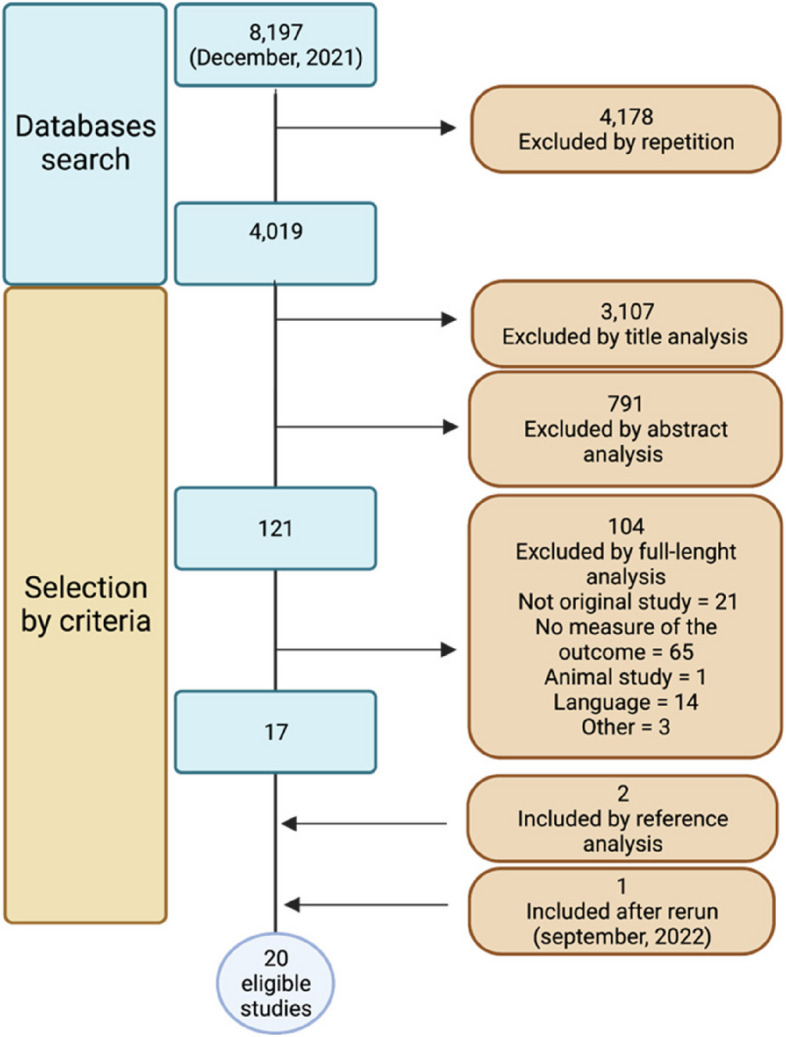
Of 4019 studies, we deemed 20, including randomised controlled trials and follow-up and observational studies, to be eligible for our systematic review. The analysed sleep parameters, the evaluation phase and the instruments for sleep assessment varied considerably among the studies. The main findings can be summarised as follows: (i) most of the eligible studies in this systematic review indicate that caffeine used to treat AOP seems to have no effect on key sleep parameters and (ii) the effects on sleep when caffeine is administered earlier, at higher doses or for longer periods than the most common protocol have not been investigated. There is a possible correlation between the caffeine concentration and period of exposure and negative sleep quality, but the sleep assessment protocols used in the included studies did not have high-quality standards and could not provide good evidence.
Sleep quality is an important determinant of health, and better investments in research with adequate sleep assessment tools are necessary to guarantee the ideal management of children who were born preterm.
科学审查已证明咖啡因治疗早产儿呼吸暂停(AOP)的安全性和益处。然而,对于这种治疗对睡眠的影响尚无共识,尤其是考虑到腺苷和早期大脑发育对睡眠成熟的关键作用。我们系统回顾了以睡眠作为主要和/或次要结局,或在咖啡因治疗AOP背景下提及任何睡眠参数的研究。
我们对PubMed、科学网和虚拟健康图书馆进行了系统检索,检索时间从数据库创建至2022年9月7日,以确定研究咖啡因治疗AOP对睡眠参数短期和长期影响的研究。我们采用PIC策略,将早产儿作为研究对象,将用于呼吸暂停的咖啡因作为干预措施,将无咖啡因或除咖啡因外的其他干预措施作为对照。我们在国际前瞻性系统评价注册库(PROSPERO,注册号:CRD42021282536)上登记了研究方案。
在4019项研究中,我们认为20项研究符合系统评价的纳入标准,包括随机对照试验、随访研究和观察性研究。各研究中分析的睡眠参数、评估阶段和睡眠评估工具差异很大。主要研究结果可总结如下:(i)本系统评价中的大多数符合条件的研究表明,用于治疗AOP的咖啡因似乎对关键睡眠参数没有影响;(ii)尚未研究与最常用方案相比,更早、更高剂量或更长时间使用咖啡因对睡眠的影响。咖啡因浓度和暴露时间与睡眠质量差之间可能存在相关性,但纳入研究中使用的睡眠评估方案没有高质量标准,无法提供充分证据。
睡眠质量是健康的重要决定因素,有必要更好地投入使用适当睡眠评估工具的研究,以确保对早产儿进行理想管理。