
PAK4基因沉默与工程化细胞外囊泡的免疫原性光疗之间的抗肿瘤协同作用。
Antitumor synergism between PAK4 silencing and immunogenic phototherapy of engineered extracellular vesicles.
作者信息
Lu Mei, Xing Haonan, Shao Wanxuan, Wu Pengfei, Fan Yuchuan, He Huining, Barth Stefan, Zheng Aiping, Liang Xing-Jie, Huang Yuanyu
机构信息
Advanced Research Institute of Multidisciplinary Science, School of Life Science, School of Medical Technology, Key Laboratory of Molecular Medicine and Biotherapy, Key Laboratory of Medical Molecule Science and Pharmaceutics Engineering, Beijing Institute of Technology, Beijing 100081, China.
Chinese Academy of Sciences (CAS) Key Laboratory for Biomedical Effects of Nanomaterials and Nanosafety, CAS Center for Excellence in Nanoscience, National Center for Nanoscience and Technology of China, Beijing 100190, China.
出版信息
Acta Pharm Sin B. 2023 Sep;13(9):3945-3955. doi: 10.1016/j.apsb.2023.03.020. Epub 2023 Mar 29.
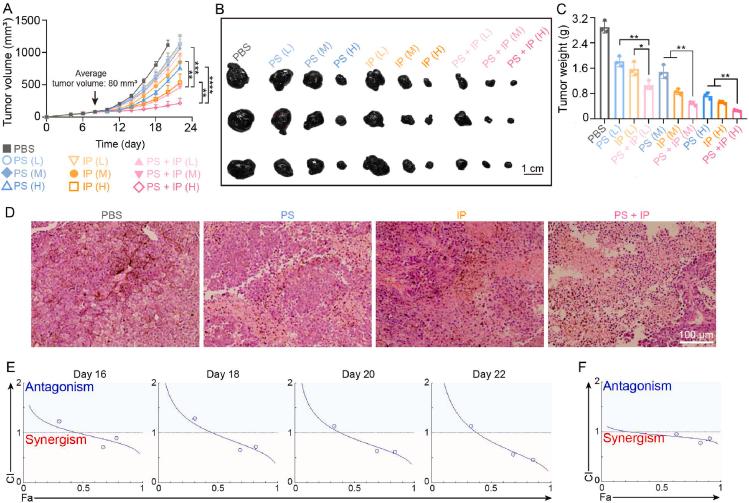
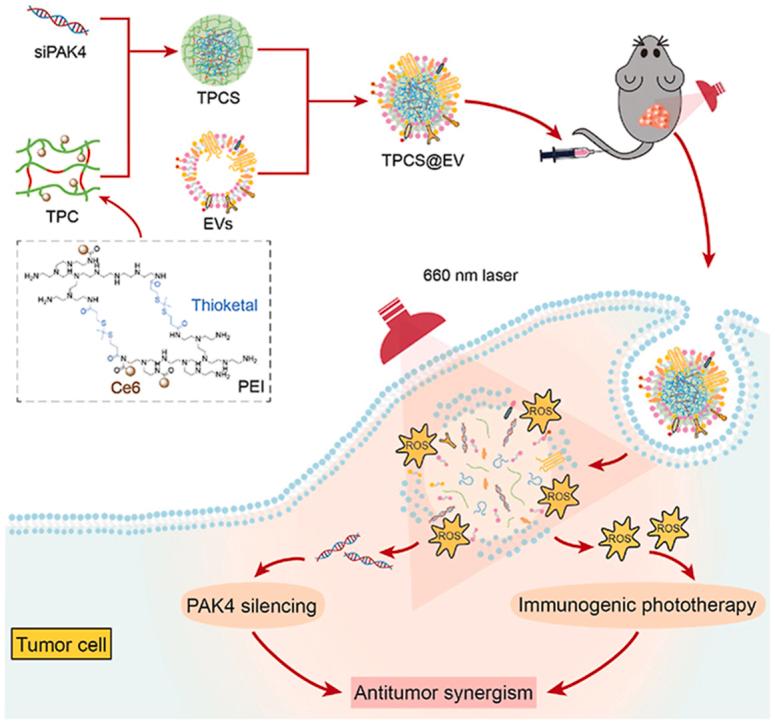
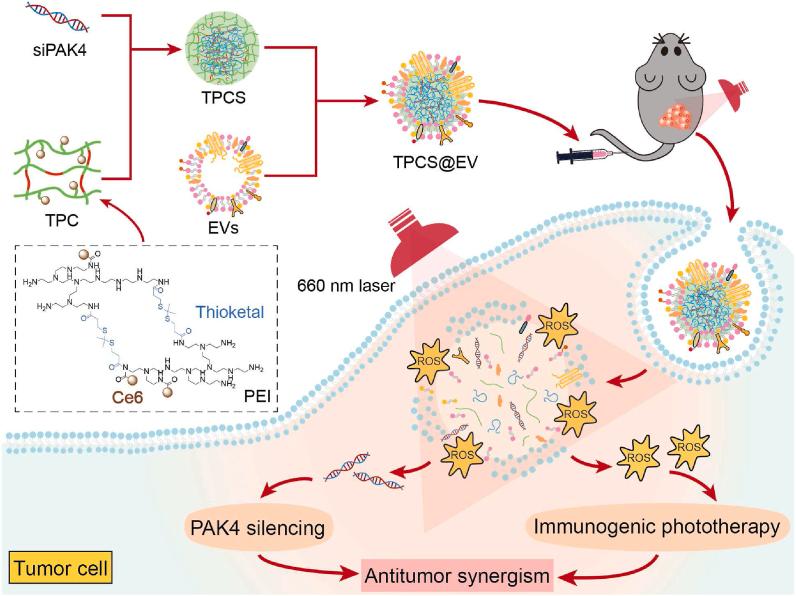
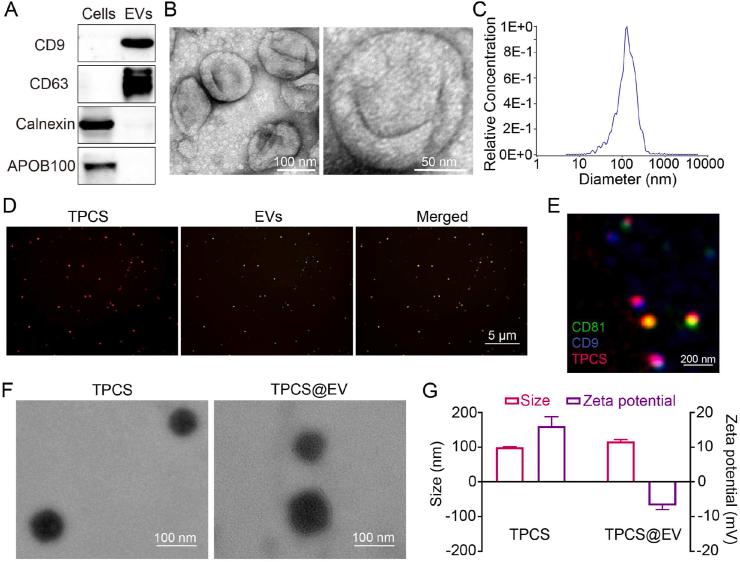
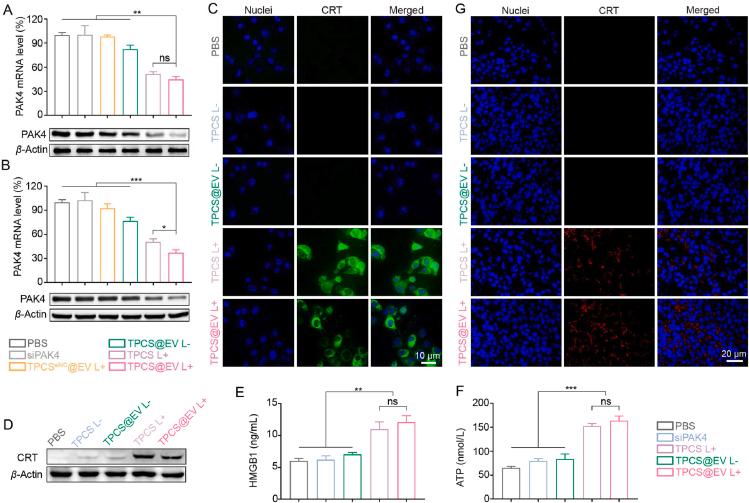
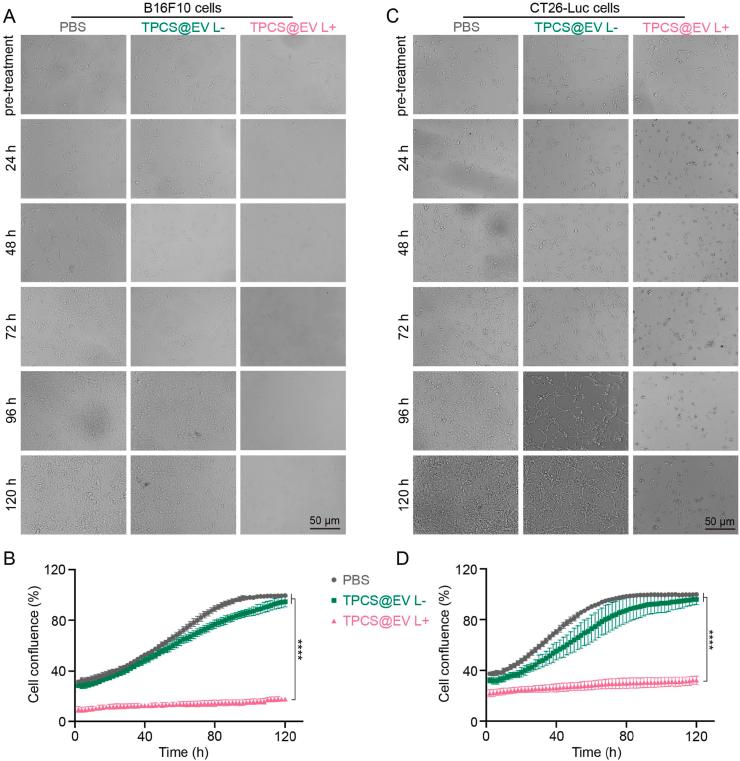
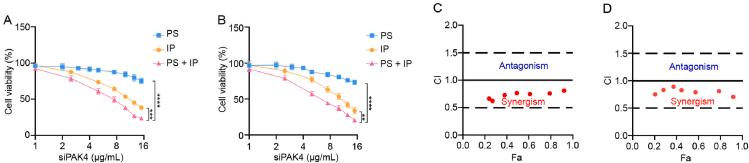
Immunotherapy has revolutionized the landscape of cancer treatment. However, single immunotherapy only works well in a small subset of patients. Combined immunotherapy with antitumor synergism holds considerable potential to boost the therapeutic outcome. Nevertheless, the synergistic, additive or antagonistic antitumor effects of combined immunotherapies have been rarely explored. Herein, we established a novel combined cancer treatment modality by synergizing p21-activated kinase 4 (PAK4) silencing with immunogenic phototherapy in engineered extracellular vesicles (EVs) that were fabricated by coating M1 macrophage-derived EVs on the surface of the nano-complex cores assembled with siRNA against PAK4 and a photoactivatable polyethyleneimine. The engineered EVs induced potent PAK4 silencing and robust immunogenic phototherapy, thus contributing to effective antitumor effects and . Moreover, the antitumor synergism of the combined treatment was quantitatively determined by the CompuSyn method. The combination index (CI) and isobologram results confirmed that there was an antitumor synergism for the combined treatment. Furthermore, the dose reduction index (DRI) showed favorable dose reduction, revealing lower toxicity and higher biocompatibility of the engineered EVs. Collectively, the study presents a synergistically potentiated cancer treatment modality by combining PAK4 silencing with immunogenic phototherapy in engineered EVs, which is promising for boosting the therapeutic outcome of cancer immunotherapy.
免疫疗法彻底改变了癌症治疗的格局。然而,单一免疫疗法仅在一小部分患者中效果良好。具有抗肿瘤协同作用的联合免疫疗法在提高治疗效果方面具有巨大潜力。尽管如此,联合免疫疗法的协同、相加或拮抗抗肿瘤作用却鲜有研究。在此,我们通过将p21激活激酶4(PAK4)沉默与免疫原性光疗在工程化细胞外囊泡(EVs)中协同作用,建立了一种新型联合癌症治疗模式。这些工程化EVs是通过将M1巨噬细胞衍生的EVs包被在由针对PAK4的小干扰RNA(siRNA)和可光激活的聚乙烯亚胺组装而成的纳米复合核心表面而制备的。工程化EVs诱导了有效的PAK4沉默和强大的免疫原性光疗,从而产生有效的抗肿瘤作用。此外,通过CompuSyn方法定量测定了联合治疗的抗肿瘤协同作用。联合指数(CI)和等效线图结果证实联合治疗存在抗肿瘤协同作用。此外,剂量降低指数(DRI)显示出良好的剂量降低效果,表明工程化EVs具有较低的毒性和较高的生物相容性。总体而言,该研究通过在工程化EVs中将PAK4沉默与免疫原性光疗相结合,提出了一种协同增强的癌症治疗模式,有望提高癌症免疫治疗的疗效。
 Zotero 插件