Yang Hongjie, Liu Jiafei, Jiang Peishi, Li Peng, Zhou Yuanda, Zhang Zhichun, Zeng Qingsheng, Wang Min, Xiao Luciena Xiao, Zhang Xipeng, Sun Yi, Zhu Siwei
Nankai University, Tianjin, China.
Department of Colorectal Surgery, Tianjin Union Medical Center, Tianjin, China.
Int J Genomics. 2023 Sep 7;2023:9942663. doi: 10.1155/2023/9942663. eCollection 2023.
This study aimed to explore the genes regulating lymph node metastasis in colorectal cancer (CRC) and to clarify their relationship with tumor immune cell infiltration and patient prognoses.
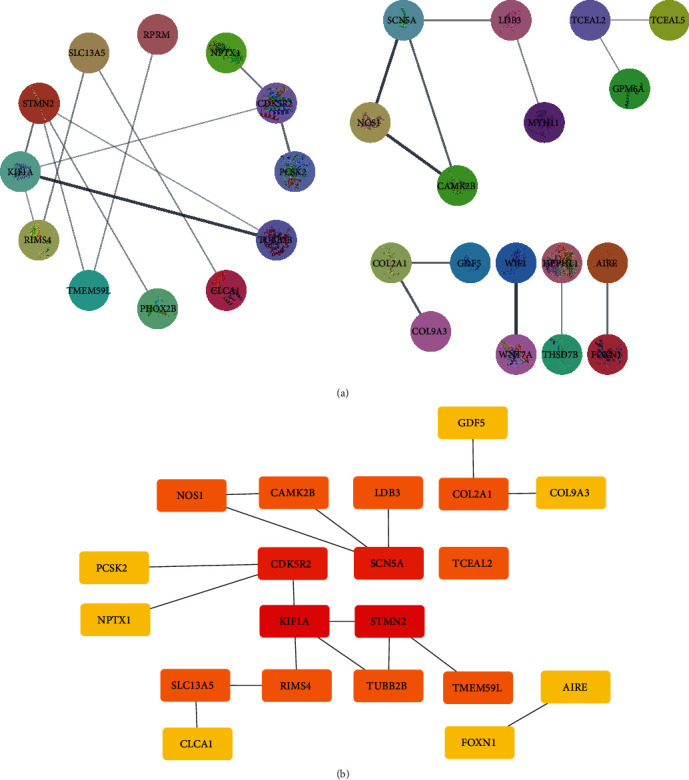
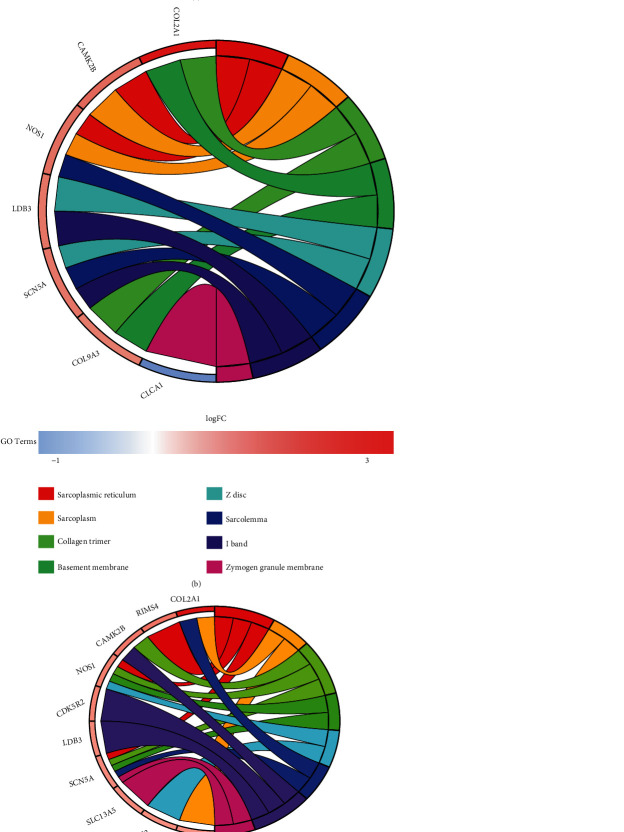
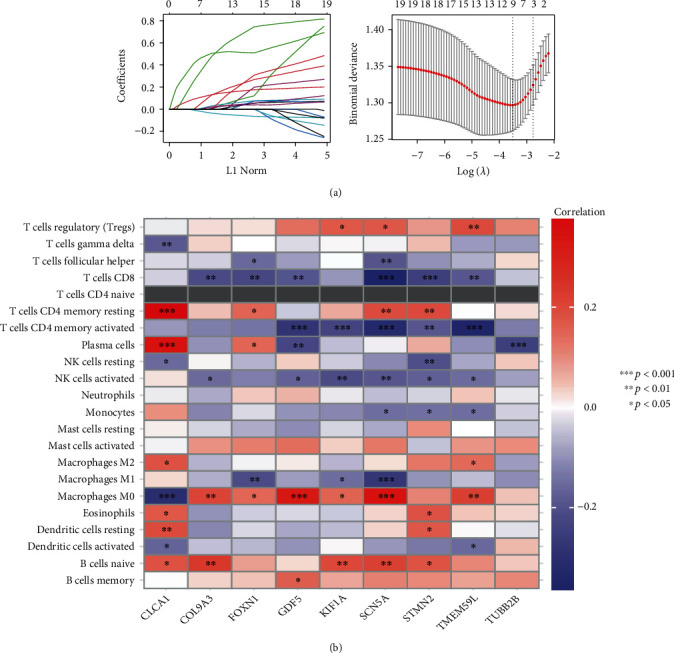
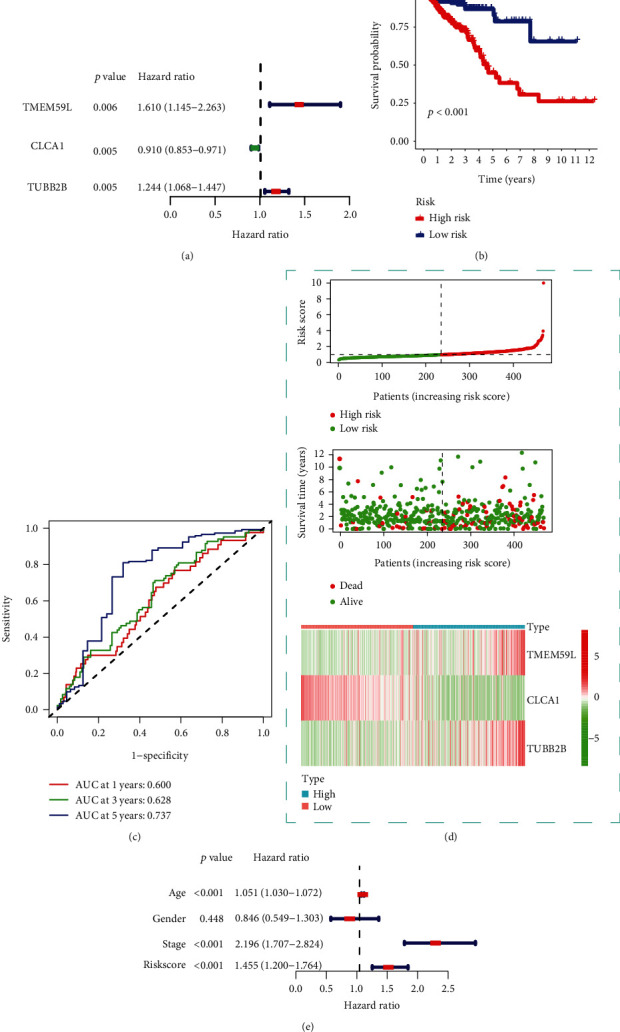
The data sets of CRC patients were collected through the Cancer Gene Atlas database; the differentially expressed genes (DEGs) associated with CRC lymph node metastasis were screened; a protein-protein interaction (PPI) network was constructed; the top 20 hub genes were selected; the Gene Ontology functions and the Kyoto Encyclopedia of Genes and Genomes pathways were enriched and analyzed. The Least Absolute Shrinkage and Selection Operator (LASSO) regression method was employed to further screen the characteristic genes associated with CRC lymph node metastasis in 20 hub genes, exploring the correlation between the characteristic genes and immune cell infiltration, conducting a univariate COX analysis on the characteristic genes, obtaining survival-related genes, constructing a risk score formula, conducting a Kaplan-Meier analysis based on the risk score formula, and performing a multivariate COX regression analysis on the clinical factors and risk scores.
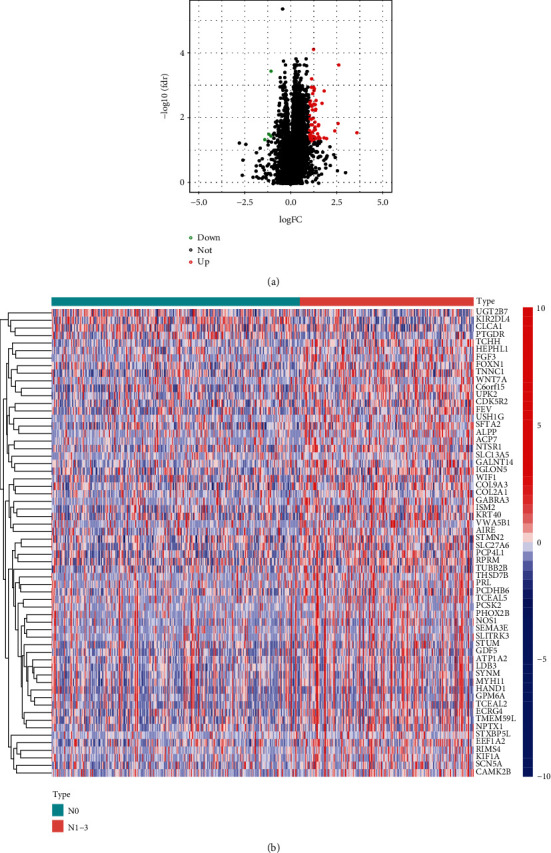
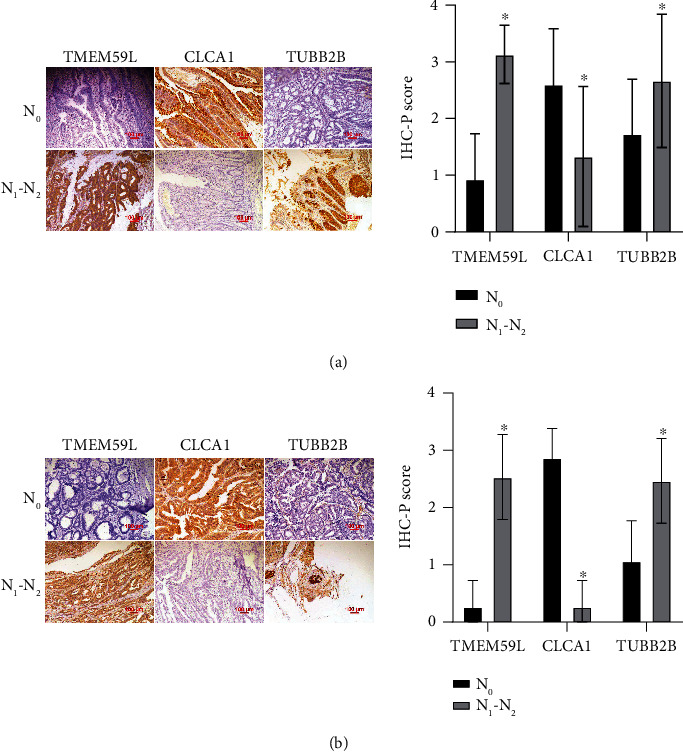
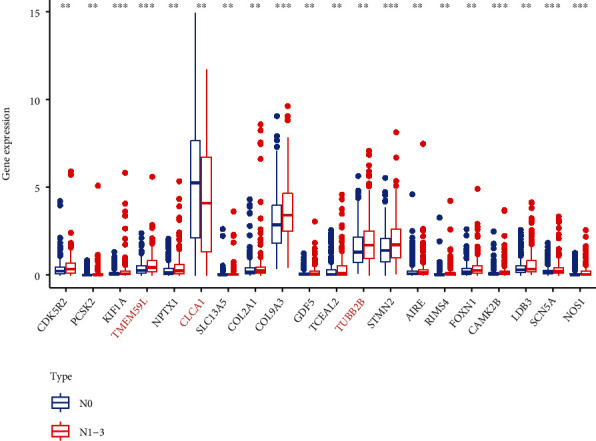
A total of 62 DEGs associated with CRC lymph node metastasis were obtained. Among the 20 hub genes identified via PPI, only calcium-activated chloride channel regulator 1 (CLCA1) expression was down-regulated in lymph node metastasis, and the rest were up-regulated. A total of nine characteristic genes associated with CRC lymph node metastasis (KIF1A, TMEM59L, CLCA1, COL9A3, GDF5, TUBB2B, STMN2, FOXN1, and SCN5A) were screened using the LASSO regression method. The nine characteristic genes were significantly related to different kinds of immune cell infiltration, from which three survival-related genes (TMEM59L, CLCA1, and TUBB2B) were screened. A multi-factor COX regression showed that the risk scores obtained from TMEM59L, CLCA1, and TUBB2B were independent prognostic factors. Immunohistochemical validation was performed in tissue samples from patients with rectal and colon cancer.
TMEM59L, CLCA1, and TUBB2B were independent prognostic factors associated with lymphatic metastasis of CRC.
本研究旨在探索调控结直肠癌(CRC)淋巴结转移的基因,并阐明它们与肿瘤免疫细胞浸润及患者预后的关系。
通过癌症基因图谱数据库收集CRC患者的数据集;筛选与CRC淋巴结转移相关的差异表达基因(DEGs);构建蛋白质-蛋白质相互作用(PPI)网络;选择前20个枢纽基因;对基因本体功能和京都基因与基因组百科全书通路进行富集和分析。采用最小绝对收缩和选择算子(LASSO)回归方法进一步筛选20个枢纽基因中与CRC淋巴结转移相关的特征基因,探索特征基因与免疫细胞浸润的相关性,对特征基因进行单因素COX分析,获得生存相关基因,构建风险评分公式,基于风险评分公式进行Kaplan-Meier分析,并对临床因素和风险评分进行多因素COX回归分析。
共获得62个与CRC淋巴结转移相关的DEGs。在通过PPI鉴定的20个枢纽基因中,只有钙激活氯通道调节因子1(CLCA1)的表达在淋巴结转移中下调,其余均上调。使用LASSO回归方法筛选出9个与CRC淋巴结转移相关的特征基因(KIF1A、TMEM59L、CLCA1、COL9A3、GDF5、TUBB2B、STMN2、FOXN1和SCN5A)。这9个特征基因与不同类型的免疫细胞浸润显著相关,从中筛选出3个生存相关基因(TMEM59L、CLCA1和TUBB2B)。多因素COX回归显示,从TMEM59L、CLCA1和TUBB2B获得的风险评分是独立的预后因素。在直肠癌和结肠癌患者的组织样本中进行了免疫组化验证。
TMEM59L、CLCA1和TUBB2B是与CRC淋巴转移相关的独立预后因素。