Butler Mark, D'Angelo Stefani, Ahn Heejoon, Chandereng Thevaa, Miller Danielle, Perrin Alexandra, Romain Anne-Marie N, Scatoni Ava, Friel Ciaran P, Cheung Ying-Kuen, Davidson Karina W
Institute of Health System Science, Feinstein Institutes for Medical Research, Northwell Health, New York, NY, United States.
Gordon F. Derner School of Psychology, Adelphi University, Garden City, NY, United States.
JMIR Form Res. 2023 Sep 18;7:e45510. doi: 10.2196/45510.
Fatigue is one of the most common symptoms treated in primary care and can lead to deficits in mental health and functioning. Light therapy can be an effective treatment for symptoms of fatigue; however, the feasibility, scalability, and individual-level heterogeneity of light therapy for fatigue are unknown.
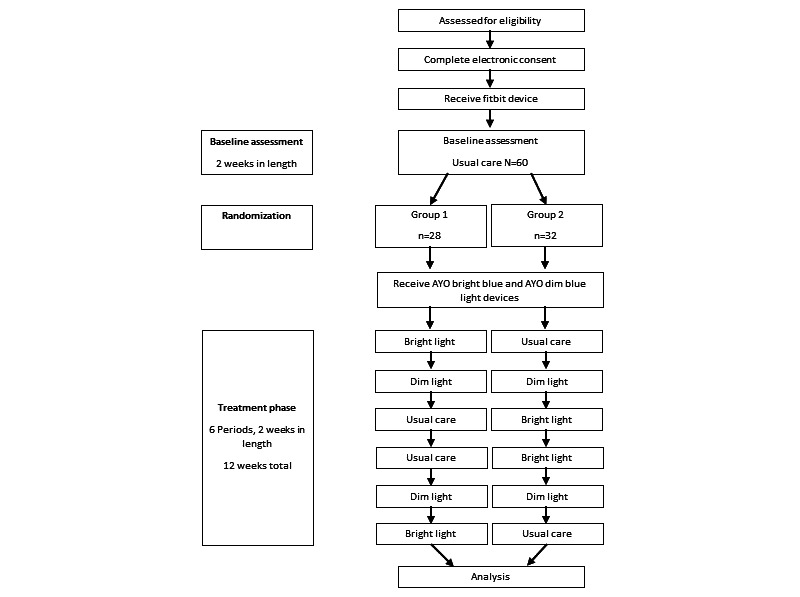
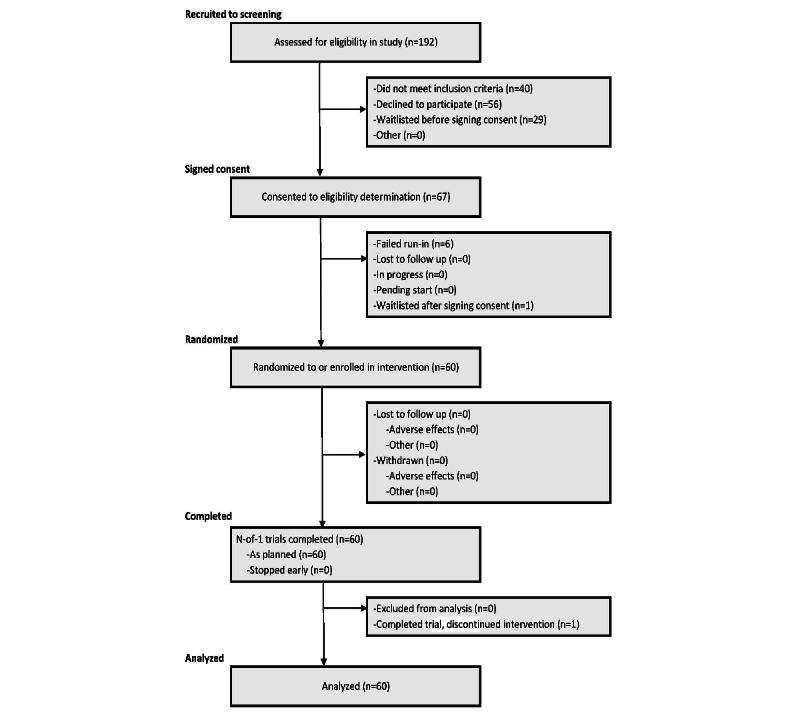
This study aimed to evaluate the feasibility, acceptability, and effectiveness of a series of personalized (N-of-1) interventions for the virtual delivery of bright light (BL) therapy and dim light (DL) therapy versus usual care (UC) treatment for fatigue in 60 participants.
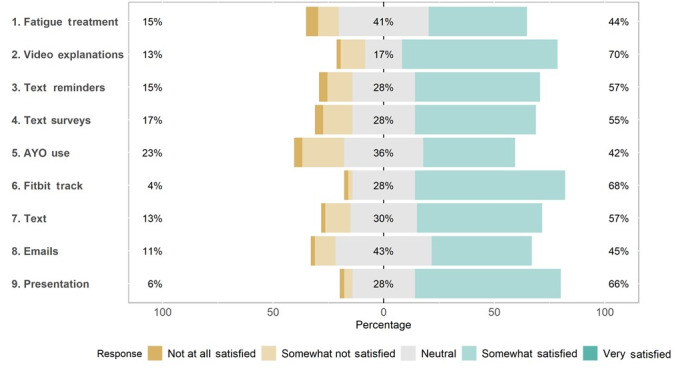
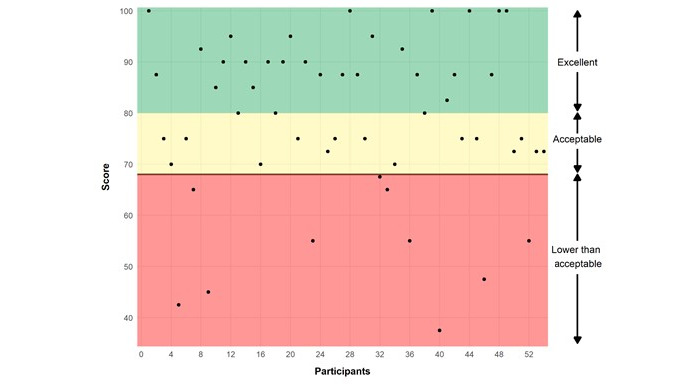
Participants completed satisfaction surveys comprising the System Usability Scale (SUS) and items assessing satisfaction with the components of the personalized trial. Symptoms of fatigue were measured using the Patient-Reported Outcomes Measurement Information System (PROMIS) daily, PROMIS weekly, and ecological momentary assessment (EMA) questionnaires delivered 3 times daily. Comparisons of fatigue between the BL, DL, and UC treatment periods were conducted using generalized linear mixed model analyses between participants and generalized least squares analyses within individual participants.
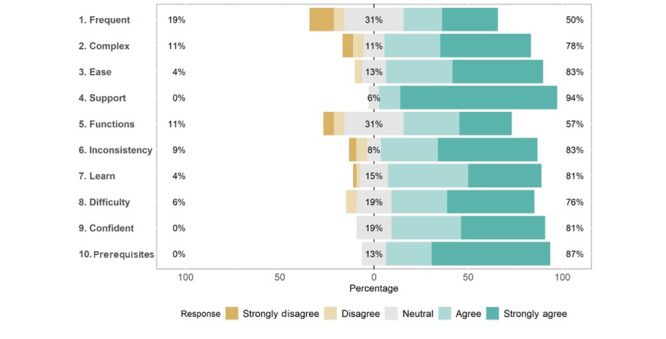
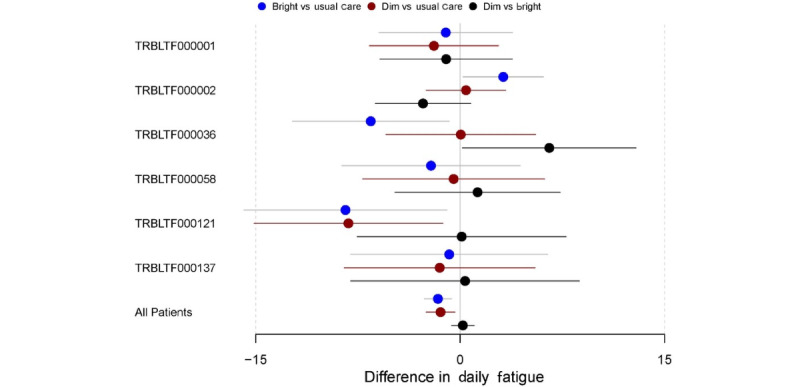
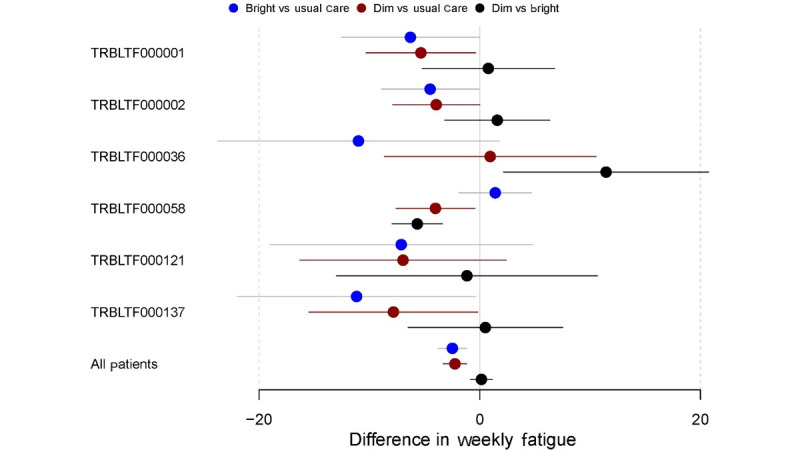
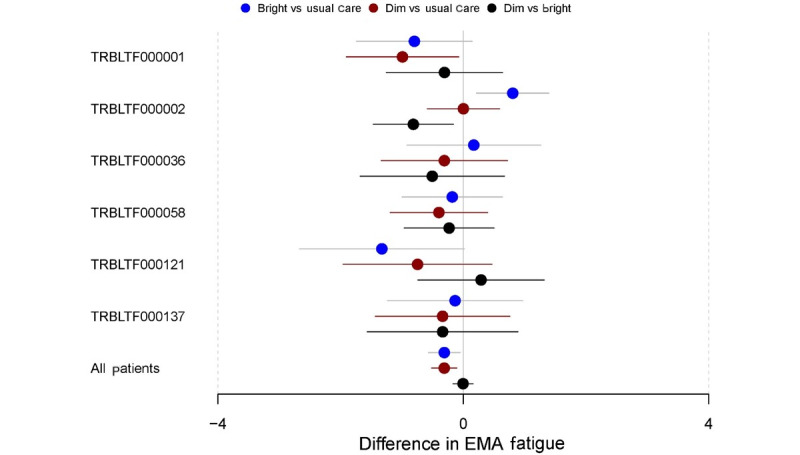
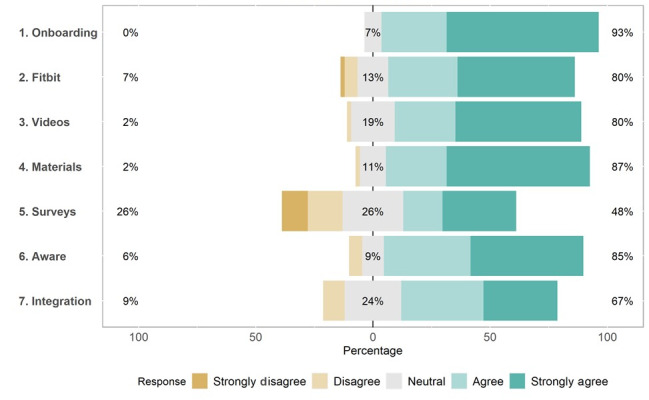
Participants rated the usability of the personalized trial as acceptable (average SUS score=78.9, SD 15.6), and 92% (49/53) of those who completed satisfaction surveys stated that they would recommend the trial to others. The levels of fatigue symptoms measured using the PROMIS daily fatigue measure were lower or improved in the BL (B=-1.63, 95% CI -2.63 to -0.63) and DL (B=-1.44, 95% CI -2.50 to -0.38) periods relative to UC. The treatment effects of BL and DL on the PROMIS daily measure varied among participants. Similar findings were demonstrated for the PROMIS weekly and EMA measures of fatigue symptoms.
The participant scores on the SUS and satisfaction surveys suggest that personalized N-of-1 trials of light therapy for fatigue symptoms are both feasible and acceptable. Both interventions produced significant (P<.05) reductions in participant-reported PROMIS and EMA fatigue symptoms relative to UC. However, the heterogeneity of these treatment effects across participants indicated that the effect of light therapy was not uniform. This heterogeneity along with high ratings of usability and satisfaction support the use of personalized N-of-1 research designs in evaluating the effect of light therapy on fatigue for each patient. Furthermore, the results of this trial provide additional support for the use of a series of personalized N-of-1 research trials.
ClinicalTrials.gov NCT04707846; https://clinicaltrials.gov/ct2/show/NCT04707846.
疲劳是初级保健中最常见的治疗症状之一,可导致心理健康和功能缺陷。光疗法可能是治疗疲劳症状的有效方法;然而,光疗法治疗疲劳的可行性、可扩展性和个体水平的异质性尚不清楚。
本研究旨在评估一系列个性化(单病例)干预措施的可行性、可接受性和有效性,这些干预措施用于虚拟提供强光(BL)疗法和弱光(DL)疗法,与常规护理(UC)治疗60名参与者的疲劳情况进行对比。
参与者完成了满意度调查,包括系统可用性量表(SUS)以及评估对个性化试验各组成部分满意度的项目。使用患者报告结局测量信息系统(PROMIS)每日测量、PROMIS每周测量以及每天3次发放的生态瞬时评估(EMA)问卷来测量疲劳症状。使用广义线性混合模型分析参与者之间以及个体参与者内部的广义最小二乘法分析,对BL、DL和UC治疗期间的疲劳情况进行比较。
参与者对个性化试验的可用性评价为可接受(平均SUS评分为78.9,标准差15.6),并且完成满意度调查的参与者中有92%(49/53)表示他们会向他人推荐该试验。相对于UC,在BL(B = -1.63,95%置信区间 -2.63至 -0.63)和DL(B = -1.44,95%置信区间 -2.50至 -0.38)期间,使用PROMIS每日疲劳测量方法测得的疲劳症状水平较低或有所改善。BL和DL对PROMIS每日测量的治疗效果在参与者之间存在差异。对于PROMIS每周测量和EMA疲劳症状测量也有类似发现。
参与者在SUS和满意度调查中的得分表明,针对疲劳症状的个性化单病例光疗法试验既可行又可接受。相对于UC,两种干预措施均使参与者报告的PROMIS和EMA疲劳症状显著(P <.05)降低。然而,这些治疗效果在参与者之间的异质性表明光疗法的效果并不一致。这种异质性以及高可用性和满意度评分支持在评估光疗法对每位患者疲劳的影响时使用个性化单病例研究设计。此外,该试验的结果为一系列个性化单病例研究试验的使用提供了额外支持。
ClinicalTrials.gov NCT04707846;https://clinicaltrials.gov/ct2/show/NCT04707846