Smilowska Katarzyna, van Wamelen Daniel J, Schoutens Antonius M C, Meinders Marjan J, Bloem Bastiaan R
Radboud University Medical Center, Donders Institute for Brain, Cognition and Behaviour, Department of Neurology, Nijmegen, Netherlands.
Institute of Psychiatry, Psychology & Neuroscience, Department of Basic & Clinical Neuroscience, Division of Neuroscience, King's College London, London, UK.
Parkinsons Dis. 2019 Jun 18;2019:1906271. doi: 10.1155/2019/1906271. eCollection 2019.
Blue light glasses have been introduced as a possible new treatment option to treat sleep disturbances in patients with Parkinson disease (PD). Assessing patient attitudes represents a key step in the road towards formal testing and introduction into clinical practice. Specifically, we aimed to assess how patients experience the use of blue light glasses, aiming to optimise compliance in upcoming clinical trials where these glasses will be tested for efficacy.
We invited 58 PD patients who had used the blue light glasses for at least one week on a daily basis to complete an online survey about their experiences and self-reported impact. For this purpose, the System Usability Scale was used, supplemented with additional questions about (side)effects. A total of 31 patients (53%) replied.
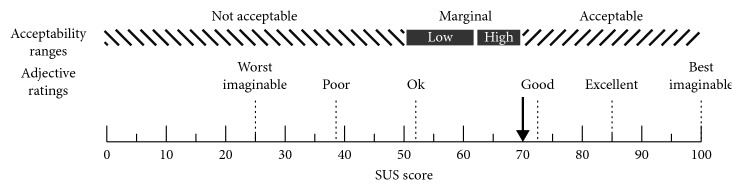
74% of respondents reported subjective improvements in night-time sleep, daytime sleepiness, depressive symptoms, motor functioning, or a combination thereof. The median score for the System Usability Scale (SUS; 0-100 range, higher scores indicating better performance) was 70.0. A total of 26 patients (84%) had an overall positive attitude towards the technique, with patients rating the glasses with an average score of 6.9 ± 2.0 (SD) out of 10. Except for one patient, all responders would like to continue using the glasses, mostly because they considered it a useful aid.
Blue light therapy appears to have a positive effect on sleep, mood, and motor symptoms in PD. PD patients had an overall positive attitude towards blue light glasses as treatment for sleep disorders.
蓝光眼镜已被作为一种可能的新治疗选择引入,用于治疗帕金森病(PD)患者的睡眠障碍。评估患者的态度是迈向正式测试并引入临床实践的关键一步。具体而言,我们旨在评估患者使用蓝光眼镜的体验,以期在即将开展的对这些眼镜进行疗效测试的临床试验中优化依从性。
我们邀请了58名每天使用蓝光眼镜至少一周的PD患者,让他们完成一项关于其体验和自我报告影响的在线调查。为此,使用了系统可用性量表,并补充了关于(副)作用的其他问题。共有31名患者(53%)回复。
74%的受访者报告在夜间睡眠、日间嗜睡、抑郁症状、运动功能或这些方面的综合情况有主观改善。系统可用性量表(SUS;范围为0 - 100,分数越高表明性能越好)的中位数为70.0。共有26名患者(84%)对该技术总体持积极态度,患者对眼镜的评分平均为6.9±2.0(标准差)(满分10分)。除一名患者外,所有回复者都希望继续使用眼镜,主要是因为他们认为这是一种有用的辅助工具。
蓝光疗法似乎对PD患者的睡眠、情绪和运动症状有积极影响。PD患者对将蓝光眼镜作为睡眠障碍的治疗方法总体持积极态度。