The Second Clinical Medical College, Gansu Province, Lanzhou University, Cheng-Guan District, No. 222 Tianshui Road (South), Lanzhou City, 730030, China.
The First Clinical Medical College, Lanzhou University, Lanzhou, 730030, China.
BMC Cancer. 2023 Sep 18;23(1):876. doi: 10.1186/s12885-023-11369-1.
Pancreatic cancer poses a serious medical problem worldwide. Countries in the Western Pacific Region are facing public health challenges from cancer. This study assesses the time trends of pancreatic cancer mortality in the Western Pacific Region from 1990 to 2019 and predicts its trend to 2044.
Mortality data were obtained from the Global Health Data Exchange. We used an age-period-cohort model to estimate age, period and birth cohort effects on pancreatic cancer mortality from 1990 to 2019 by calculating net drift, local drift, age-specific rate, period rate ratio, and cohort rate ratio. We also predict pancreatic cancer mortality to 2044 in Western Pacific countries.
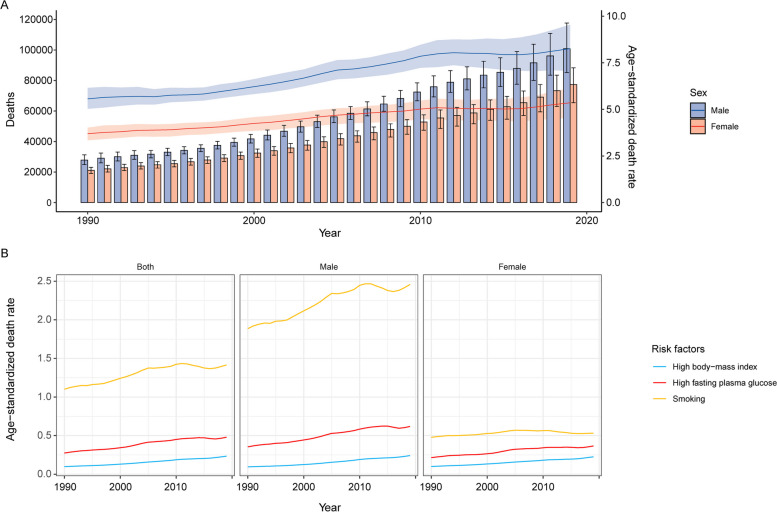
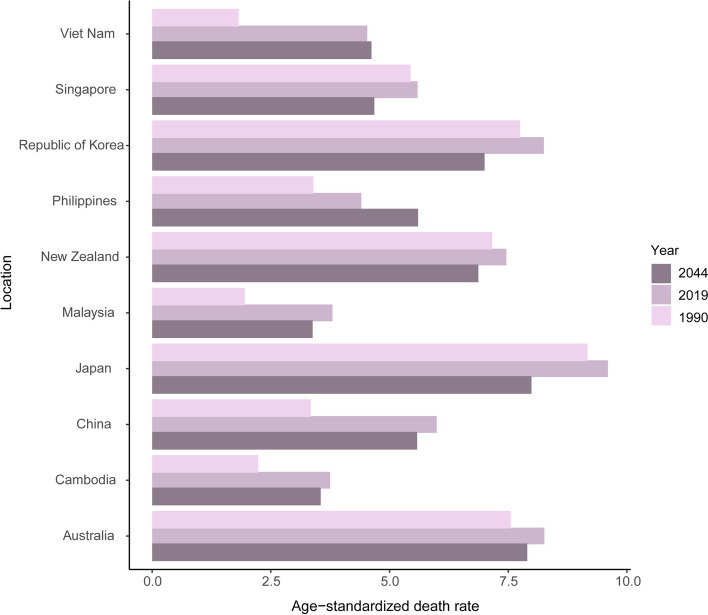
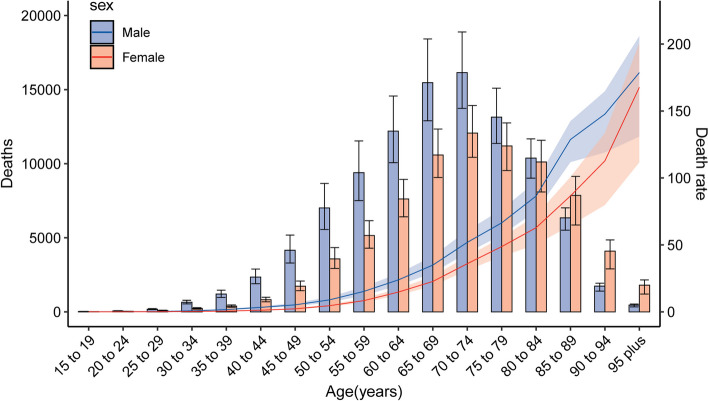
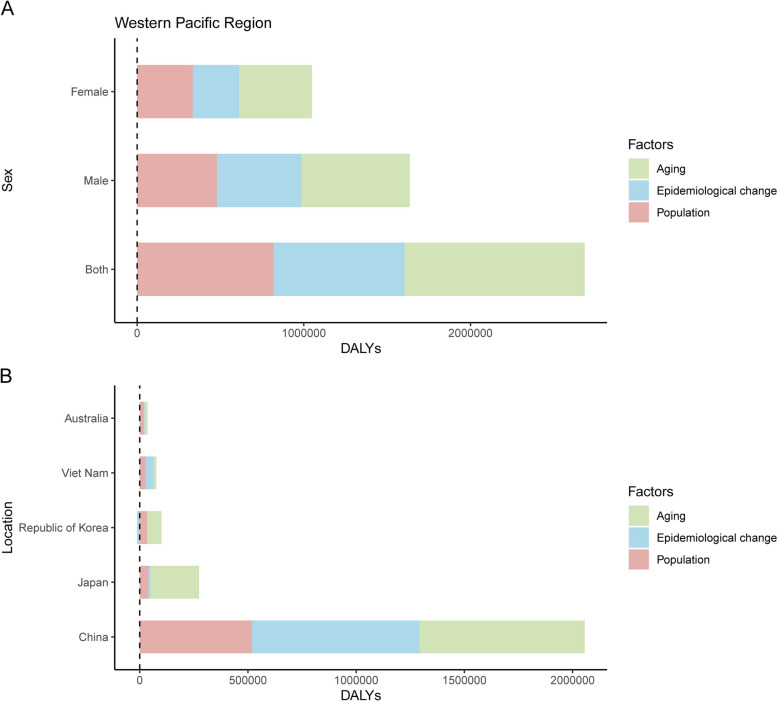
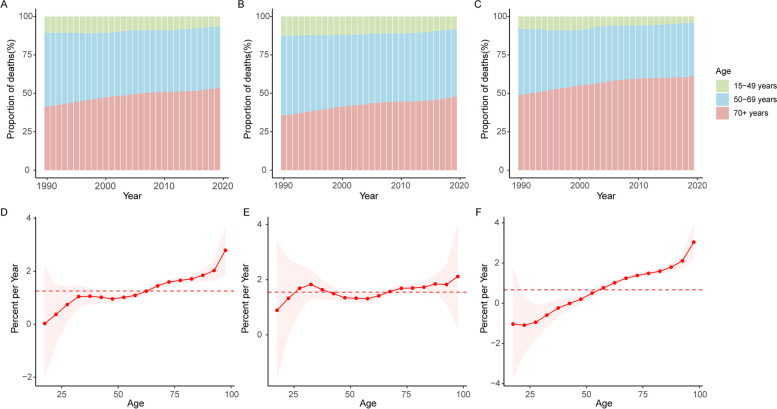
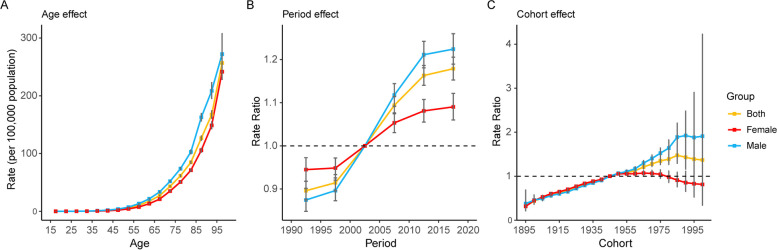
Overall, there were 178,276 (95% uncertain interval: 157,771 to 198,636) pancreatic cancer deaths in the Western Pacific Region in 2019, accounting for 33.6% of all deaths due to pancreatic cancer worldwide. There were significant increases in pancreatic cancer disability-adjusted life years between 1990 and 2019 in the Western Pacific Region, mainly due to population growth and aging. Pancreatic cancer mortality increased with age. The period effect showed an increasing trend of mortality for both sexes over the study period. Compared to the reference period (2000 to 2004), the rate ratio was elevated in both males and females in the period of 2015 to 2019. There was an overall increasing rate ratio from early birth cohorts to recent cohorts. Deaths may continue to increase in the next 25 years in the ten countries, while most countries have seen their age-standardized rate forecasts fall.
The mortality of pancreatic cancer is still high in the Western Pacific Region. Countries/territories should focus on pancreatic cancer prevention and early cancer screening in high-risk populations. Specific public health methods and policies aimed at reducing risk factors for pancreatic cancer are also needed.
胰腺癌在全球范围内构成严重的医学问题。西太平洋区域各国面临癌症带来的公共卫生挑战。本研究评估了 1990 年至 2019 年西太平洋区域胰腺癌死亡率的时间趋势,并预测了其至 2044 年的趋势。
死亡率数据来自全球卫生数据交换。我们使用年龄-时期-队列模型,通过计算净漂移、局部漂移、年龄特异性率、时期率比和队列率比,来评估 1990 年至 2019 年年龄、时期和出生队列对胰腺癌死亡率的影响。我们还预测了西太平洋国家 2044 年的胰腺癌死亡率。
2019 年,西太平洋区域共有 178276 例(95%不确定区间:157771 至 198636)胰腺癌死亡,占全球所有胰腺癌死亡的 33.6%。1990 年至 2019 年,西太平洋区域因胰腺癌导致的残疾调整生命年显著增加,主要归因于人口增长和老龄化。胰腺癌死亡率随年龄增长而增加。时期效应显示,在整个研究期间,男女死亡率均呈上升趋势。与参考时期(2000 年至 2004 年)相比,2015 年至 2019 年期间,男性和女性的率比均升高。整体上,从早期出生队列到最近的队列,比率呈上升趋势。在未来 25 年,10 个国家的死亡人数可能会继续增加,而大多数国家的年龄标准化率预测值将会下降。
西太平洋区域的胰腺癌死亡率仍然很高。各国/地区应注重高危人群的胰腺癌预防和早期癌症筛查。还需要采取具体的公共卫生方法和政策,以减少胰腺癌的风险因素。