The First Clinical Medical College, Lanzhou University, Lanzhou, China.
School of Stomatology, Lanzhou University, Lanzhou, China.
BMC Gastroenterol. 2022 Jun 3;22(1):279. doi: 10.1186/s12876-022-02362-2.
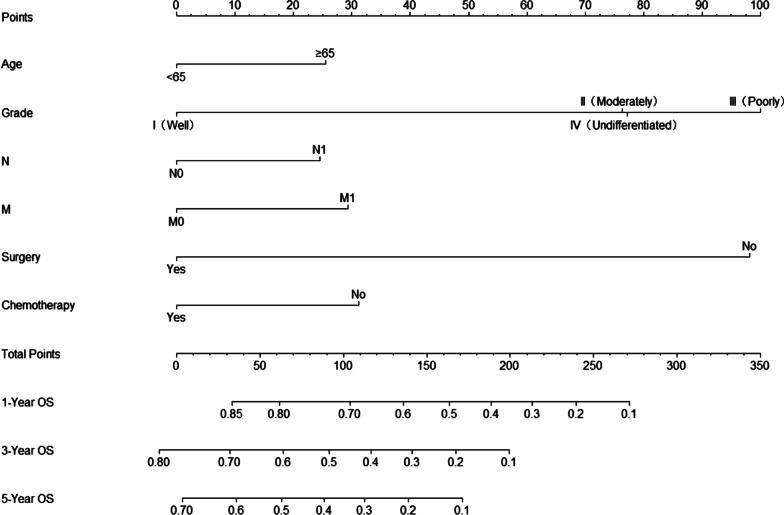
Pancreatic body tail carcinoma (PBTC) is a relatively few pancreatic cancer in clinical practice, and its specific clinicopathological features and prognosis have not been fully described. In this study, we aimed to create a nomogram to predict the overall survival (OS) of patients with advanced PBTC.
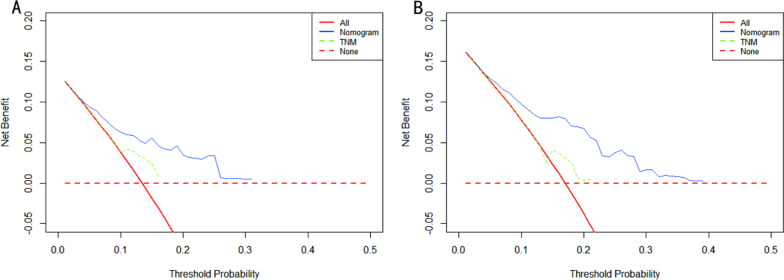
We extracted clinical and related prognostic data of advanced PBTC patients from 2000 to 2018 from the Surveillance, Epidemiology, and End Results database. Independent prognostic factors were selected using univariate and multivariate Cox analyses, and a nomogram was constructed using R software. The C-index, area under the curve (AUC) of receiver operating characteristic curves, calibration curves, and decision curve analysis (DCA) were used to assess the clinical utility of the nomogram. Finally, OS was assessed using the Kaplan-Meier method.
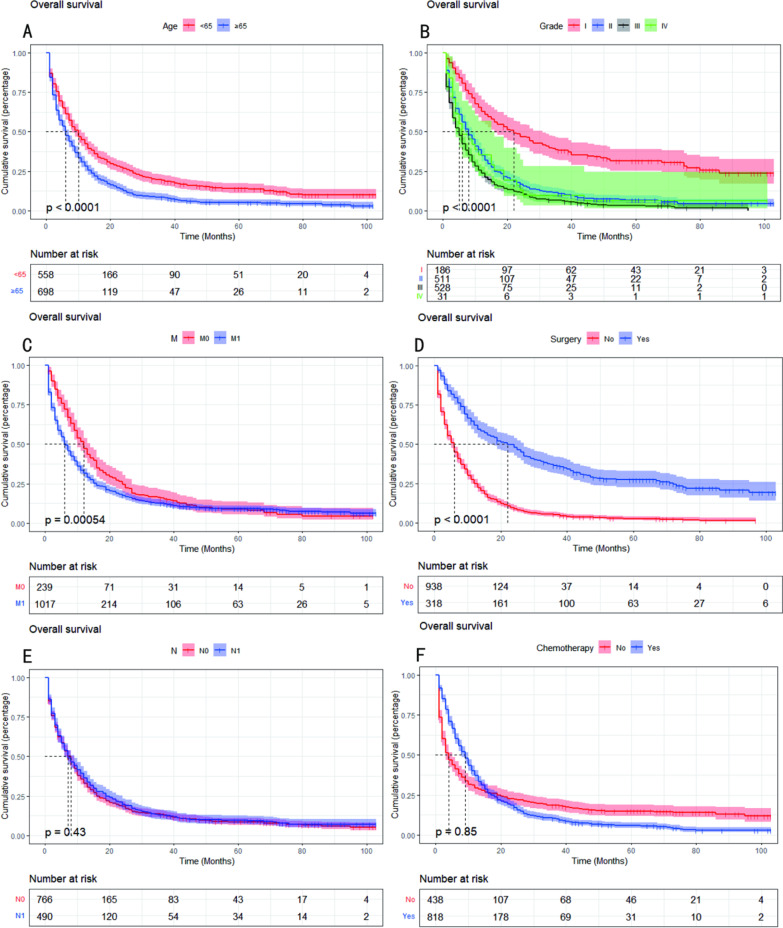
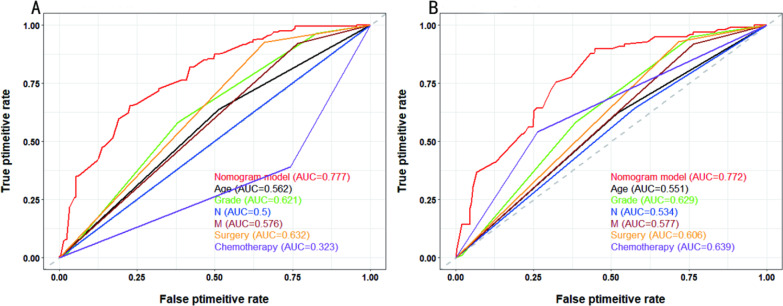
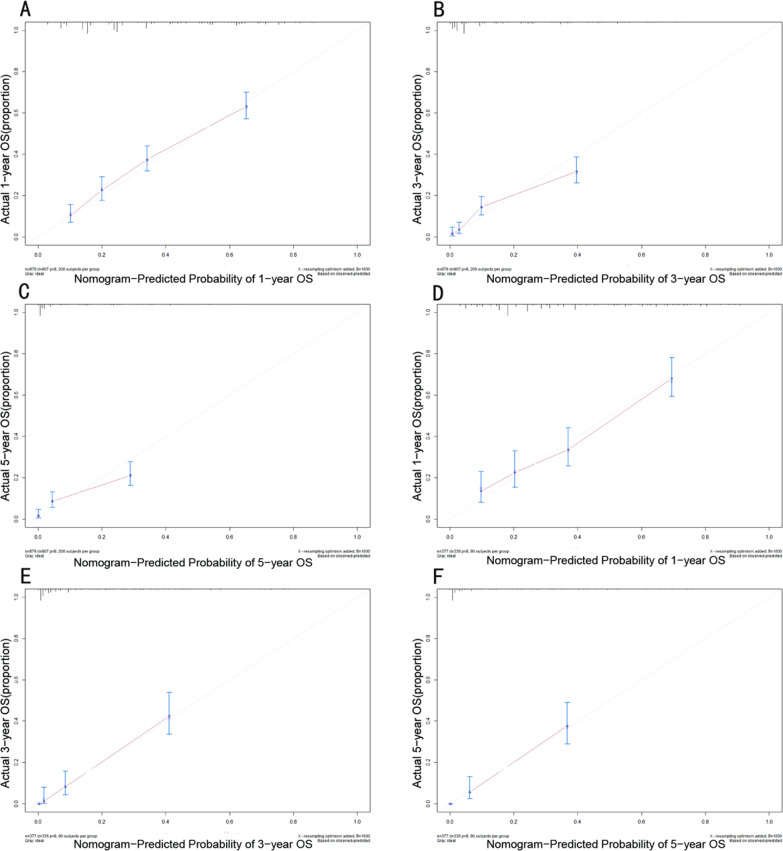
A total of 1256 patients with advanced PBTC were eventually included in this study. Age, grade, N stage, M stage, surgery, and chemotherapy were identified as independent risk factors using univariate and multivariate Cox regression analyses (p < 0.05). In the training cohort, the calibration index of the nomogram was 0.709, while the AUC values of the nomogram, age, grade, N stage, M stage, surgery, and chemotherapy were 0.777, 0.562, 0.621, 0.5, 0.576, 0.632, and 0.323, respectively. Meanwhile, in the validation cohort, the AUC values of the nomogram, age, grade, N stage, M stage, surgery, and chemotherapy were 0.772, 0.551, 0.629, 0.534, 0.577, 0.606, and 0.639, respectively. Good agreement of the model in the training and validation cohorts was demonstrated in the calibration and DCA curves. Univariate survival analysis showed a statistically significant effect of age, grade, M stage, and surgery on prognosis (p < 0.05).
Age, grade, M stage, and surgery were independently associated with OS, and the established nomogram was a visual tool to effectively predict OS in advanced PBTC patients.
胰腺体尾部癌(PBTC)是临床实践中相对较少见的胰腺癌,其具体的临床病理特征和预后尚未得到充分描述。本研究旨在建立一个列线图来预测晚期 PBTC 患者的总生存期(OS)。
我们从 2000 年至 2018 年从监测、流行病学和最终结果(SEER)数据库中提取晚期 PBTC 患者的临床和相关预后数据。使用单因素和多因素 Cox 分析选择独立的预后因素,并使用 R 软件构建列线图。C 指数、接收者操作特征曲线(ROC)下面积(AUC)、校准曲线和决策曲线分析(DCA)用于评估列线图的临床实用性。最后,使用 Kaplan-Meier 方法评估 OS。
本研究最终纳入了 1256 名晚期 PBTC 患者。单因素和多因素 Cox 回归分析显示,年龄、分级、N 分期、M 分期、手术和化疗是独立的危险因素(p<0.05)。在训练队列中,列线图的校准指数为 0.709,而列线图、年龄、分级、N 分期、M 分期、手术和化疗的 AUC 值分别为 0.777、0.562、0.621、0.5、0.576、0.632 和 0.323。同时,在验证队列中,列线图、年龄、分级、N 分期、M 分期、手术和化疗的 AUC 值分别为 0.772、0.551、0.629、0.534、0.577、0.606 和 0.639。校准和 DCA 曲线表明,模型在训练和验证队列中的一致性良好。单因素生存分析显示,年龄、分级、M 分期和手术对预后有统计学意义(p<0.05)。
年龄、分级、M 分期和手术与 OS 独立相关,建立的列线图是有效预测晚期 PBTC 患者 OS 的可视化工具。