Department of Endocrinology and Metabolism, Center for Microbiota and Immunological Diseases, Shanghai General Hospital, School of Medicine, Shanghai Jiao Tong University, Shanghai, China.
Department of Endocrinology and Metabolism, Changhai Hospital of Shanghai, Shanghai, China.
BMC Cancer. 2023 Sep 19;23(1):882. doi: 10.1186/s12885-023-11361-9.
Thyroid cancer (TC) is one of the most common endocrine malignancies, and its morbidity continues to rise. N-methyladenosine (mA) RNA methylation, an epigenetic modification, is an important regulator of gene expression in TC. Therefore, it's worth finding the characteristics and predictive value of the mA RNA methylation regulators in thyroid cancer (TC).
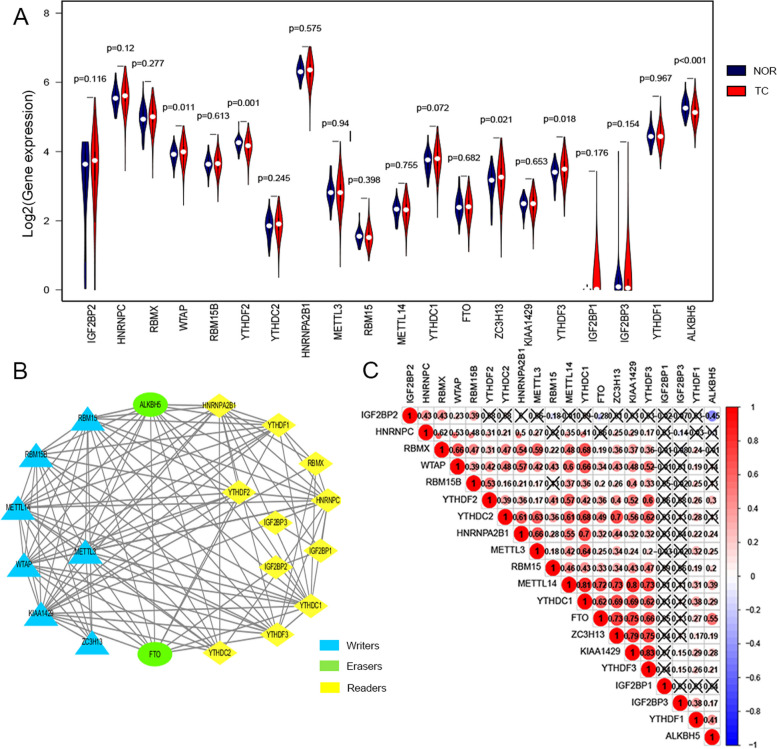
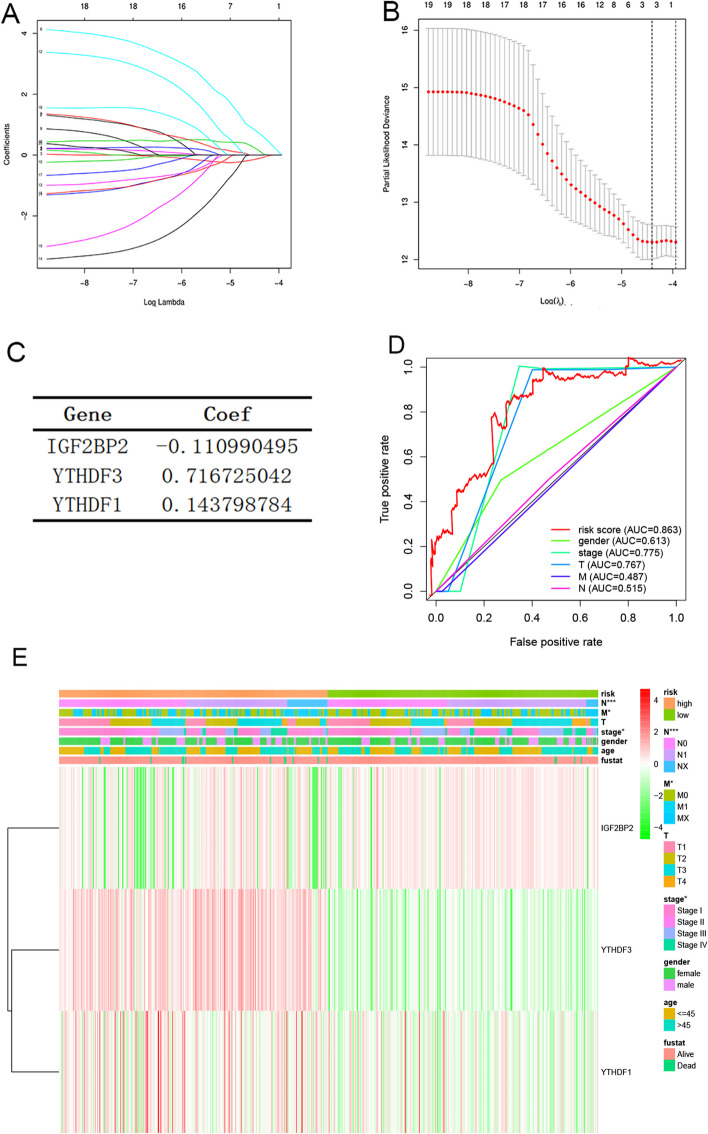
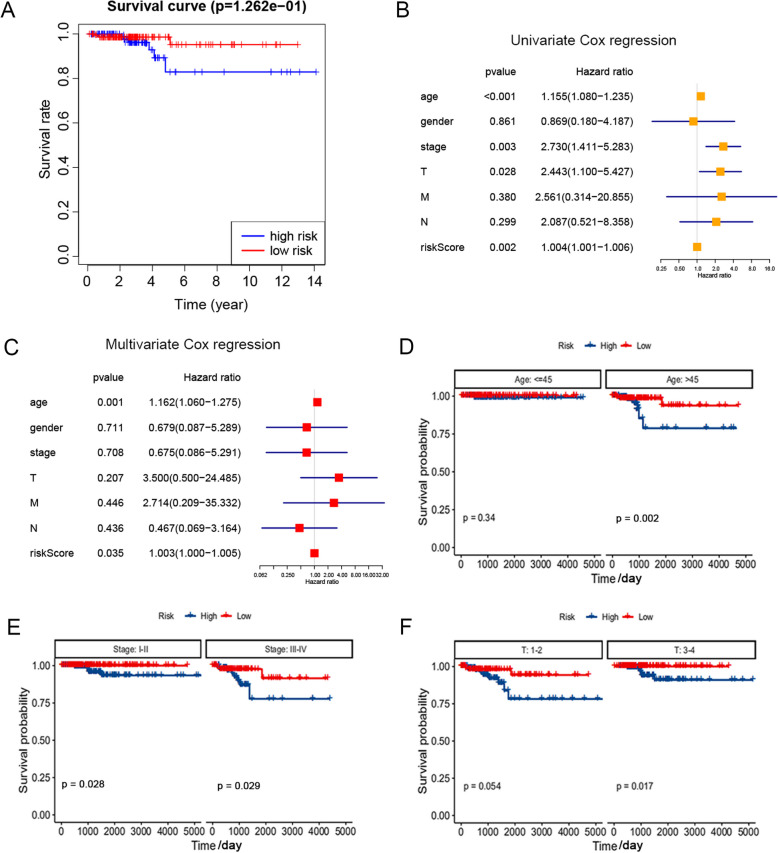
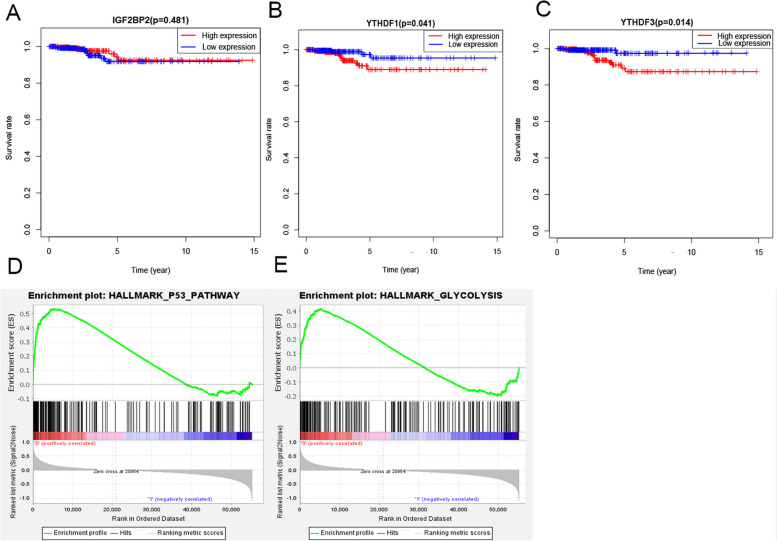
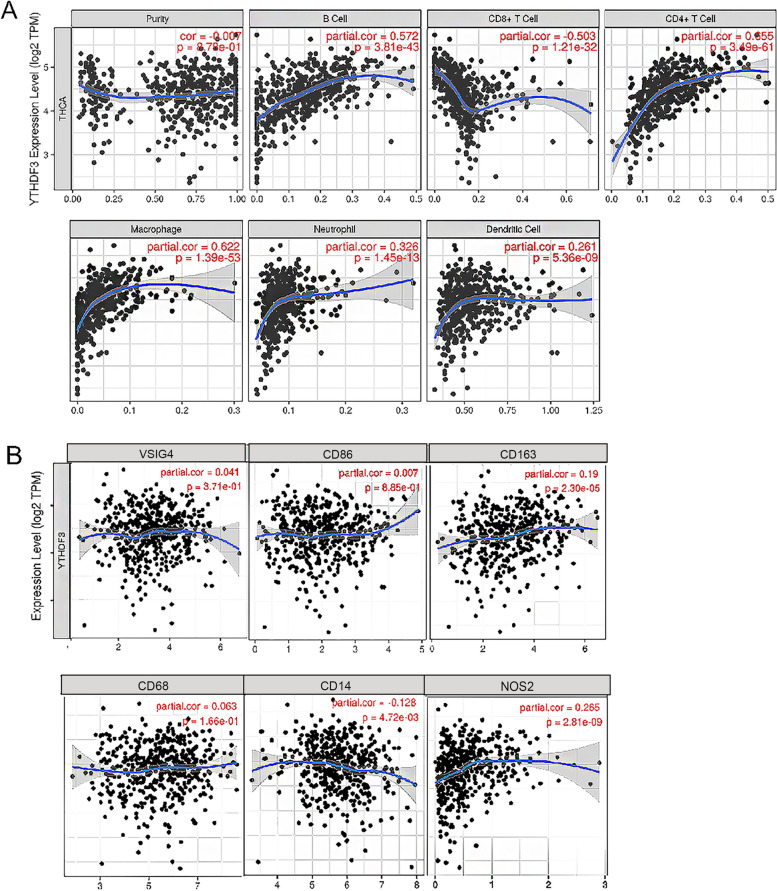
RNA-seq data of TC was downloaded from the Cancer Genome Atlas (TCGA) database to screen out the differential expressed regulators. The absolute contraction selection operator (Lasso) Cox regression was used to construct the risk model of mA methylation regulators. The predictive value of the risk scoring model was evaluated by Kaplan Meier (K-M) analysis and receiver operating characteristic (ROC) curves. The underlying mechanism of mA methylation regulators in TC was predicted by gene set enrichment analysis (GSEA). Further validation was performed by using immunohistochemistry (IHC) and q-PCR. The correlation between risk-related gene and immune infiltration was evaluated by Tumour Immune Estimation Resource (TIMER).
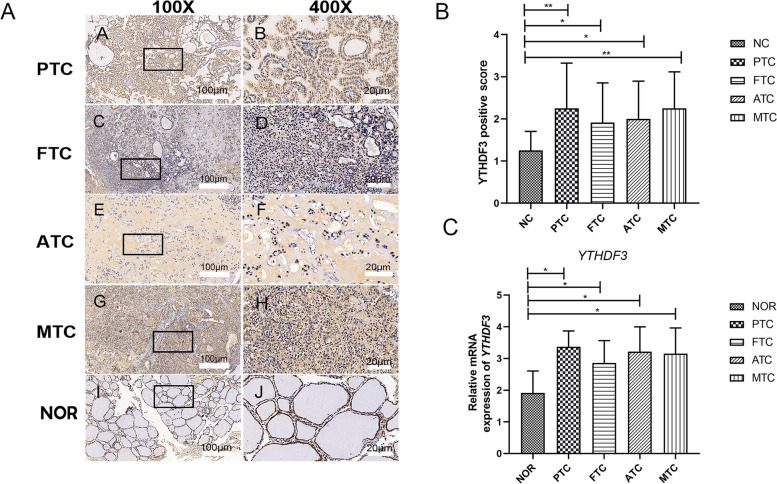
IGF2BP2, YTHDF1 and YTHDF3 were screened out as strong independent prognostic factors of TC. Then a risk score model was established to further screen the predictors. Finally, according to the results of overall survival (OS) and clinical characteristics of TC, YTHDF3 was screened out as a potential predictor. Meanwhile, IHC and qPCR confirmed that YTHDF3 was expressed differential in TC. The expression of YTHDF3 was positively associated with the infiltration level of CD4 T cells and macrophages. It was strongly correlated with a variety of immune markers in TC.
We confirmed that YTHDF3 can be used as a potential prognostic biomarker of TC. It not only plays a decisive role in the initiation and development of TC, but also provides a new perspective for understanding the modification of mA RNA in TC.
甲状腺癌(TC)是最常见的内分泌恶性肿瘤之一,其发病率持续上升。N6-甲基腺苷(m6A)RNA 甲基化作为一种表观遗传修饰,是 TC 基因表达的重要调节因子。因此,寻找 TC 中 mA RNA 甲基化调节因子的特征和预测价值是值得的。
从癌症基因组图谱(TCGA)数据库中下载 TC 的 RNA-seq 数据,筛选出差异表达的调节因子。采用绝对收缩选择算子(Lasso)Cox 回归构建 mA 甲基化调节因子的风险模型。通过 Kaplan-Meier(K-M)分析和受试者工作特征(ROC)曲线评估风险评分模型的预测价值。通过基因集富集分析(GSEA)预测 mA 甲基化调节因子在 TC 中的潜在机制。进一步通过免疫组织化学(IHC)和 q-PCR 进行验证。通过肿瘤免疫估计资源(TIMER)评估风险相关基因与免疫浸润的相关性。
IGF2BP2、YTHDF1 和 YTHDF3 被筛选为 TC 强独立预后因素。然后建立风险评分模型进一步筛选预测因子。最后,根据 TC 的总生存(OS)和临床特征的结果,筛选出 YTHDF3 作为潜在的预测因子。同时,IHC 和 qPCR 证实 YTHDF3 在 TC 中表达差异。YTHDF3 的表达与 CD4+T 细胞和巨噬细胞的浸润水平呈正相关。与 TC 中的多种免疫标志物强烈相关。
我们证实 YTHDF3 可作为 TC 的潜在预后生物标志物。它不仅在 TC 的发生和发展中起决定性作用,而且为理解 TC 中 mA RNA 的修饰提供了新的视角。