Zhang Bo, Gu Yanlin, Jiang Guoqin
General Surgery Department, The Second Affiliated Hospital of Soochow University, Suzhou, China.
Front Genet. 2020 Dec 10;11:604597. doi: 10.3389/fgene.2020.604597. eCollection 2020.
N6-methyladenosine (mA) is the most prevalent modification in mRNA methylation which has a wide effect on biological functions. This study aims to figure out the efficacy of mA RNA methylation regulator-based biomarkers with prognostic significance in breast cancer.
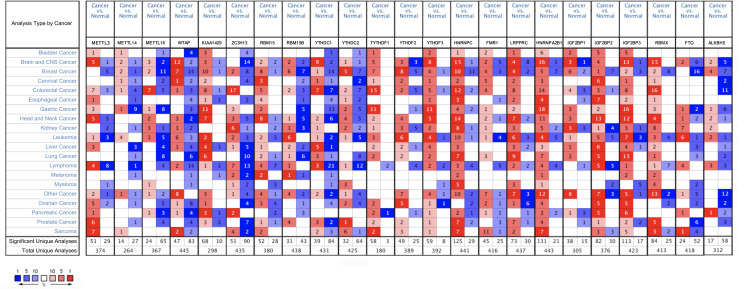
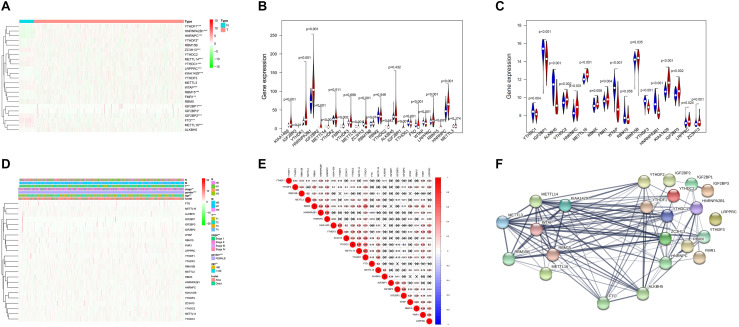
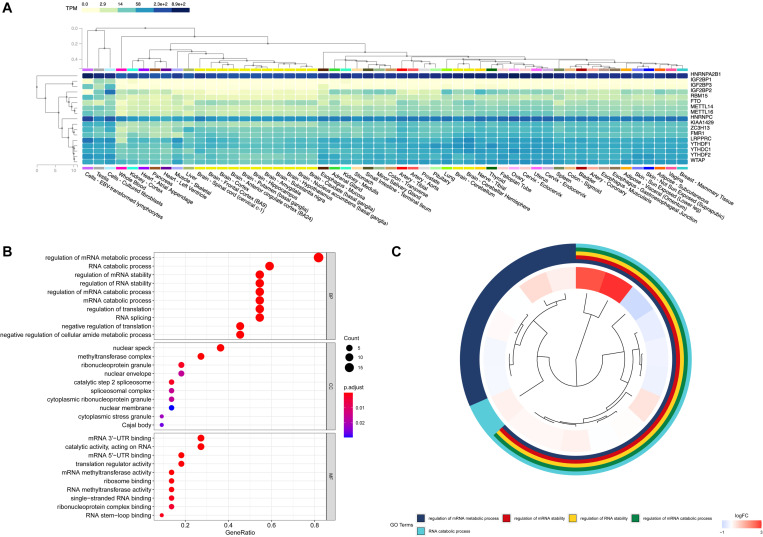
The 23 RNA methylation regulators were firstly analyzed through ONCOMINE, then relative RNA-seq transcriptome and clinical data of 1,096 breast cancer samples and 112 normal tissue samples were acquired from The Cancer Gene Atlas (TCGA) database. The expressive distinction was also showed by the Gene Expression Omnibus (GEO) database. The gene expression data of mA RNA regulators in human tissues were acquired from the Genotype-Tissue Expression (GTEx) database. The R v3.5.1 and other online tools such as STRING, bc-GeneExminer v4.5, Kaplan-Meier Plotter were applied for bioinformatics analysis.
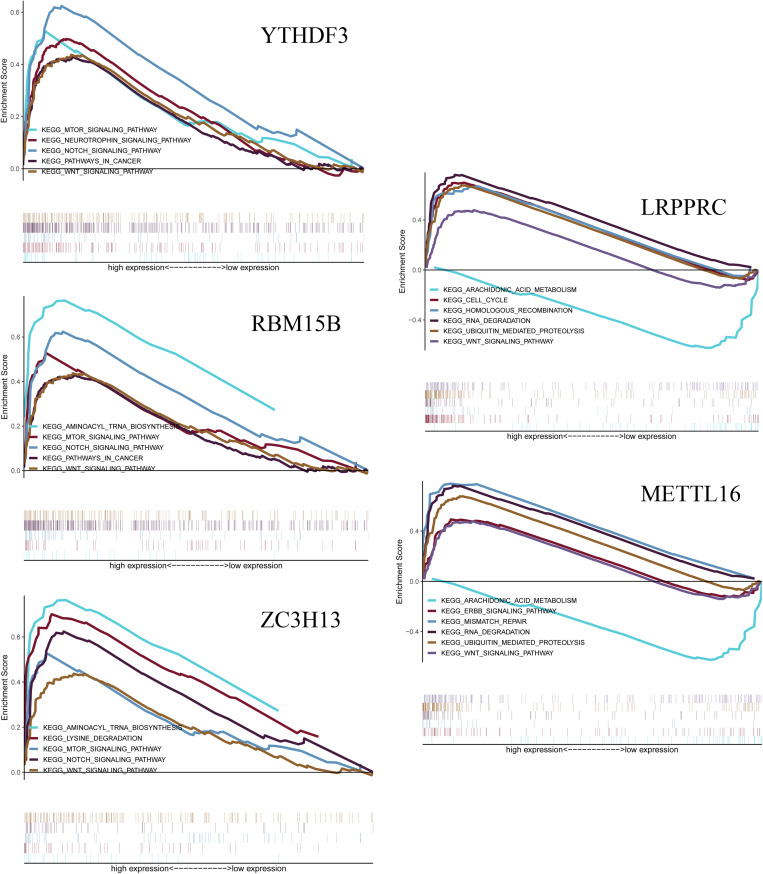
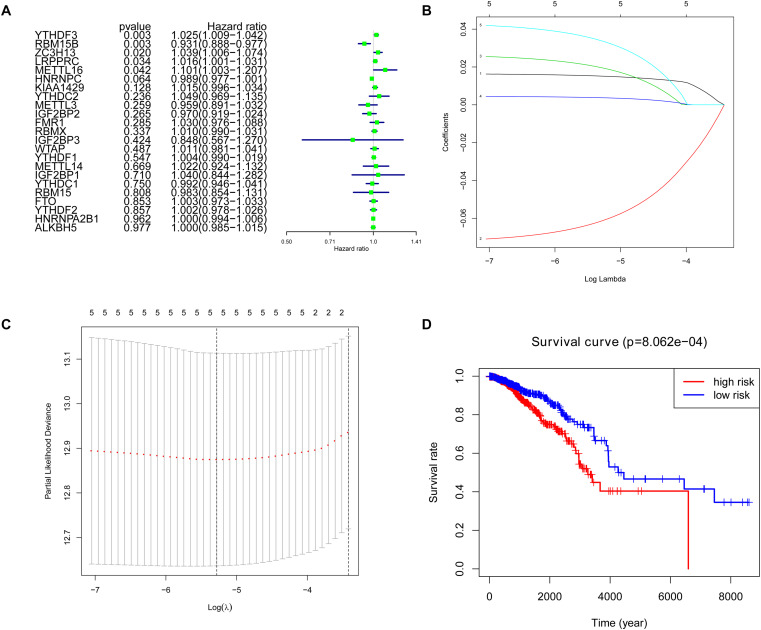
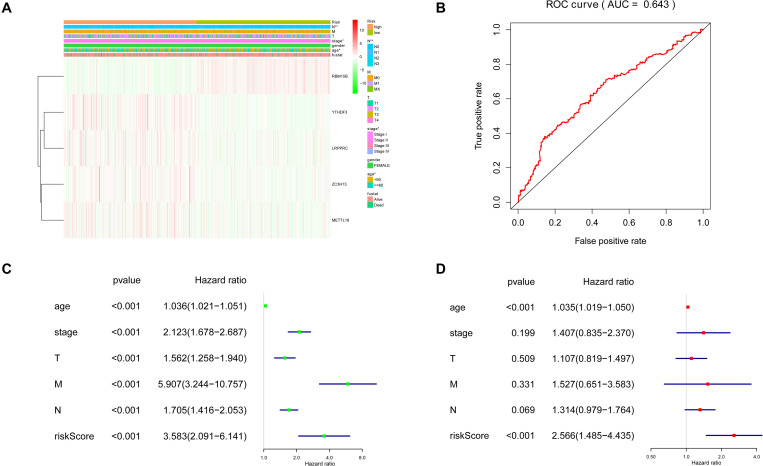
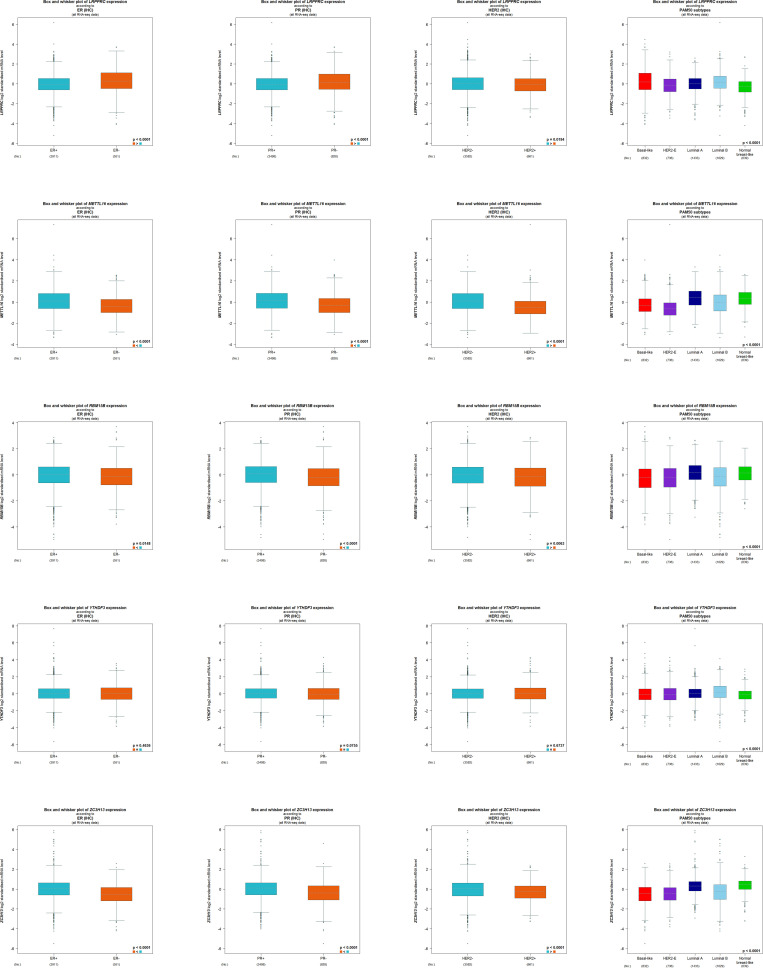
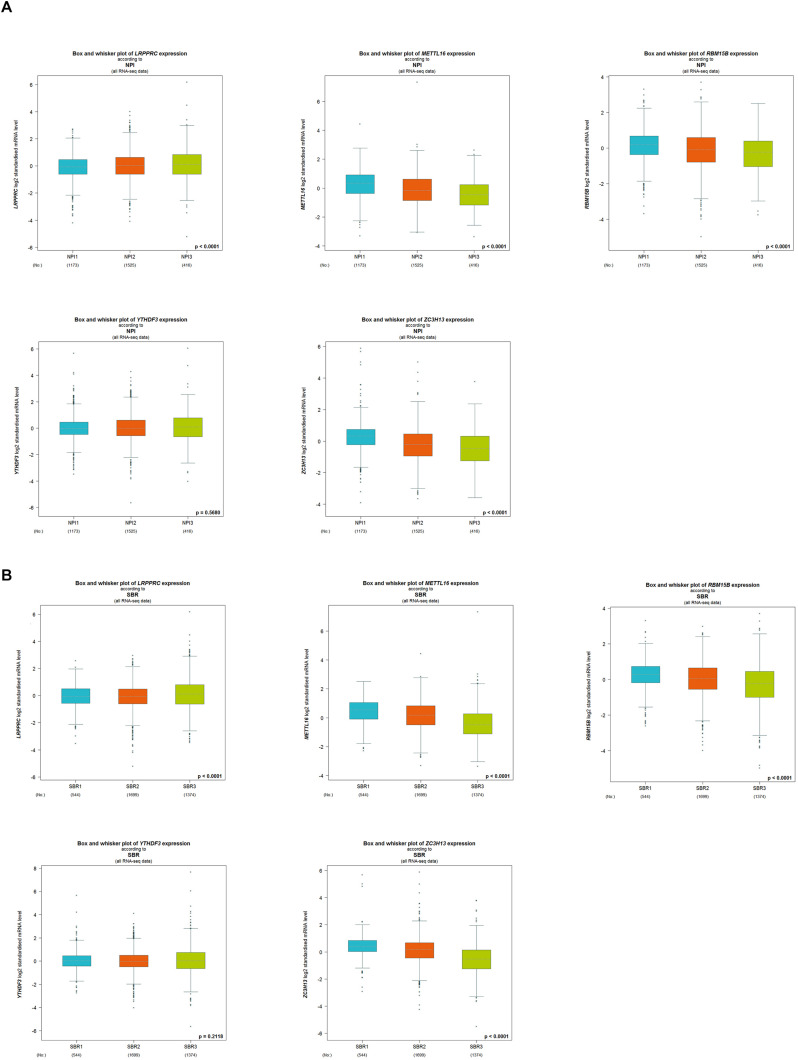
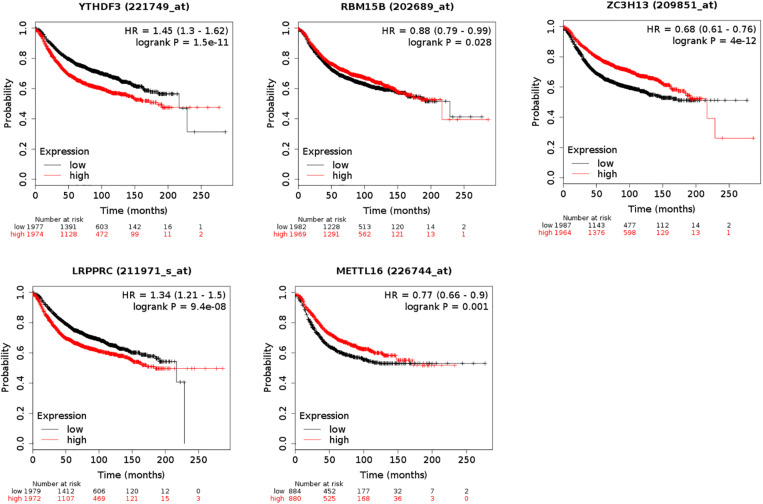
Results from ONCOMINE, TCGA, and GEO databases showed distinctive expression and clinical correlations of mA RNA methylation regulators in breast cancer patients. The high expression of YTHDF3, ZC3H13, LRPPRC, and METTL16 indicated poor survival rate in patients with breast cancer, while high expression of RBM15B pointed to a better survival rate. Both univariate and multivariate Cox regression analyses revealed that age and risk scores were related to overall survival (OS). Univariate analysis also delineated that stage, tumor (T) status, lymph node (N) status, and metastasis (M) status were associated with OS. From another perspective, Kaplan-Meier Plotter platform showed that the relatively high expression of YTHDF3 and LRPPRC and the relatively low expression of RBM15B, ZC3H13, and METTL16 in breast cancer patients had worse Relapse-Free Survival (RFS). Breast Cancer Gene-Expression Miner v4.5 showed that LRPPRC level was negatively associated with ER and PR expression, while METTL16, RBM15B, ZC3H13 level was positively linked with ER and PR expression. In HER-2 (+) breast cancer patients, the expression of LRPPRC, METTL16, RBM15B, and ZC3H13 were all lower than the HER-2 (-) group.
The significant difference in expression levels and prognostic value of mA RNA methylation regulators were analyzed and validated in this study. This signature revealed the potential therapeutic value of mA RNA methylation regulators in breast cancer.
N6-甲基腺苷(mA)是mRNA甲基化中最普遍的修饰,对生物学功能有广泛影响。本研究旨在探讨基于mA RNA甲基化调节因子的生物标志物在乳腺癌中的预后意义及疗效。
首先通过ONCOMINE分析23种RNA甲基化调节因子,然后从癌症基因组图谱(TCGA)数据库获取1096例乳腺癌样本和112例正常组织样本的相关RNA测序转录组及临床数据。基因表达综合数据库(GEO)也显示了表达差异。人类组织中mA RNA调节因子的基因表达数据从基因型-组织表达(GTEx)数据库获取。应用R v3.5.1及STRING、bc-GeneExminer v4.5、Kaplan-Meier Plotter等在线工具进行生物信息学分析。
ONCOMINE、TCGA和GEO数据库的结果显示,乳腺癌患者中mA RNA甲基化调节因子存在独特的表达及临床相关性。YTHDF3、ZC3H13、LRPPRC和METTL16的高表达表明乳腺癌患者生存率低,而RBM15B的高表达则提示较好的生存率。单因素和多因素Cox回归分析均显示年龄和风险评分与总生存期(OS)相关。单因素分析还表明分期、肿瘤(T)状态、淋巴结(N)状态和转移(M)状态与OS相关。从另一个角度看,Kaplan-Meier Plotter平台显示,乳腺癌患者中YTHDF3和LRPPRC相对高表达以及RBM15B、ZC3H13和METTL16相对低表达时无复发生存期(RFS)较差。乳腺癌基因表达挖掘器v4.5显示,LRPPRC水平与雌激素受体(ER)和孕激素受体(PR)表达呈负相关,而METTL16、RBM15B、ZC3H13水平与ER和PR表达呈正相关。在人表皮生长因子受体2(HER-2)阳性乳腺癌患者中,LRPPRC、METTL16、RBM15B和ZC3H13的表达均低于HER-2阴性组。
本研究分析并验证了mA RNA甲基化调节因子表达水平及预后价值的显著差异。这一特征揭示了mA RNA甲基化调节因子在乳腺癌中的潜在治疗价值。