Department of Veterinary Microbiology and Pathology, Washington State University , Pullman, Washington, USA.
School of Molecular Biosciences, Washington State University , Pullman, Washington, USA.
mSphere. 2023 Oct 24;8(5):e0032123. doi: 10.1128/msphere.00321-23. Epub 2023 Sep 21.
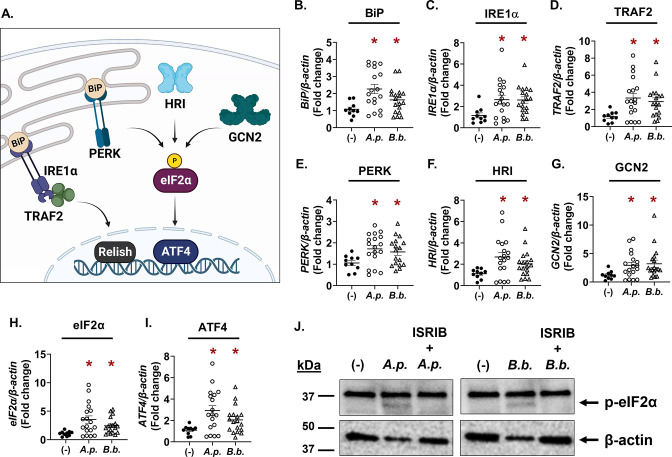
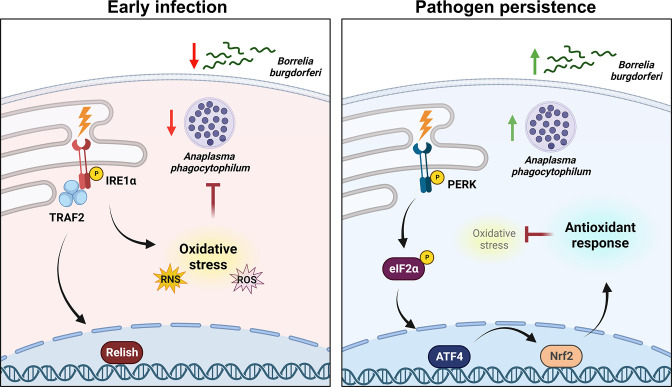
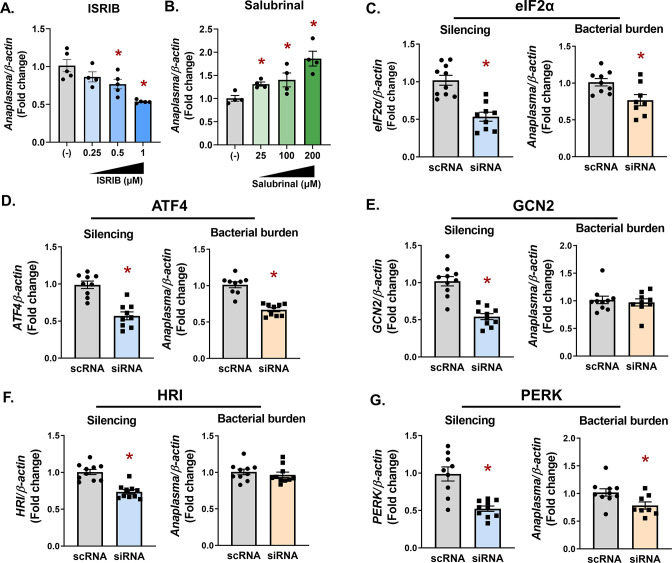
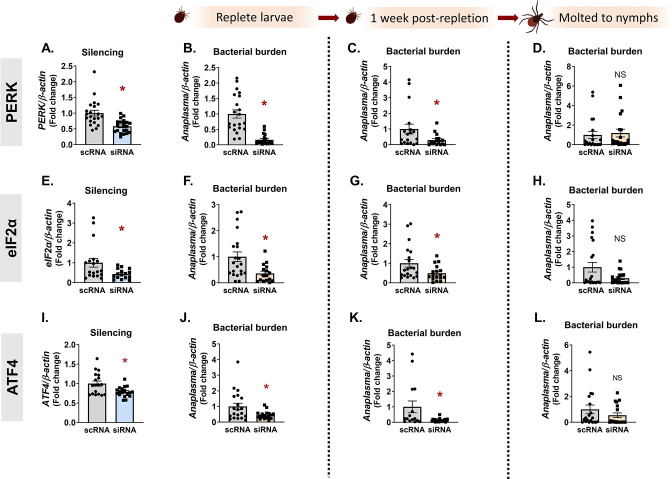
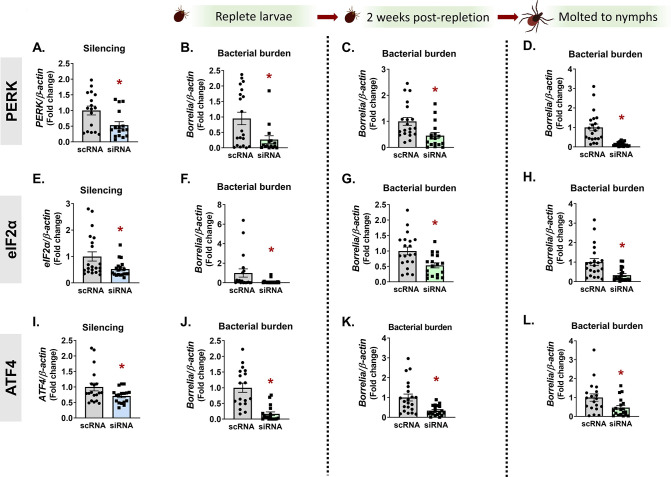
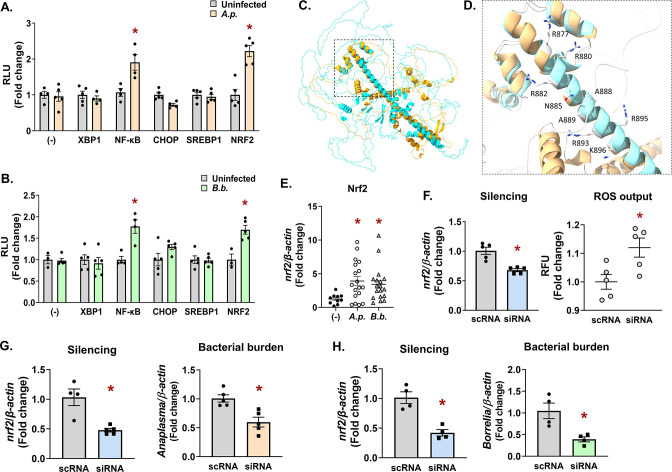
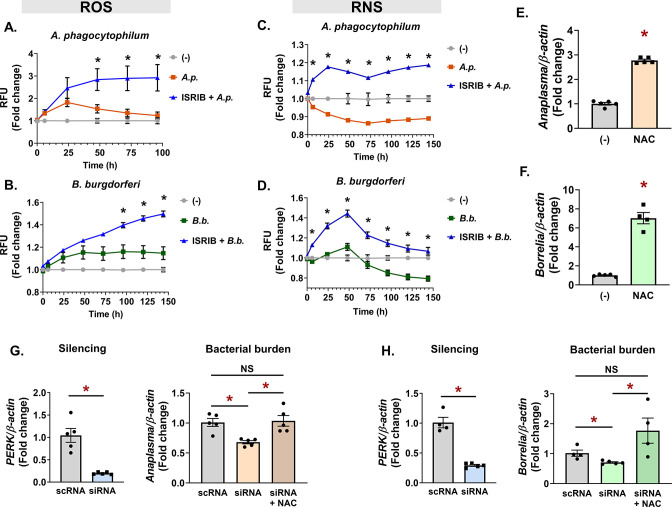
A crucial phase in the life cycle of tick-borne pathogens is the time spent colonizing and persisting within the arthropod. Tick immunity is emerging as a key force shaping how transmissible pathogens interact with the vector. How pathogens remain in the tick despite immunological pressure remains unknown. In persistently infected , we found that (causative agent of Lyme disease) and (causative agent of granulocytic anaplasmosis) activate a cellular stress pathway mediated by the endoplasmic reticulum receptor PKR-like ER kinase (PERK) and the central regulatory molecule eIF2α. Disabling the PERK pathway through pharmacological inhibition and RNA interference (RNAi) significantly decreased microbial numbers. RNAi of the PERK pathway not only reduced the number of and colonizing larvae after a bloodmeal but also significantly reduced the number of bacteria that survive the molt. An investigation into PERK pathway-regulated targets revealed that and induce activity of the antioxidant response regulator, nuclear factor erythroid 2-related factor 2 (Nrf2). Tick cells deficient for expression or PERK signaling showed accumulation of reactive oxygen and nitrogen species in addition to reduced microbial survival. Supplementation with antioxidants rescued the microbicidal phenotype caused by blocking the PERK pathway. Altogether, our study demonstrates that the PERK pathway is activated by transmissible microbes and facilitates persistence in the arthropod by potentiating an Nrf2-regulated antioxidant environment. IMPORTANCE Recent advances demonstrate that the tick immune system recognizes and limits the pathogens they transmit. Innate immune mediators such as antimicrobial peptides and reactive oxygen/nitrogen species are produced and restrict microbial survival. It is currently unclear how pathogens remain in the tick, despite this immune assault. We found that an antioxidant response controlled by the PERK branch of the unfolded protein response is activated in ticks that are persistently infected with (Lyme disease) or (granulocytic anaplasmosis). The PERK pathway induces the antioxidant response transcription factor, Nrf2, which coordinates a gene network that ultimately neutralizes reactive oxygen and nitrogen species. Interfering with this signaling cascade in ticks causes a significant decline in pathogen numbers. Given that innate immune products can cause collateral damage to host tissues, we speculate that this is an arthropod-driven response aimed at minimizing damage to "self" that also inadvertently benefits the pathogen. Collectively, our findings shed light on the mechanistic push and pull between tick immunity and pathogen persistence within the arthropod vector.
在蜱传病原体的生命周期中,至关重要的一个阶段是其在节肢动物体内定殖和持续存在的时间。蜱的免疫功能正成为影响可传播病原体与媒介相互作用的关键因素。尽管受到免疫压力,病原体仍能在蜱中持续存在,其原因目前尚不清楚。在持续感染中,我们发现 (导致莱姆病的病原体)和 (导致粒细胞埃立克体病的病原体)激活了一种由内质网受体 PKR 样 ER 激酶(PERK)和中央调节分子 eIF2α 介导的细胞应激途径。通过药理学抑制和 RNA 干扰(RNAi)使 PERK 途径失活,显著降低了微生物数量。PERK 途径的 RNAi 不仅减少了饱血后幼虫定殖的 和 的数量,而且显著减少了在蜕皮过程中存活下来的细菌数量。对 PERK 途径调控靶点的研究表明, 和 诱导抗氧化反应调节剂核因子红细胞 2 相关因子 2(Nrf2)的活性。缺乏 表达或 PERK 信号的蜱细胞除了微生物存活率降低外,还会积累活性氧和氮物质。用抗氧化剂进行补充可挽救阻断 PERK 途径引起的杀菌表型。总的来说,我们的研究表明,可传播的微生物激活了 ,并通过增强 Nrf2 调节的抗氧化环境来促进节肢动物中的持久性。
最近的进展表明,蜱的免疫系统识别并限制了它们传播的病原体。产生了抗菌肽和活性氧/氮物质等先天免疫介质,并限制了微生物的存活。目前尚不清楚,尽管受到这种免疫攻击,病原体仍能在蜱中持续存在。我们发现,在持续感染 (莱姆病)或 (粒细胞埃立克体病)的蜱中,未折叠蛋白反应的 PERK 分支激活了一种抗氧化反应。PERK 途径诱导抗氧化反应转录因子 Nrf2,协调最终中和活性氧和氮物质的基因网络。在蜱中干扰这种信号级联会导致病原体数量的显著下降。鉴于先天免疫产物会对宿主组织造成附带损害,我们推测这是一种节肢动物驱动的反应,旨在最大程度地减少对“自身”的损害,同时也无意中使病原体受益。总的来说,我们的研究结果揭示了蜱的免疫功能与节肢动物媒介中病原体持久性之间的机械推拉作用。