Department of Radiation Oncology (MAASTRO), GROW School for Oncology and Developmental Biology, Maastricht University Medical Center, Maastricht, The Netherlands.
Department of Nuclear Medicine, Tata Memorial Hospital, Mumbai, Maharashtra, India.
J Digit Imaging. 2023 Dec;36(6):2519-2531. doi: 10.1007/s10278-023-00835-8. Epub 2023 Sep 21.
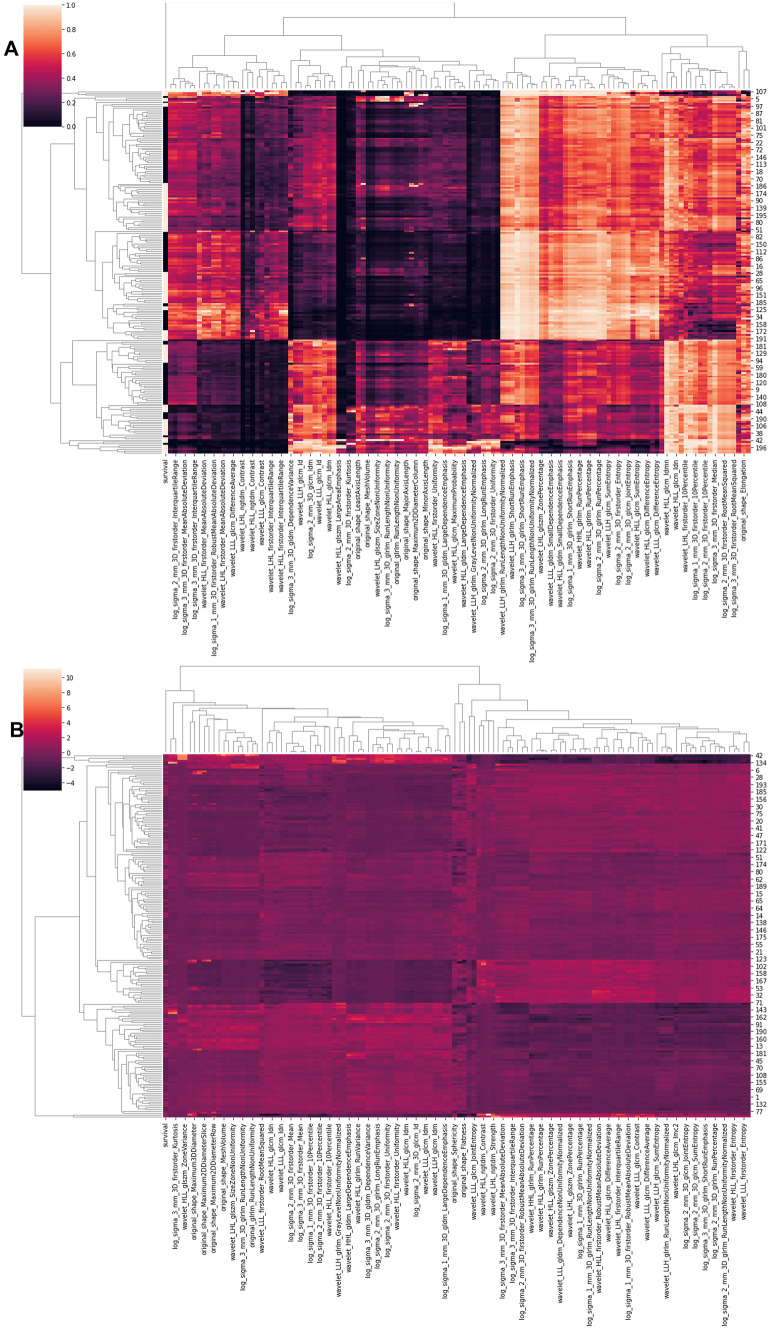
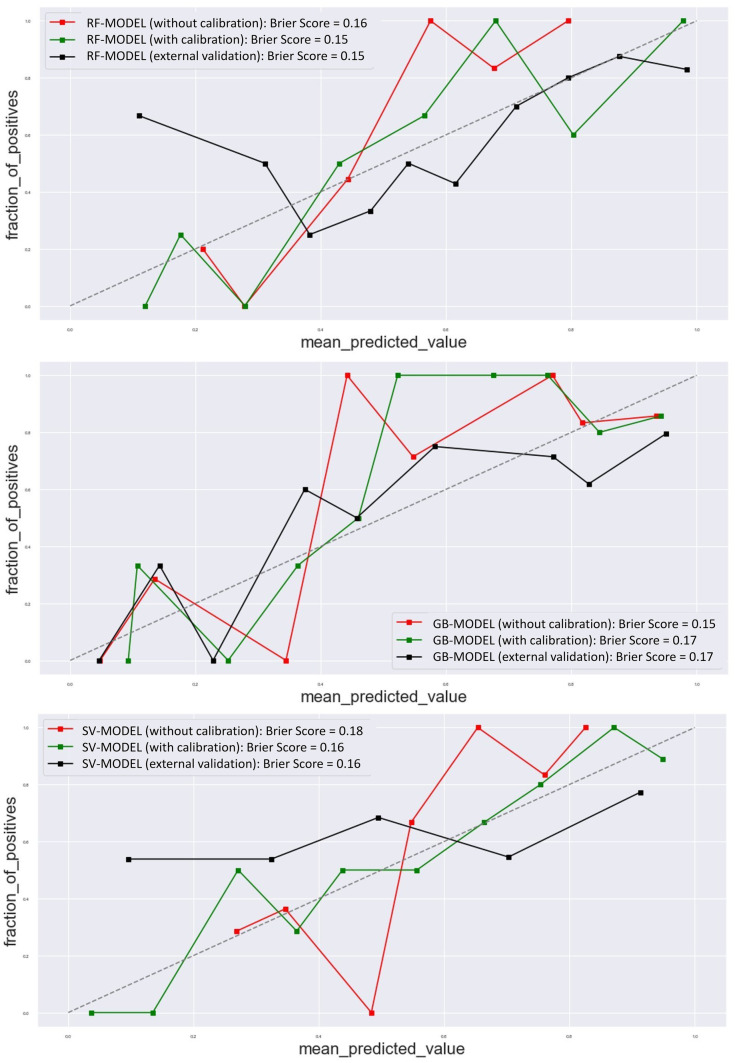
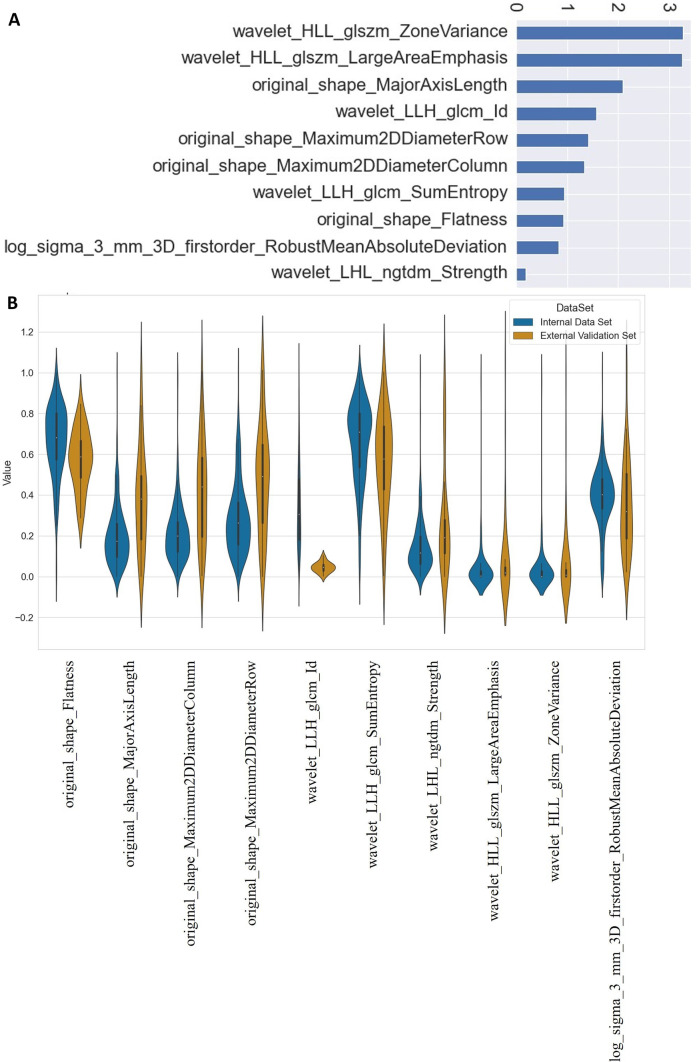
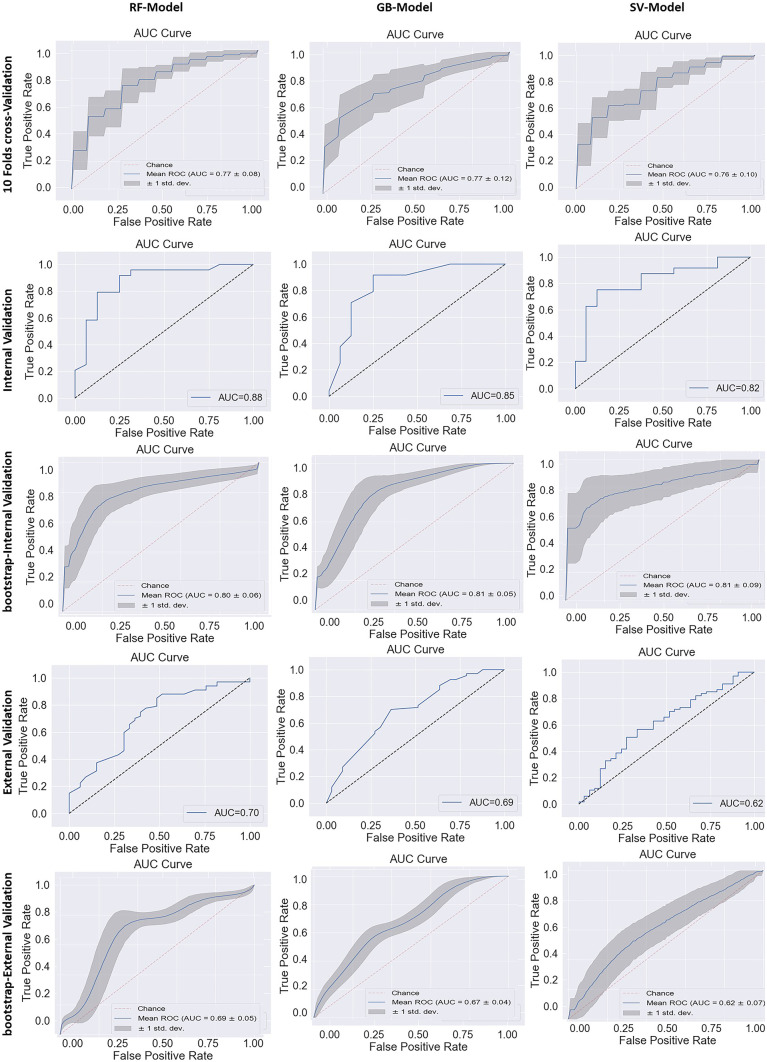
Lung cancer is the second most fatal disease worldwide. In the last few years, radiomics is being explored to develop prediction models for various clinical endpoints in lung cancer. However, the robustness of radiomic features is under question and has been identified as one of the roadblocks in the implementation of a radiomic-based prediction model in the clinic. Many past studies have suggested identifying the robust radiomic feature to develop a prediction model. In our earlier study, we identified robust radiomic features for prediction model development. The objective of this study was to develop and validate the robust radiomic signatures for predicting 2-year overall survival in non-small cell lung cancer (NSCLC). This retrospective study included a cohort of 300 stage I-IV NSCLC patients. Institutional 200 patients' data were included for training and internal validation and 100 patients' data from The Cancer Image Archive (TCIA) open-source image repository for external validation. Radiomic features were extracted from the CT images of both cohorts. The feature selection was performed using hierarchical clustering, a Chi-squared test, and recursive feature elimination (RFE). In total, six prediction models were developed using random forest (RF-Model-O, RF-Model-B), gradient boosting (GB-Model-O, GB-Model-B), and support vector(SV-Model-O, SV-Model-B) classifiers to predict 2-year overall survival (OS) on original data as well as balanced data. Model validation was performed using 10-fold cross-validation, internal validation, and external validation. Using a multistep feature selection method, the overall top 10 features were chosen. On internal validation, the two random forest models (RF-Model-O, RF-Model-B) displayed the highest accuracy; their scores on the original and balanced datasets were 0.81 and 0.77 respectively. During external validation, both the random forest models' accuracy was 0.68. In our study, robust radiomic features showed promising predictive performance to predict 2-year overall survival in NSCLC.
肺癌是全球第二大致命疾病。在过去的几年中,放射组学被用于开发用于肺癌各种临床终点的预测模型。然而,放射组学特征的稳健性受到质疑,并已被确定为在临床实施基于放射组学的预测模型的障碍之一。许多过去的研究表明,需要确定稳健的放射组学特征来开发预测模型。在我们之前的研究中,我们确定了用于开发预测模型的稳健放射组学特征。本研究的目的是开发和验证用于预测非小细胞肺癌(NSCLC)患者 2 年总生存率的稳健放射组学特征。这项回顾性研究纳入了 300 例 I-IV 期 NSCLC 患者。机构内的 200 名患者数据用于训练和内部验证,而来自癌症影像档案(TCIA)开源影像库的 100 名患者数据用于外部验证。从两个队列的 CT 图像中提取放射组学特征。使用层次聚类、卡方检验和递归特征消除(RFE)进行特征选择。总共使用随机森林(RF-Model-O、RF-Model-B)、梯度提升(GB-Model-O、GB-Model-B)和支持向量机(SV-Model-O、SV-Model-B)分类器开发了六个预测模型,用于对原始数据和平衡数据进行 2 年总生存率(OS)预测。使用 10 折交叉验证、内部验证和外部验证进行模型验证。使用多步特征选择方法,选择了前 10 个总体特征。在内部验证中,两个随机森林模型(RF-Model-O、RF-Model-B)表现出最高的准确性;它们在原始和平衡数据集上的得分分别为 0.81 和 0.77。在外部验证中,两个随机森林模型的准确性均为 0.68。在本研究中,稳健的放射组学特征显示出有前途的预测性能,可以预测 NSCLC 患者的 2 年总生存率。