Laboratory of Complement Biology, Lindsley F. Kimball Research Institute, New York Blood Center, New York, New York, USA.
Department of Haematology, Blizard Institute, Barts and The London School of Medicine and Dentistry, Queen Mary University of London, London, UK.
Br J Haematol. 2023 Oct;203(1):54-61. doi: 10.1111/bjh.19079.
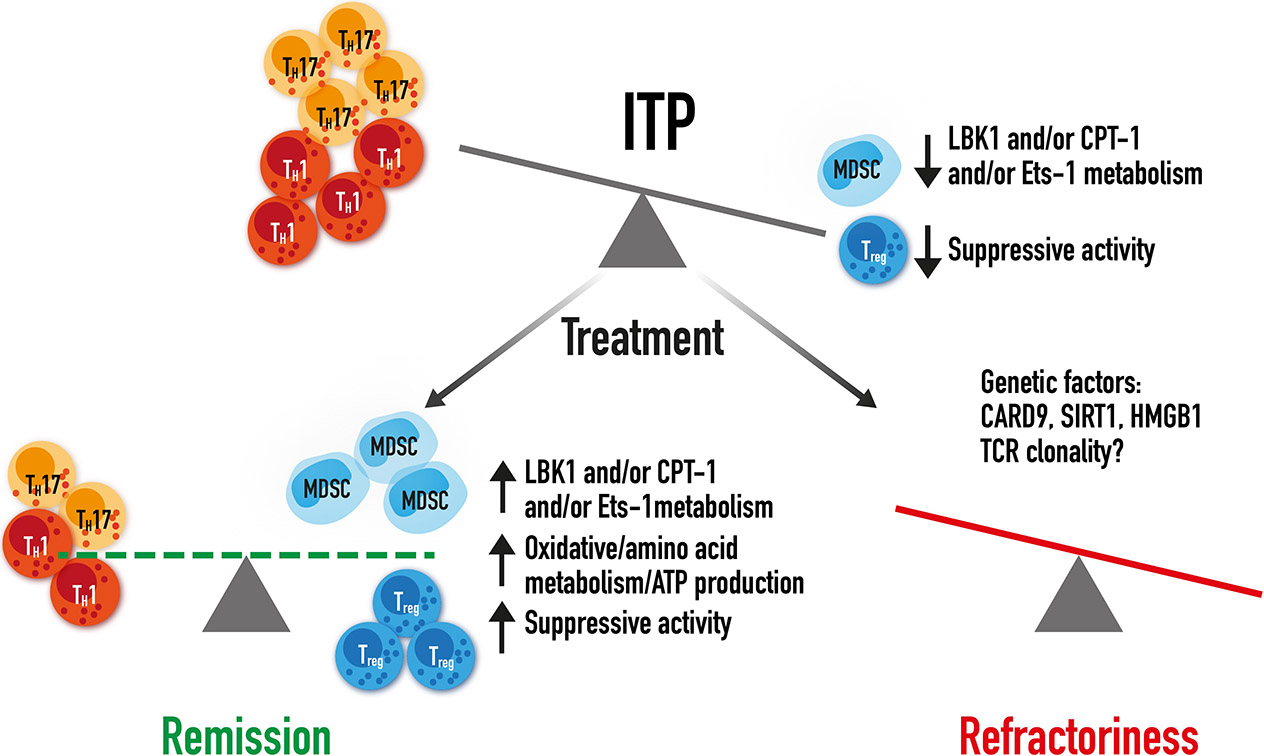
Immune thrombocytopenia (ITP) is characterized by a dysregulated immune response against platelets, affecting both their destruction and production. A role for an abnormal T-cell compartment has been established in ITP pathogenesis and treatments that increase platelet counts in patients with ITP have shown improvements in T-cell profiles. On the other hand, patients who were refractory to treatment appear to retain the T-cell abnormalities as before. Myeloid-derived suppressive cells (MDSCs) are also emerging as key contributors to the immune pathology of ITP and response to treatment. In this review, we will discuss how various treatments affect the T-cell and MDSC compartments in ITP. The review will focus on studies that have examined the underlying mechanisms and/or genetic basis responsible for refractoriness to a given treatment and highlight remaining challenges in identifying factors and mechanisms to predict response to treatment.
免疫性血小板减少症 (ITP) 的特征是针对血小板的免疫失调反应,影响其破坏和生成。异常 T 细胞群在 ITP 的发病机制和治疗中已经确立,并且增加 ITP 患者血小板计数的治疗方法显示 T 细胞谱有所改善。另一方面,对治疗有反应的患者似乎保留了治疗前的 T 细胞异常。髓系来源的抑制细胞 (MDSCs) 也成为 ITP 的免疫病理学和治疗反应的关键因素。在这篇综述中,我们将讨论各种治疗方法如何影响 ITP 中的 T 细胞和 MDSC 群。综述将重点讨论研究过的潜在机制和/或遗传基础,这些机制和遗传基础导致对特定治疗方法的耐药性,并强调在确定预测治疗反应的因素和机制方面仍然存在挑战。