Tawfeek Gehan Abd-Elfatah, Kasem Heba, Abdallah Eman Ali, Almulhim Mohammed, Almulhim Abdullah, Albarqi Mohammed, Elzorkany Khaled Mohamed Amin
Clinical Pathology Department, Faculty of Medicine, Menoufia University, Shebeen El-Kom 32511, Egypt.
Nephrology Unit, Internal Medicine Department, Faculty of Medicine, Menoufia University, Shebeen El-Kom 32511, Egypt.
Noncoding RNA. 2023 Sep 19;9(5):56. doi: 10.3390/ncrna9050056.
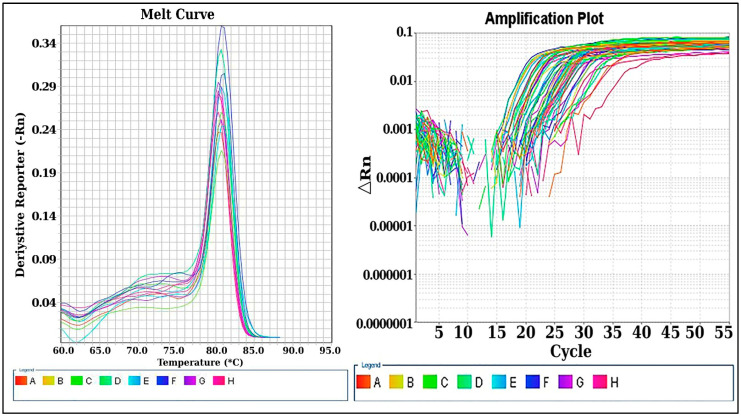
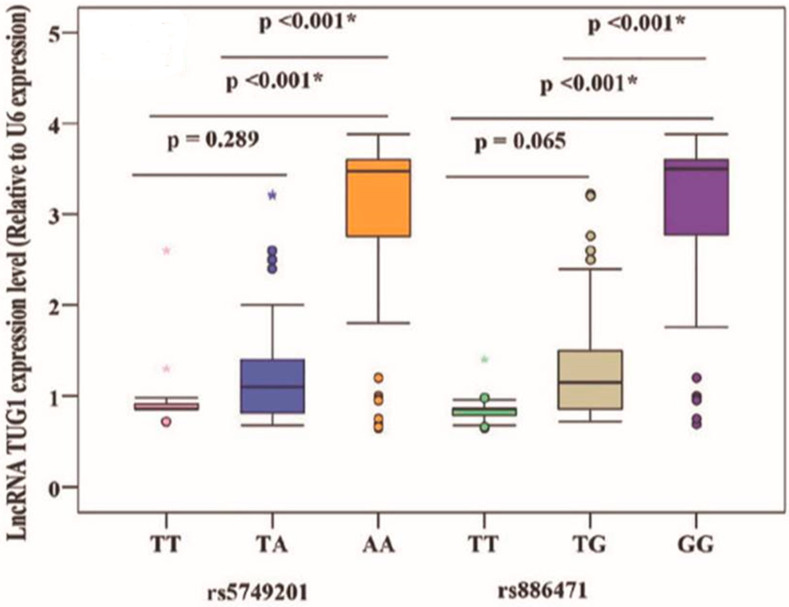
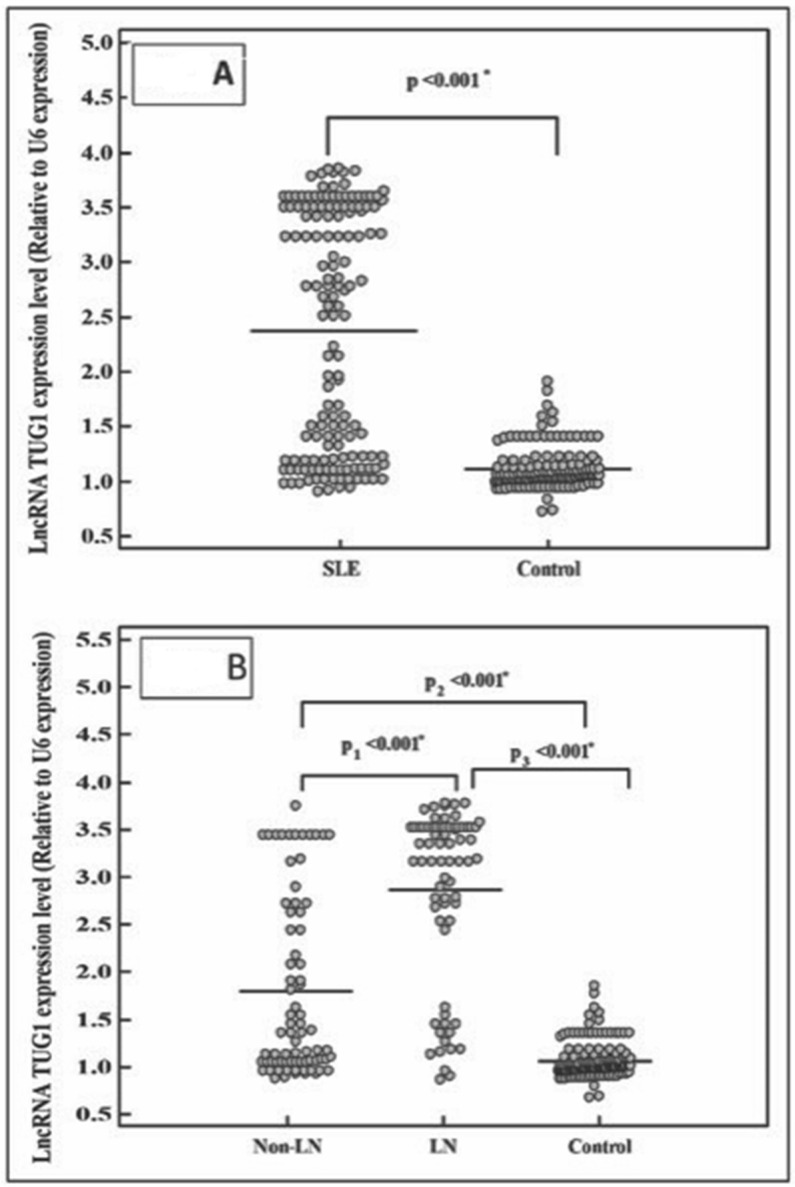
Long non-coding RNA (lncRNA) TUG1 acts as a proto-oncogene, allowing the proliferation of tumor cells, and it has been related to inflammation. Therefore, we aimed in this study to investigate for the first time the role of TUG1 gene polymorphism and the TUG1 level as biomarkers in systemic lupus erythematosus (SLE) and their link to lupus nephritis 145 SLE. A total of 145 healthy controls were subjected to clinical and laboratory evaluation. The disease activity was assessed by the SLE disease activity index (SLEDAI) score. SLE patients were divided into two subgroups according to the presence of lupus nephritis. The TUG1 gene polymorphisms rs5749201 and rs886471 were determined by Sanger sequencing, and TUG1 expression was assessed by qRT-PCR. There was a significant increase in the risk of SLE AA, TA, dominant genotypes, and the A allele of rs5749201 ( < 0.001) by 4.9-, 10.1-, 6.5-, and 2.5-fold in comparison to the relative control. GG and TG, dominant genotypes and the G allele of rs886471 ( < 0.01) increased the risk by 5.09-, 11.9-, 6.5-, and 2.6-fold. AA, A allele, dominant and recessive rs5749201genotypes increased the risk of lupus nephritis by 16.6-, 7.4-, 7.1-, and 12.2-fold, respectively ( < 0.05). GG, dominant and recessive genotypes, and the G allele of rs886471 increased the risk of lupus nephritis by 17.04-, 7.8-, 9.4-, and 6.08-fold, respectively ( < 0.05). Additionally, the AG haplotype increased the risk of SLE and lupus nephritis by 2.7- and 7.8-fold, respectively. The AA rs5749201 and GG rs886471 variants are significantly associated with more severe disease ( < 0.001). TUG1 expression was significantly higher in SLE than in the control and in the lupus nephritis than in non-lupus nephritis cases ( < 0.05). Interestingly, AA rs5749201 and GG rs886471 were significantly associated with higher TUG1 levels ( < 0.001). It was also found that AA rs5749201 and high SLEDAI were predictors of lupus nephritis. Overall, our findings illustrated for the first time that TUG1 gene rs5749201 and rs886471 variants were associated with increased risk of SLE, more severe disease, and lupus nephritis, and the TUG1 level could be used as a diagnostic biomarker of SLE and lupus nephritis.
长链非编码RNA(lncRNA)TUG1作为一种原癌基因,可促使肿瘤细胞增殖,且与炎症相关。因此,在本研究中,我们旨在首次探究TUG1基因多态性和TUG1水平作为系统性红斑狼疮(SLE)生物标志物的作用及其与狼疮性肾炎的关联。145名健康对照者接受了临床和实验室评估。通过SLE疾病活动指数(SLEDAI)评分评估疾病活动度。SLE患者根据是否存在狼疮性肾炎分为两个亚组。通过桑格测序确定TUG1基因多态性rs5749201和rs886471,并通过qRT-PCR评估TUG1表达。与相对对照相比,SLE的AA、TA、显性基因型以及rs5749201的A等位基因的风险显著增加(<0.001),分别增加了4.9倍、10.1倍、6.5倍和2.5倍。rs886471的GG和TG、显性基因型以及G等位基因(<0.01)使风险增加了5.09倍、11.9倍、6.5倍和2.6倍。AA、A等位基因、显性和隐性rs5749201基因型分别使狼疮性肾炎的风险增加了16.6倍、7.4倍、7.1倍和12.2倍(<0.05)。rs886471的GG、显性和隐性基因型以及G等位基因分别使狼疮性肾炎的风险增加了17.04倍、7.8倍、9.4倍和6.08倍(<0.05)。此外,AG单倍型分别使SLE和狼疮性肾炎的风险增加了2.7倍和7.8倍。rs5749201的AA和rs886471的GG变体与更严重的疾病显著相关(<0.001)。SLE中TUG1表达显著高于对照组,狼疮性肾炎中TUG1表达显著高于非狼疮性肾炎病例(<0.05)。有趣的是,rs5749201的AA和rs886471的GG与更高的TUG1水平显著相关(<0.001)。还发现rs5749201的AA和高SLEDAI是狼疮性肾炎的预测指标。总体而言,我们的研究结果首次表明,TUG1基因rs5749201和rs886471变体与SLE风险增加、更严重的疾病以及狼疮性肾炎相关,并且TUG1水平可作为SLE和狼疮性肾炎的诊断生物标志物。