German Center for Neurodegenerative Diseases (DZNE), Von-Siebold-Str. 3a, 37075, Göttingen, Germany.
German Center for Neurodegenerative Diseases (DZNE), Bonn, Germany.
Nat Commun. 2023 Sep 22;14(1):5919. doi: 10.1038/s41467-023-41672-1.
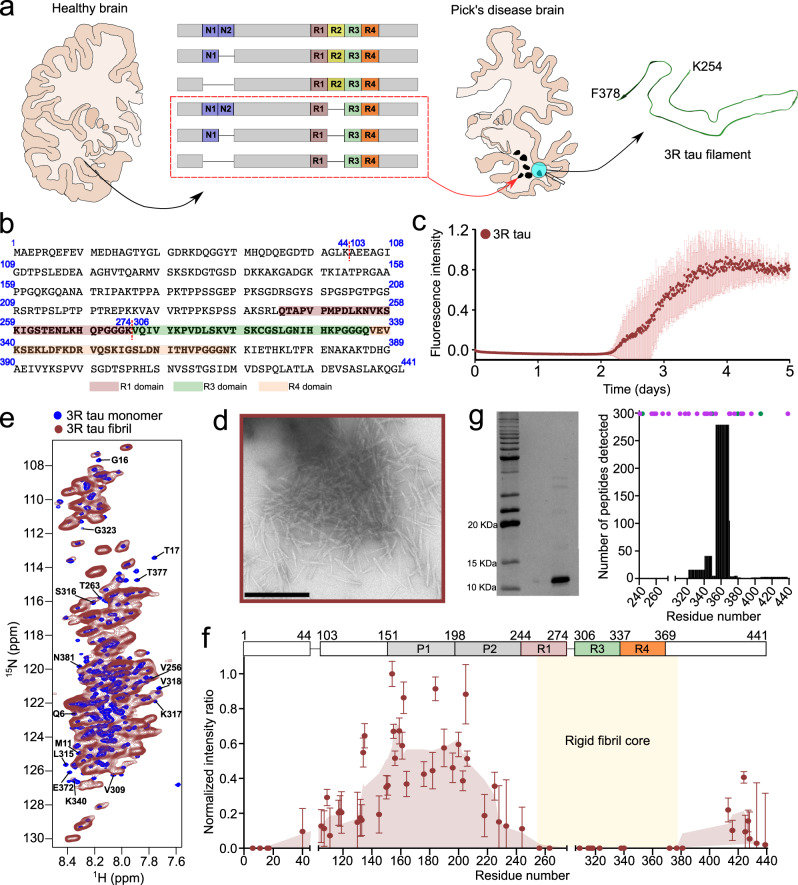
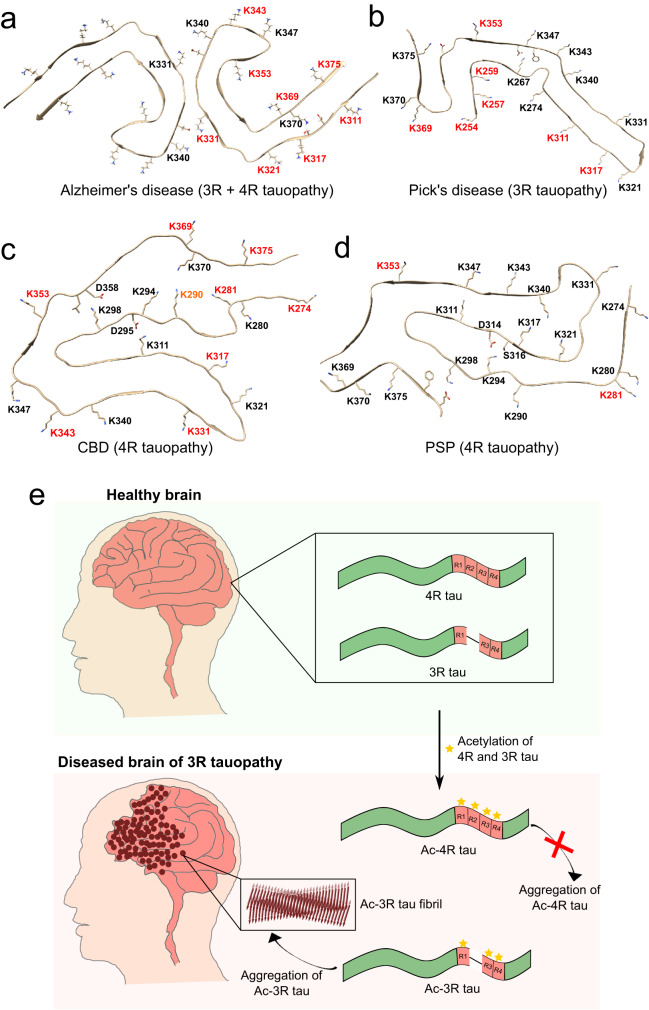
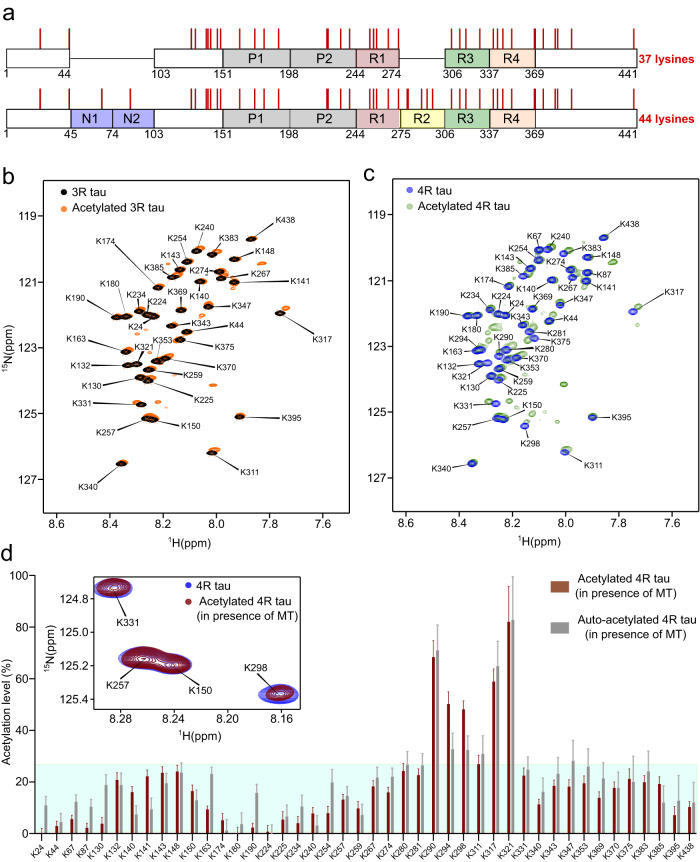
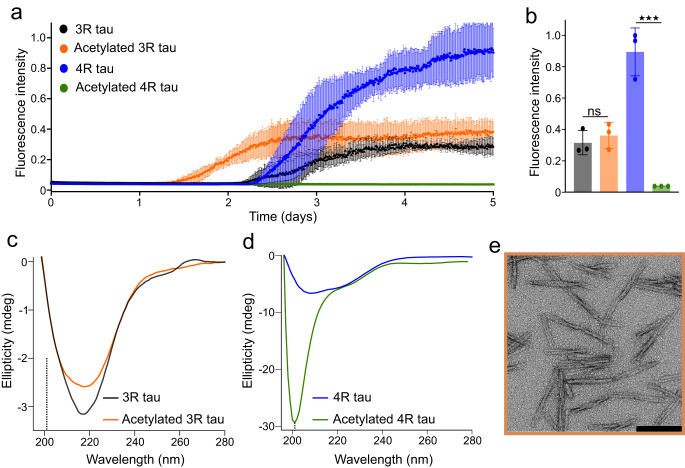
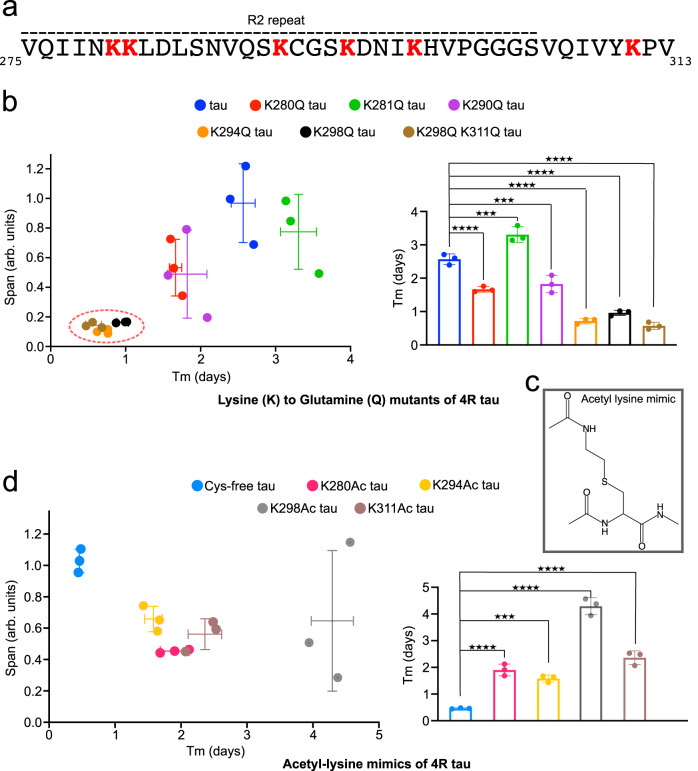
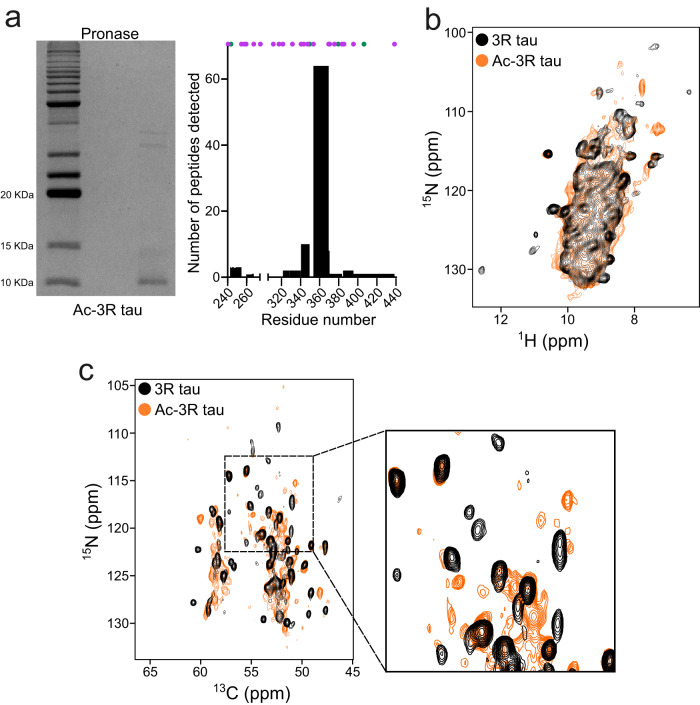
Pathogenic aggregation of the protein tau is a hallmark of Alzheimer's disease and several other tauopathies. Tauopathies are characterized by the deposition of specific tau isoforms as disease-related tau filament structures. The molecular processes that determine isoform-specific deposition of tau are however enigmatic. Here we show that acetylation of tau discriminates its isoform-specific aggregation. We reveal that acetylation strongly attenuates aggregation of four-repeat tau protein, but promotes amyloid formation of three-repeat tau. We further identify acetylation of lysine 298 as a hot spot for isoform-specific tau aggregation. Solid-state NMR spectroscopy demonstrates that amyloid fibrils formed by unmodified and acetylated three-repeat tau differ in structure indicating that site-specific acetylation modulates tau structure. The results implicate acetylation as a critical regulator that guides the selective aggregation of three-repeat tau and the development of tau isoform-specific neurodegenerative diseases.
蛋白 tau 的致病聚集是阿尔茨海默病和几种其他 tau 病的标志。tau 病的特征是特定的 tau 同工型作为与疾病相关的 tau 丝结构沉积。然而,决定 tau 同工型特异性沉积的分子过程仍然是个谜。在这里,我们表明 tau 的乙酰化可区分其同工型特异性聚集。我们揭示了乙酰化强烈抑制四重复 tau 蛋白的聚集,但促进三重复 tau 的淀粉样形成。我们进一步确定赖氨酸 298 的乙酰化为同工型特异性 tau 聚集的热点。固态 NMR 光谱表明,未修饰和乙酰化的三重复 tau 形成的淀粉样纤维在结构上存在差异,表明特异性位点的乙酰化调节 tau 结构。结果表明,乙酰化是一种关键的调节剂,指导三重复 tau 的选择性聚集和 tau 同工型特异性神经退行性疾病的发展。