German Center for Neurodegenerative Diseases (DZNE), Göttingen, Germany.
German Center for Neurodegenerative Diseases (DZNE), Bonn, Germany.
Nat Commun. 2021 Jul 9;12(1):4231. doi: 10.1038/s41467-021-24362-8.
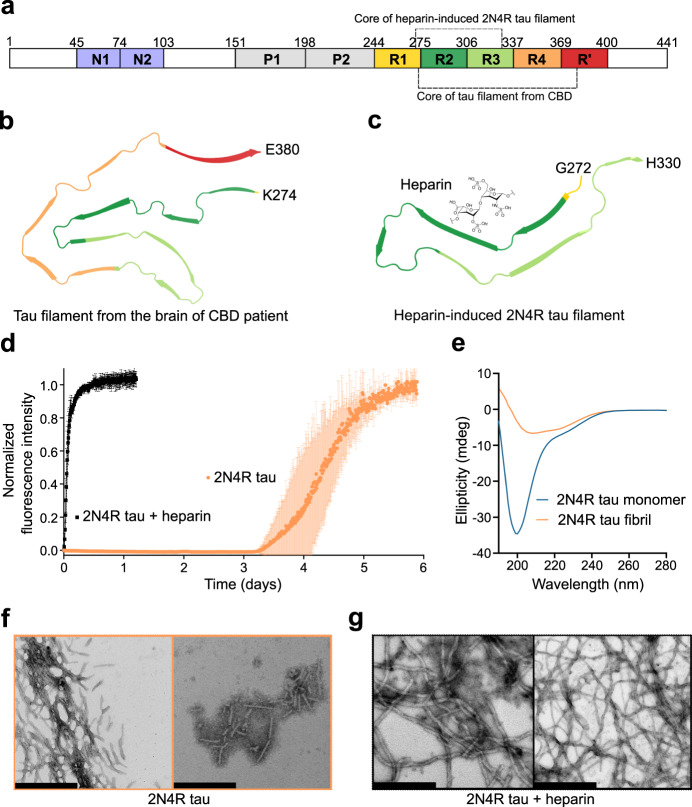
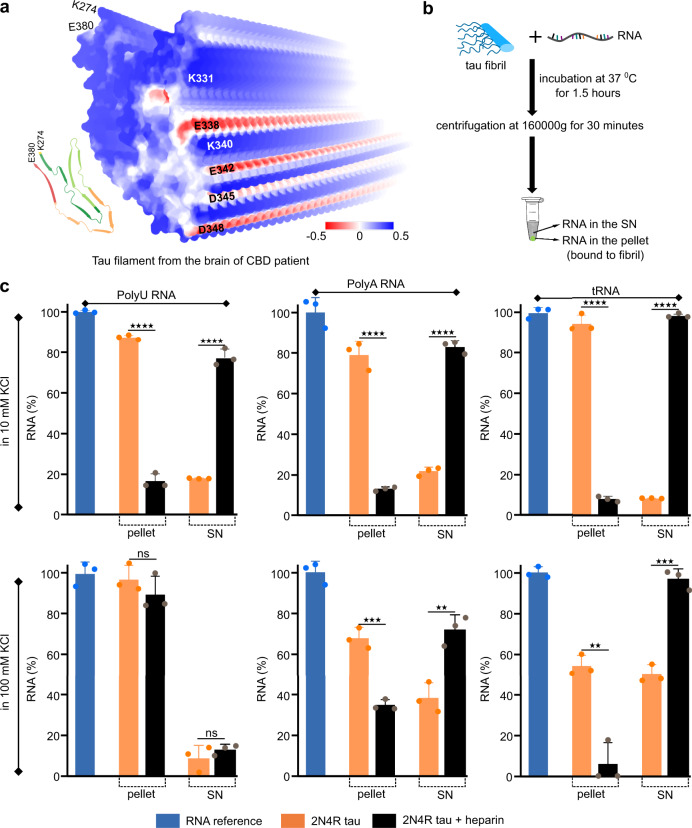
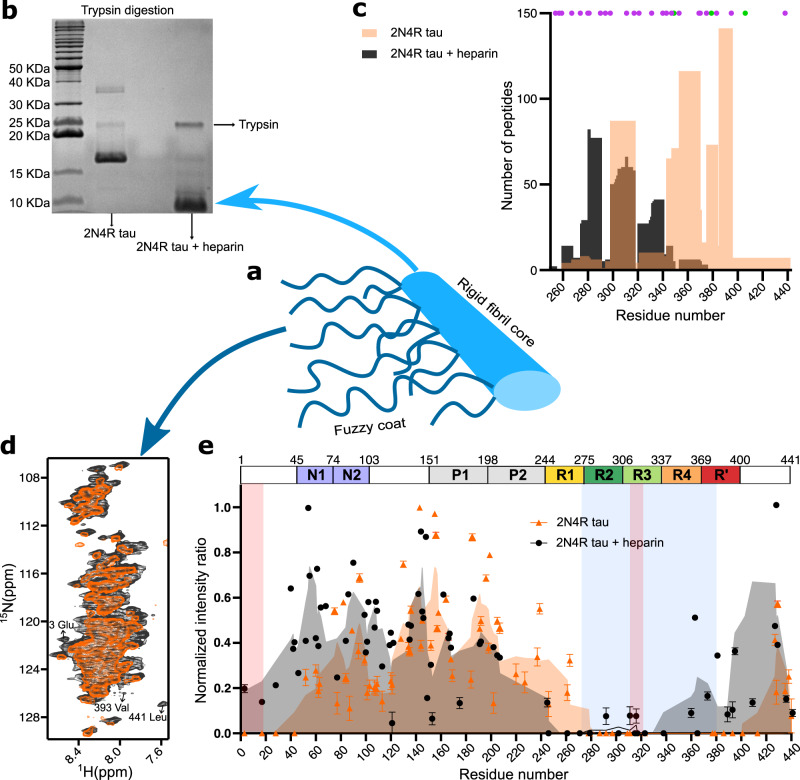
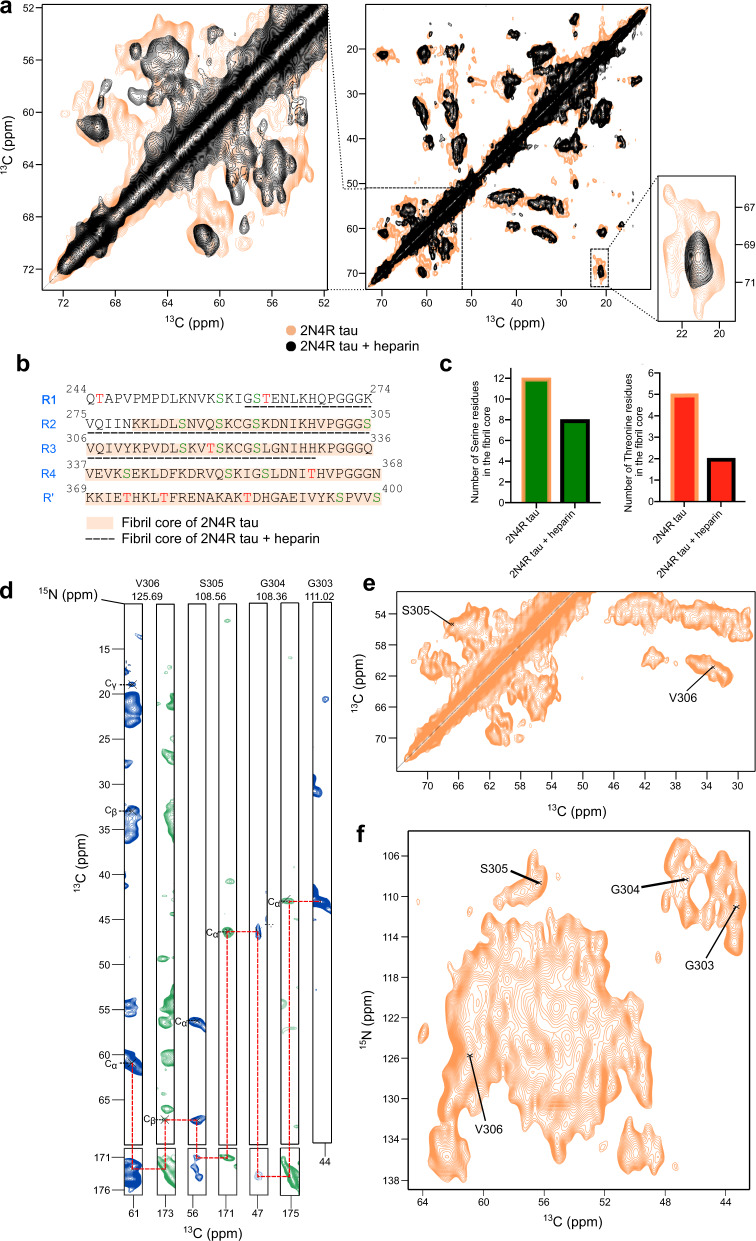
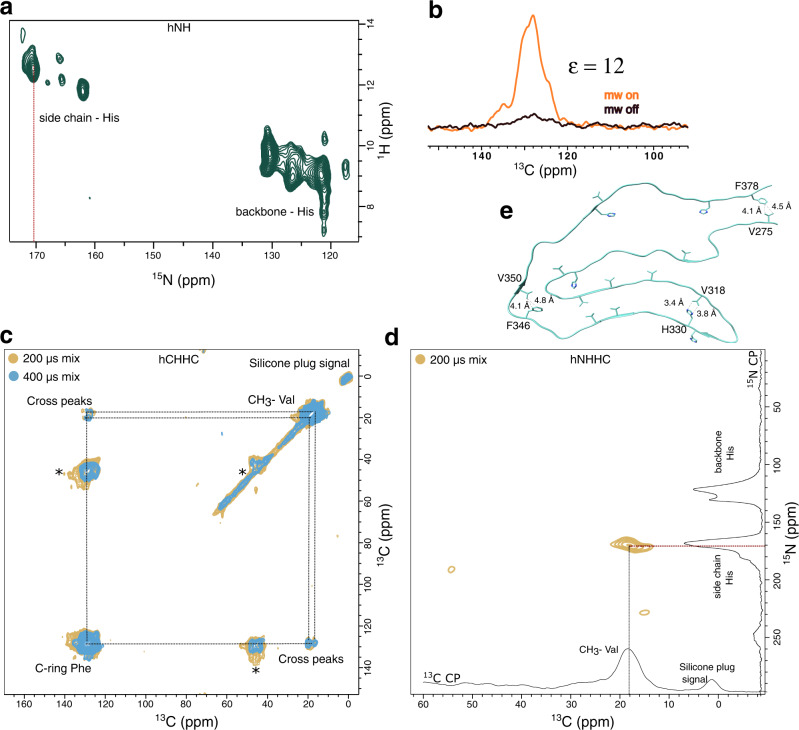
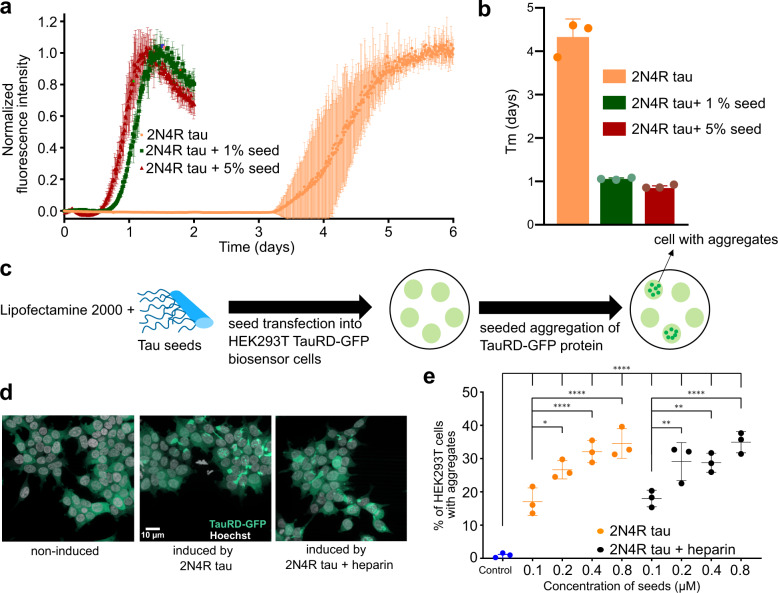
Pathological aggregation of the protein tau into insoluble aggregates is a hallmark of neurodegenerative diseases. The emergence of disease-specific tau aggregate structures termed tau strains, however, remains elusive. Here we show that full-length tau protein can be aggregated in the absence of co-factors into seeding-competent amyloid fibrils that sequester RNA. Using a combination of solid-state NMR spectroscopy and biochemical experiments we demonstrate that the co-factor-free amyloid fibrils of tau have a rigid core that is similar in size and location to the rigid core of tau fibrils purified from the brain of patients with corticobasal degeneration. In addition, we demonstrate that the N-terminal 30 residues of tau are immobilized during fibril formation, in agreement with the presence of an N-terminal epitope that is specifically detected by antibodies in pathological tau. Experiments in vitro and in biosensor cells further established that co-factor-free tau fibrils efficiently seed tau aggregation, while binding studies with different RNAs show that the co-factor-free tau fibrils strongly sequester RNA. Taken together the study provides a critical advance to reveal the molecular factors that guide aggregation towards disease-specific tau strains.
病理性聚集的蛋白 tau 形成不溶性聚集体是神经退行性疾病的一个标志。然而,疾病特异性 tau 聚集结构(称为 tau 株)的出现仍然难以捉摸。在这里,我们表明全长 tau 蛋白可以在没有辅助因子的情况下聚集形成具有种子能力的淀粉样纤维,这些纤维可以隔离 RNA。我们使用固态 NMR 光谱学和生化实验的组合证明,tau 的无辅助因子淀粉样纤维具有刚性核心,其大小和位置与从皮质基底变性患者大脑中纯化的 tau 纤维的刚性核心相似。此外,我们证明 tau 的 N 端 30 个残基在纤维形成过程中被固定,这与存在一个 N 端表位一致,该表位被病理性 tau 中的抗体特异性检测到。体外实验和生物传感器细胞中的实验进一步证实,无辅助因子的 tau 纤维能够有效地引发 tau 聚集,而与不同 RNA 的结合研究表明,无辅助因子的 tau 纤维强烈地隔离 RNA。总之,该研究提供了一个重要的进展,揭示了引导聚集向疾病特异性 tau 株的分子因素。