Departamento de Oncologia e Hematologia, Centro Universitário FMABC, Av. Príncipe de Gales, 821, Santo André, SP, 09060-650, Brazil.
Laboratório de Análises Clínicas, Centro Universitário FMABC, Av. Príncipe de Gales, 821, Santo André, SP, 09060-650, Brazil.
J Med Case Rep. 2023 Sep 25;17(1):407. doi: 10.1186/s13256-023-04139-x.
The BRCA2 gene is a well-known tumor suppressor gene implicated in breast and ovarian cancers. BRCA1/2 mutations can be sensitive to poly ADP-ribose polymerase (PARP) inhibitors such as olaparib. However, some of these patients develop resistance to this treatment and an essential factor contributing to acquired insensitivity is the occurrence of reversion mutations in the BRCA1/2 genes.
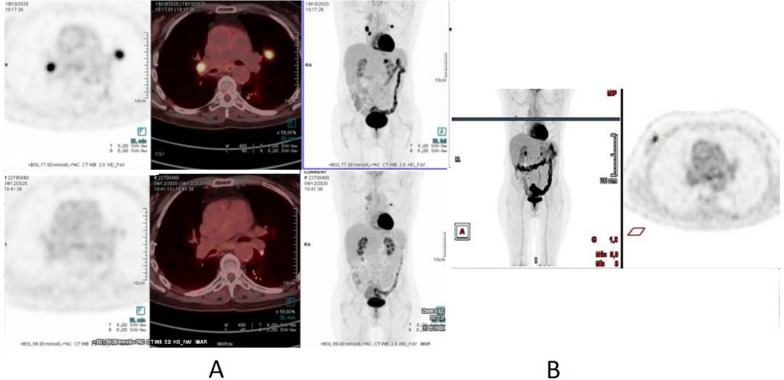
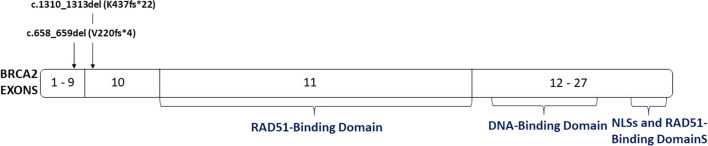
We report the case of a 65-year-old Brazilian female patient who had previously been diagnosed with metastatic lung carcinoma carrying a BRCA2 mutation that had extended to the central nervous system. Following disease progression, olaparib was administered, resulting in a stabilizing effect on her condition for ~ 30 months. During a routine follow-up, a new triple-negative breast tumor was found. Genetic testing revealed the presence of two distinct BRCA2 gene mutations in the breast tumor. The original mutation (p.Val220Ilefs4) led to a frameshift, culminating in the production of a truncated and non-functional BRCA2 protein; the second mutation, K437fs22, rectified the reading frame of exon 11. Consequently, Rad51 could properly bind to BRCA2-an essential protein crucial for DNA repair. This restoration resulted in a functional BRCA2 protein, effectively elucidating the clinical resistance observed in the new breast tumor in this case.
This case report highlights the clinical significance of comprehensive next-generation sequencing analyses for lung adenocarcinomas, both at diagnosis and upon progression. Such analyses enable informed decisions regarding targeted therapies and facilitate a deeper comprehension of resistance mechanisms.
BRCA2 基因是一种著名的肿瘤抑制基因,与乳腺癌和卵巢癌有关。BRCA1/2 突变对聚 ADP-核糖聚合酶(PARP)抑制剂如奥拉帕利敏感。然而,这些患者中的一些对这种治疗产生了耐药性,导致获得性不敏感的一个重要因素是 BRCA1/2 基因发生回复突变。
我们报告了一例 65 岁的巴西女性患者,她先前被诊断患有转移性肺癌,携带 BRCA2 突变,已扩展到中枢神经系统。疾病进展后,给予奥拉帕利治疗,使病情稳定约 30 个月。在常规随访中,发现了一个新的三阴性乳腺癌肿瘤。基因检测显示在乳腺癌肿瘤中存在两种不同的 BRCA2 基因突变。原始突变(p.Val220Ilefs4)导致移码,最终产生截短的、无功能的 BRCA2 蛋白;第二个突变,K437fs22,纠正了第 11 外显子的阅读框。因此,Rad51 可以正确结合 BRCA2-这是一种对 DNA 修复至关重要的必需蛋白。这种修复导致功能性 BRCA2 蛋白的产生,有效地解释了在这种情况下新乳腺癌肿瘤中观察到的临床耐药性。
本病例报告强调了对肺腺癌进行全面的下一代测序分析的临床意义,无论是在诊断时还是在进展时。这些分析有助于针对靶向治疗做出明智的决策,并深入了解耐药机制。