McLean Mia A, Nakajima Lisa, Chau Cecil M Y, Weinberg Joanne, Synnes Anne R, Miller Steven P, Grunau Ruth E
Department of Pediatrics University of British Columbia British Columbia Vancouver Canada.
BC Children's Hospital Research Institute British Columbia Vancouver Canada.
Paediatr Neonatal Pain. 2023 May 29;5(3):86-95. doi: 10.1002/pne2.12112. eCollection 2023 Sep.
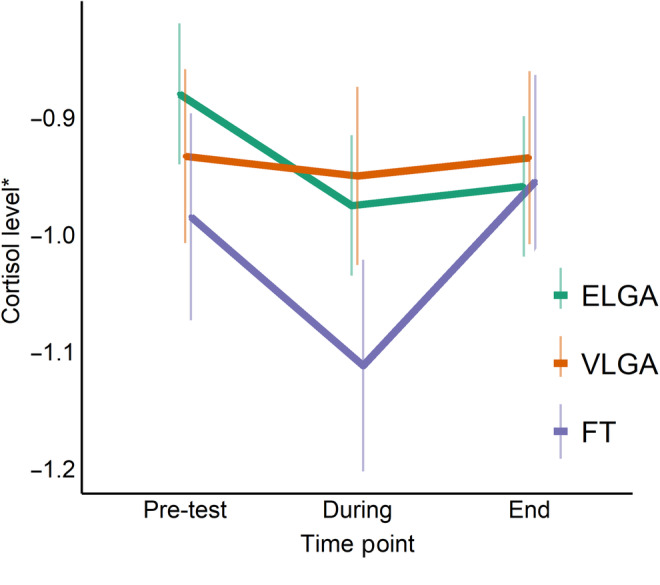
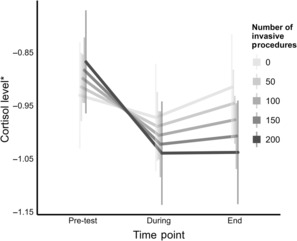
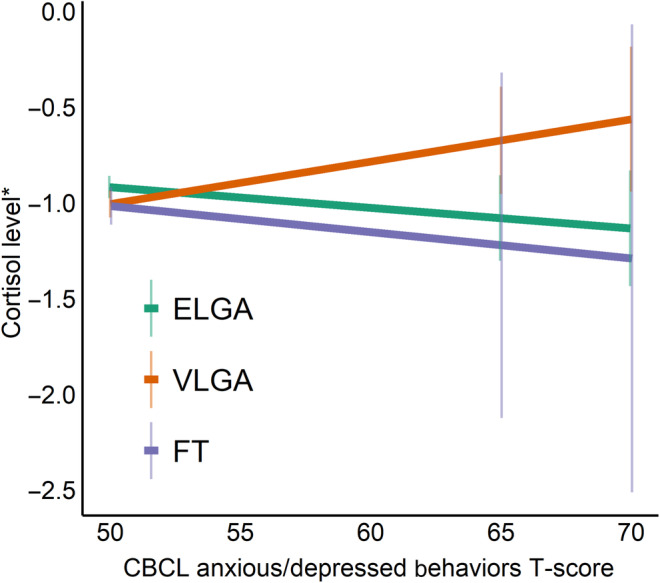
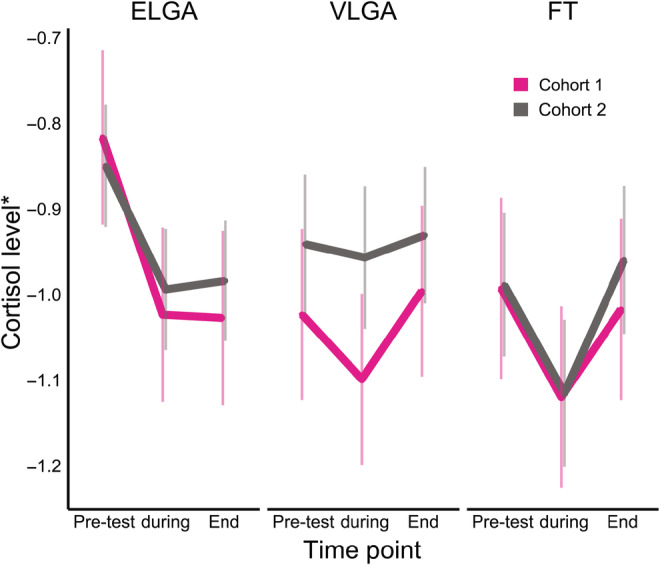
Exposure to pain-related stress from frequent invasive procedures in the neonatal intensive care unit (NICU) has been associated with altered physiological stress regulation, neurodevelopment, and behavior in children born very preterm (≤32 weeks gestation). Previously, in a cohort born 2003-2006 (Cohort 1), we found that, at 18 months corrected age (CA), children born extremely low gestational age (ELGA; 24-28 weeks) and very low gestational age (VLGA; 29-32 weeks), had higher pre-test cortisol levels and a different pattern of cortisol output across a developmental assessment involving cognitive challenge compared to children born full-term (FT; 39-41 weeks). Also, greater neonatal pain-related stress exposure among the preterm children was related to higher pre-test cortisol levels. Given the adverse long-term effects of neonatal pain in preterm infants and the ensuing rise in clinical concerns to appropriately manage pain in the NICU in recent years, we aimed to examine whether our findings from Cohort 1 would still be evident in an independent cohort (Cohort 2) born 2006-2011 and recruited from the same tertiary NICU in Vancouver, Canada. We also compared the cortisol patterns, clinical and socio-demographic factors, and their interrelationships between the two cohorts. In Cohort 2, our findings using multi-level modeling support and extend our earlier findings in Cohort 1, demonstrating that children born ELGA display higher pre-test cortisol levels than FT. As well, greater cortisol output across assessment was related to more anxiety/depressive behaviors in children born VLGA. Importantly, children born ELGA were exposed to less neonatal pain/stress, mechanical ventilation, and morphine in Cohort 2 than Cohort 1. In both cohorts, however, cortisol levels and patterns were related to neonatal pain/stress and clinical factors (days on mechanical ventilation, overall morphine exposure). Despite less exposure to pain/stress and adverse clinical factors in Cohort 2 compared to Cohort 1, cortisol levels and patterns across cognitive challenge in preterm children at 18-month CA were consistent across the two independent cohorts. These findings highlight that, despite improvements to neonatal care, children born extremely preterm continue to display altered HPA axis activity, which is associated with their poorer neurodevelopmental and behavioral outcomes.
新生儿重症监护病房(NICU)中频繁的侵入性操作所带来的与疼痛相关的应激,与极早产儿(孕周≤32周)的生理应激调节改变、神经发育及行为变化有关。此前,在一个2003年至2006年出生的队列(队列1)中,我们发现,在18个月矫正年龄(CA)时,极早早产儿(ELGA;24 - 28周)和极低出生体重儿(VLGA;29 - 32周)与足月儿(FT;39 - 41周)相比,在一项涉及认知挑战的发育评估中,其测试前皮质醇水平更高,且皮质醇分泌模式不同。此外,早产儿中与新生儿疼痛相关的应激暴露增加与测试前皮质醇水平升高有关。鉴于新生儿疼痛对早产儿的长期不良影响以及近年来临床对在NICU中适当管理疼痛的关注度不断提高,我们旨在研究我们在队列1中的发现是否在2006年至2011年出生、从加拿大温哥华同一三级NICU招募的独立队列(队列2)中仍然明显。我们还比较了两个队列的皮质醇模式、临床和社会人口统计学因素及其相互关系。在队列2中,我们使用多层次模型的研究结果支持并扩展了我们在队列1中的早期发现,表明ELGA出生的儿童测试前皮质醇水平高于FT儿童。同样,在整个评估过程中皮质醇分泌增加与VLGA出生儿童更多的焦虑/抑郁行为有关。重要的是,与队列1相比,队列2中ELGA出生的儿童暴露于新生儿疼痛/应激、机械通气和吗啡的情况较少。然而,在两个队列中,皮质醇水平和模式均与新生儿疼痛/应激及临床因素(机械通气天数、吗啡总暴露量)有关。尽管队列2中与队列1相比,疼痛/应激和不良临床因素的暴露较少,但在18个月CA时,早产儿在认知挑战过程中的皮质醇水平和模式在两个独立队列中是一致的。这些发现突出表明,尽管新生儿护理有所改善,但极早早产儿出生后仍表现出下丘脑 - 垂体 - 肾上腺(HPA)轴活动改变,这与他们较差的神经发育和行为结果相关。