Cancer Center, The First Affiliated Hospital of Jinzhou Medical University, Jinzhou 121001, Liaoning Province, China.
Department of Colorectal Surgery, Liaoning Cancer Hospital, Shenyang 110042, Liaoning Province, China.
World J Gastroenterol. 2023 Sep 21;29(35):5104-5124. doi: 10.3748/wjg.v29.i35.5104.
Regenerating gene 4 has been proved to be carcinogenic in some cancers, but its manifestation and possible carcinogenic mechanisms in colorectal cancer (CRC) have not yet been elucidated. Our previous study found that the drug resistance of CRC cells may be closely linked to their fat metabolism.
To explore the role of in CRC and its association with lipid droplet formation and chemoresistance.
We conducted a meta-analysis and bioinformatics and pathological analyses of expression in CRC. The effects of on the phenotypes and related protein expression were also investigated in CRC cells. We detected the impacts of on the chemoresistance and lipid droplet formation in CRC cells. Finally, we analyzed how regulated the transcription and proteasomal degradation of lipogenic enzymes in CRC cells.
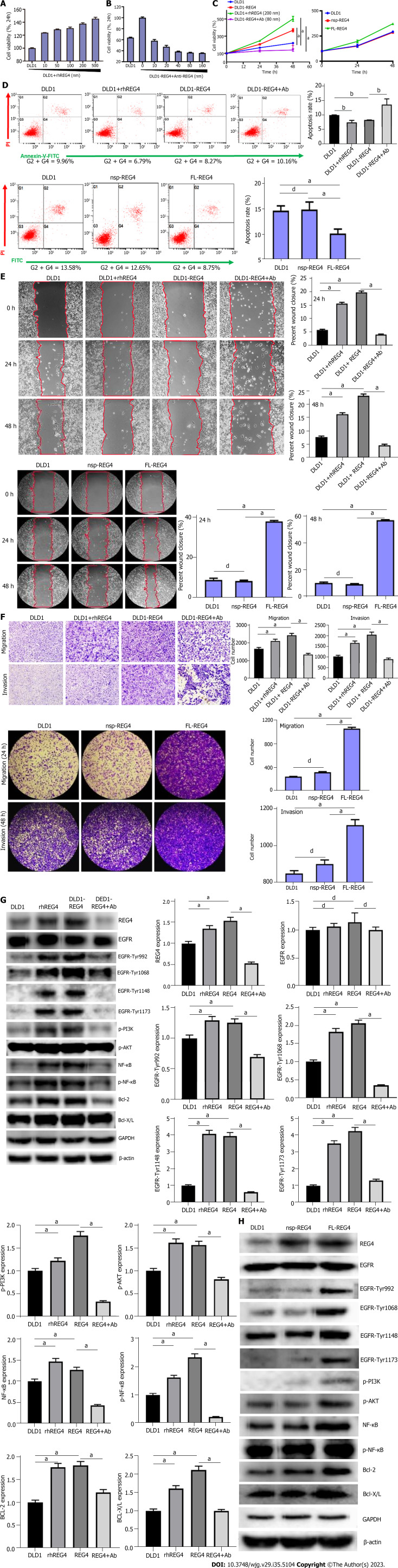
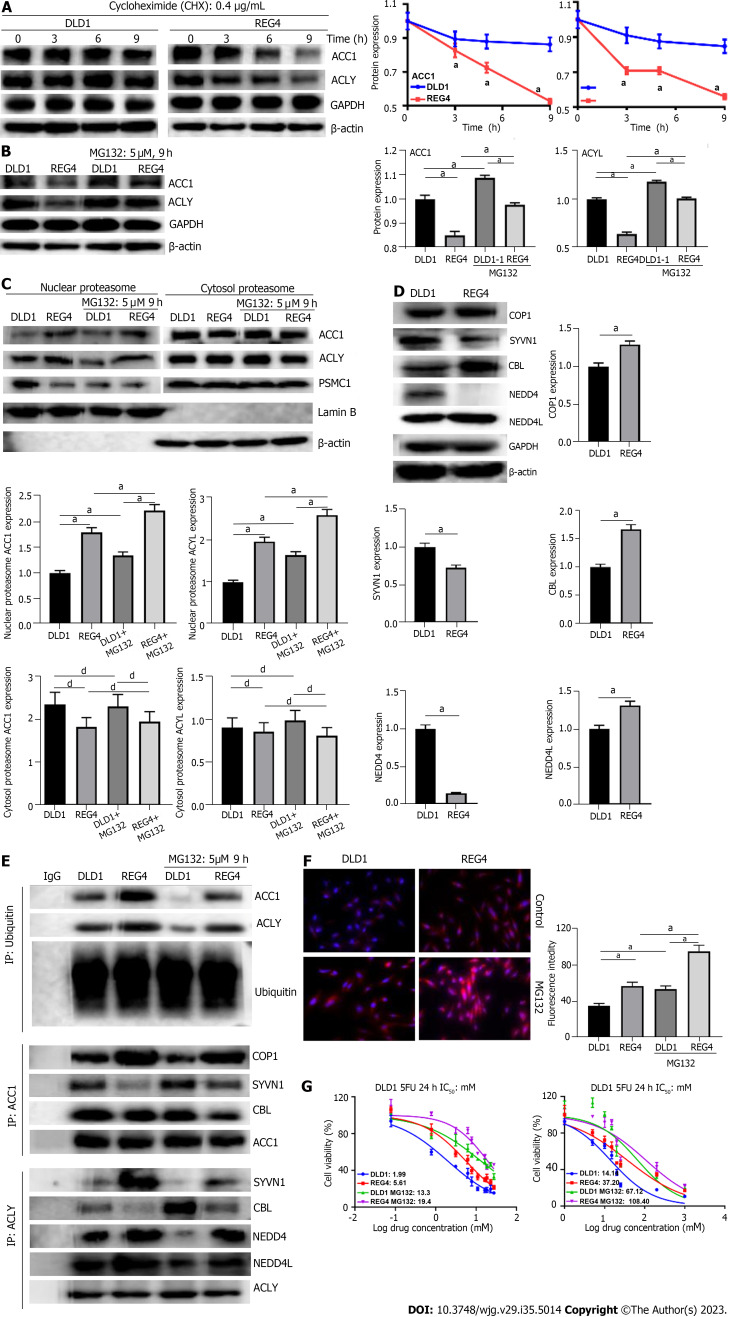
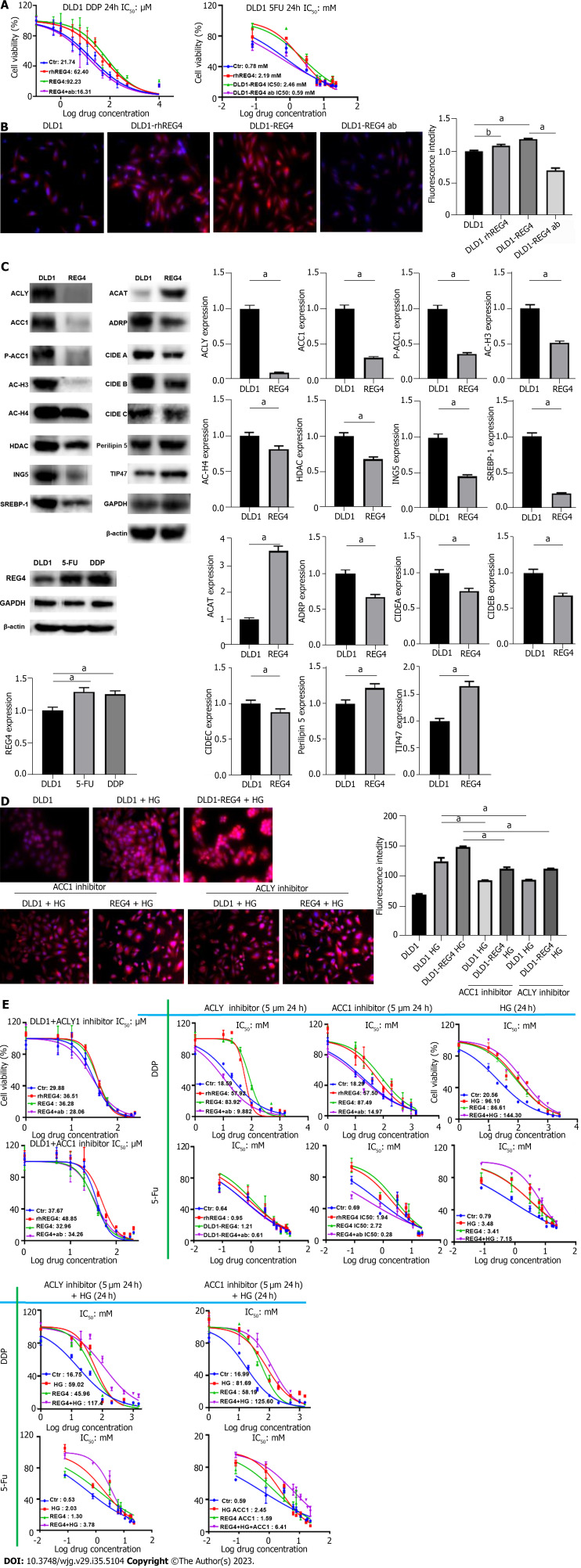
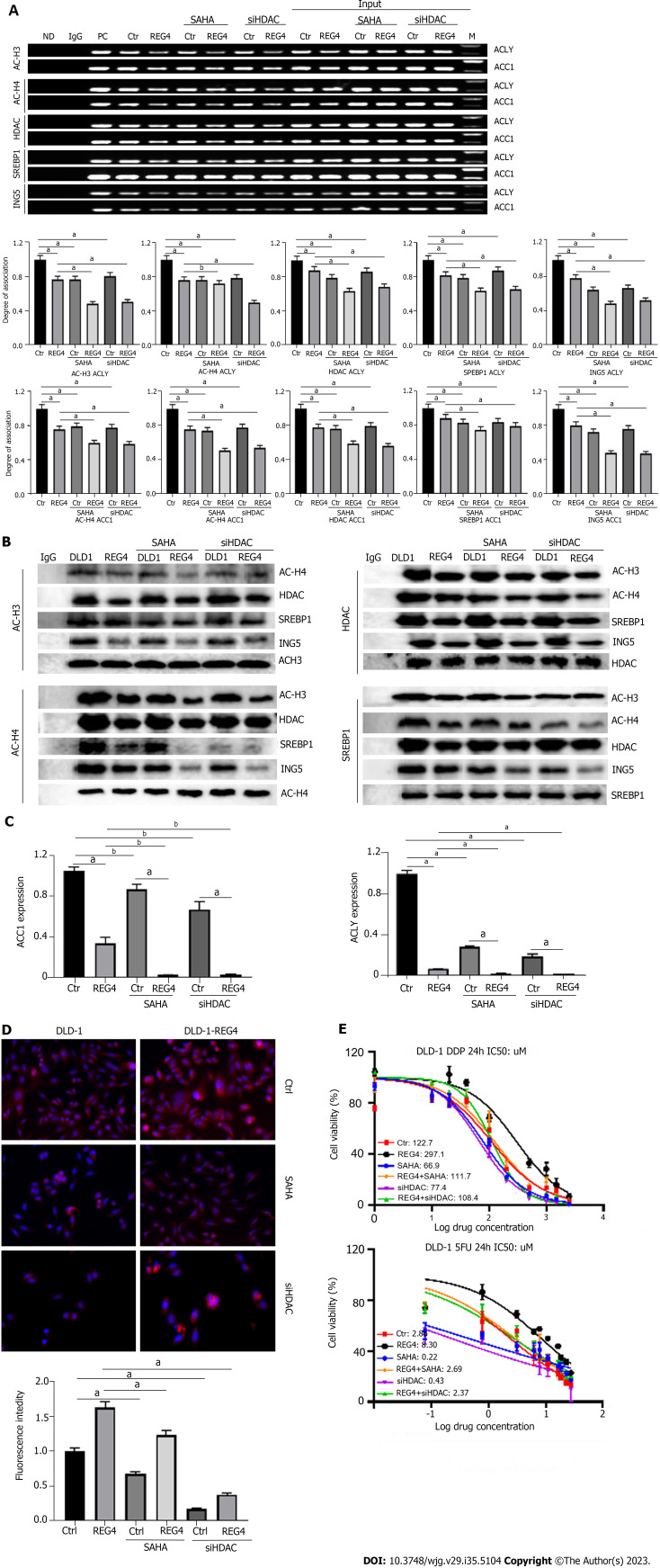
Compared to normal mucosa, mRNA expression was high in CRC ( < 0.05) but protein expression was low. An inverse correlation existed between lymph node and distant metastases, tumor-node-metastasis staging or short overall survival and mRNA overexpression ( < 0.05), but vice versa for protein expression. -related genes included: Chemokine activity; taste receptors; protein-DNA and DNA packing complexes; nucleosomes and chromatin; generation of second messenger molecules; programmed cell death signals; epigenetic regulation and DNA methylation; transcription repression and activation by DNA binding; insulin signaling pathway; sugar metabolism and transfer; and neurotransmitter receptors ( < 0.05). exposure or overexpression promoted proliferation, antiapoptosis, migration, and invasion of DLD-1 cells in an autocrine or paracrine manner by activating the epidermal growth factor receptor-phosphoinositide 3-kinase-Akt-nuclear factor-κB pathway. was involved in chemoresistance not through de novo lipogenesis, but lipid droplet assembly. inhibited the transcription of acetyl-CoA carboxylase 1 (ACC1) and ATP-citrate lyase (ACLY) by disassociating the complex formation of anti-acetyl (AC)-acetyl-histone 3-AC-histone 4-inhibitor of growth protein-5-si histone deacetylase;-sterol-regulatory element binding protein 1 in their promoters and induced proteasomal degradation of ACC1 or ACLY.
may be involved in chemoresistance through lipid droplet assembly. reduces expression of de novo lipid synthesis key enzymes by inhibiting transcription and promoting ubiquitination-mediated proteasomal degradation.
再生基因 4 已被证明在某些癌症中具有致癌性,但它在结直肠癌(CRC)中的表现和可能的致癌机制尚未阐明。我们之前的研究发现,CRC 细胞的耐药性可能与其脂肪代谢密切相关。
探讨在 CRC 中的作用及其与脂滴形成和化疗耐药性的关系。
我们进行了荟萃分析和生物信息学及病理学分析,检测了 CRC 中 的表达。还研究了在 CRC 细胞中对表型和相关蛋白表达的影响。我们检测了在 CRC 细胞中对化疗耐药性和脂滴形成的影响。最后,我们分析了如何调节 CRC 细胞中脂肪生成酶的转录和蛋白酶体降解。
与正常黏膜相比,CRC 中 的 mRNA 表达升高(<0.05),但蛋白表达降低。淋巴结和远处转移、肿瘤-淋巴结-转移分期或总生存期短与 mRNA 过表达呈负相关(<0.05),而 蛋白表达则相反。与 相关的基因包括:趋化因子活性;味觉受体;蛋白-DNA 和 DNA 包装复合物;核小体和染色质;第二信使分子的产生;程序性细胞死亡信号;表观遗传调控和 DNA 甲基化;转录抑制和 DNA 结合的激活;胰岛素信号通路;糖代谢和转移;和神经递质受体(<0.05)。 通过激活表皮生长因子受体-磷酸肌醇 3-激酶-Akt-核因子-κB 通路,以自分泌或旁分泌方式促进 DLD-1 细胞的增殖、抗凋亡、迁移和侵袭。参与化疗耐药性不是通过从头脂肪生成,而是通过脂滴组装。通过分离其启动子上的复合物形成,抑制乙酰辅酶 A 羧化酶 1(ACC1)和三磷酸柠檬酸裂解酶(ACLY)的转录。抗乙酰(AC)-乙酰组蛋白 3-乙酰组蛋白 4-生长抑制蛋白 5-si 组蛋白去乙酰酶;固醇调节元件结合蛋白 1,诱导 ACC1 或 ACLY 的泛素化介导的蛋白酶体降解。
可能通过脂滴组装参与化疗耐药性。通过抑制转录和促进泛素化介导的蛋白酶体降解,降低从头脂质合成关键酶的表达。