Ramakrishnan Divya, Jekel Leon, Chadha Saahil, Janas Anastasia, Moy Harrison, Maleki Nazanin, Sala Matthew, Kaur Manpreet, Petersen Gabriel Cassinelli, Merkaj Sara, von Reppert Marc, Baid Ujjwal, Bakas Spyridon, Kirsch Claudia, Davis Melissa, Bousabarah Khaled, Holler Wolfgang, Lin MingDe, Westerhoff Malte, Aneja Sanjay, Memon Fatima, Aboian Mariam S
Yale School of Medicine, Department of Radiology and Biomedical Imaging, New Haven, CT, USA.
University of Essen School of Medicine, Essen, Germany.
ArXiv. 2023 Sep 12:arXiv:2309.05053v2.
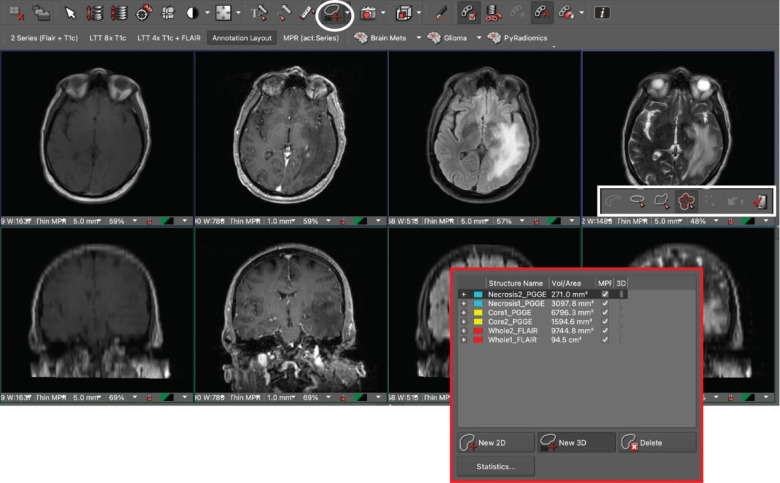
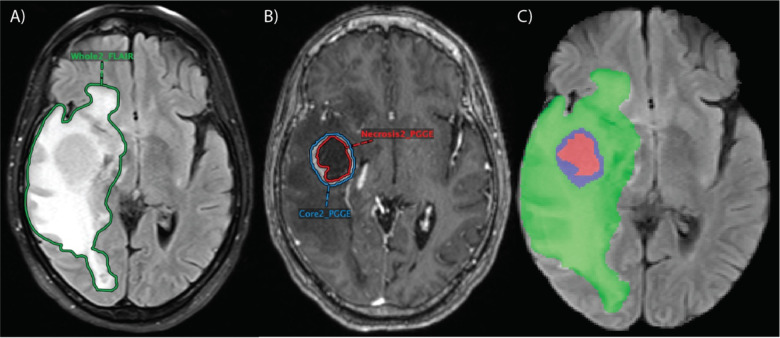
Resection and whole brain radiotherapy (WBRT) are the standards of care for the treatment of patients with brain metastases (BM) but are often associated with cognitive side effects. Stereotactic radiosurgery (SRS) involves a more targeted treatment approach and has been shown to avoid the side effects associated with WBRT. However, SRS requires precise identification and delineation of BM. While many AI algorithms have been developed for this purpose, their clinical adoption has been limited due to poor model performance in the clinical setting. Major reasons for non-generalizable algorithms are the limitations in the datasets used for training the AI network. The purpose of this study was to create a large, heterogenous, annotated BM dataset for training and validation of AI models to improve generalizability. We present a BM dataset of 200 patients with pretreatment T1, T1 post-contrast, T2, and FLAIR MR images. The dataset includes contrast-enhancing and necrotic 3D segmentations on T1 post-contrast and whole tumor (including peritumoral edema) 3D segmentations on FLAIR. Our dataset contains 975 contrast-enhancing lesions, many of which are sub centimeter, along with clinical and imaging feature information. We used a streamlined approach to database-building leveraging a PACS-integrated segmentation workflow.
手术切除和全脑放疗(WBRT)是治疗脑转移瘤(BM)患者的标准治疗方法,但常伴有认知副作用。立体定向放射外科(SRS)采用更具针对性的治疗方法,已被证明可避免与WBRT相关的副作用。然而,SRS需要精确识别和勾画BM。虽然已经为此开发了许多人工智能算法,但由于其在临床环境中的模型性能较差,其临床应用受到限制。算法不可推广的主要原因是用于训练人工智能网络的数据集存在局限性。本研究的目的是创建一个大型、异质性、带注释的BM数据集,用于训练和验证人工智能模型,以提高其通用性。我们展示了一个包含200例患者治疗前T1、T1增强后、T2和FLAIR磁共振图像的BM数据集。该数据集包括T1增强后的强化和坏死3D分割,以及FLAIR上的全肿瘤(包括瘤周水肿)3D分割。我们的数据集包含975个强化病变,其中许多是亚厘米级的,同时还包含临床和影像特征信息。我们采用了一种简化的方法来构建数据库,利用了与PACS集成的分割工作流程。