Hanlon Killian S, Cheng Ming, De La Cruz Demitri, Patel Nikita, Santoscoy Miguel C, Gong Yi, Ng Carrie, Nguyen Diane M, Nammour Josette, Clark Sean W, Kozarsky Karen, Maguire Casey A
Department of Neurology, Massachusetts General Hospital, Boston, MA.
Molecular Neurogenetics Unit, Massachusetts General Hospital, Charlestown, MA.
bioRxiv. 2023 Sep 13:2023.09.13.557506. doi: 10.1101/2023.09.13.557506.
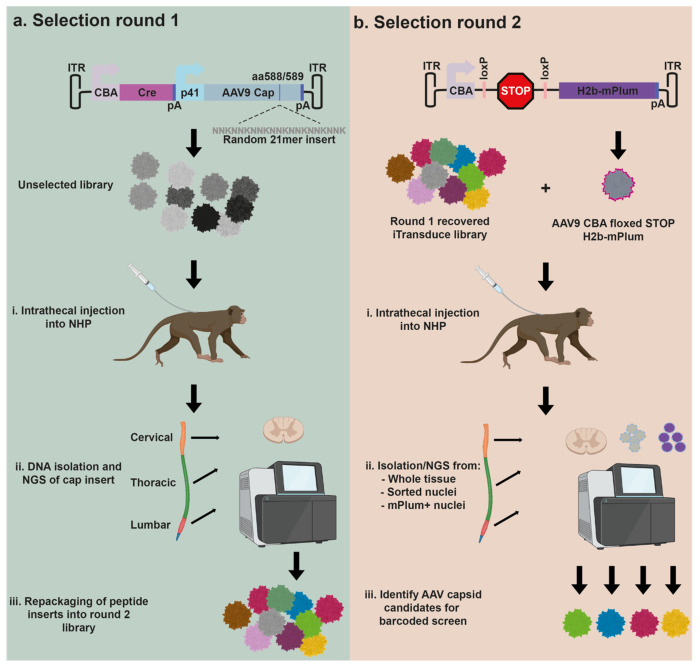
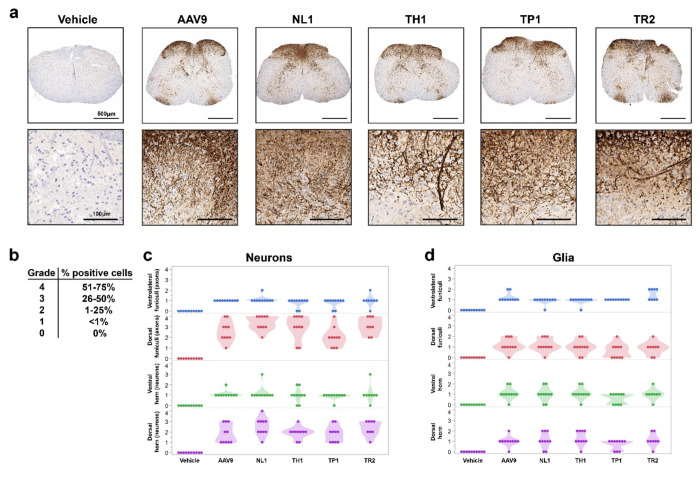
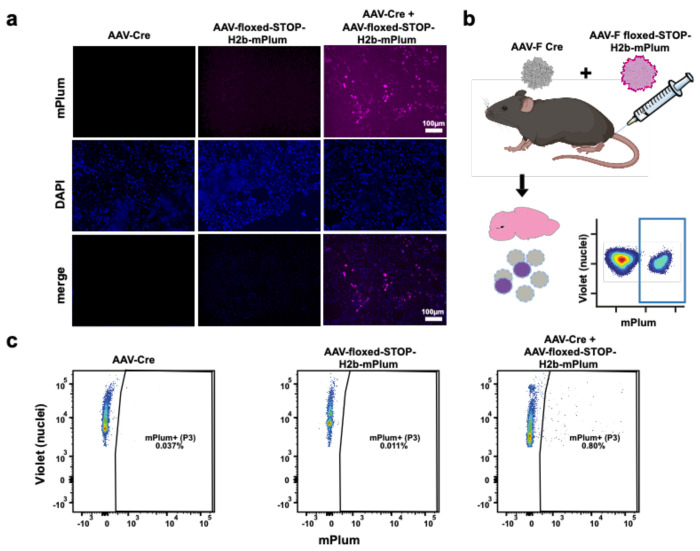
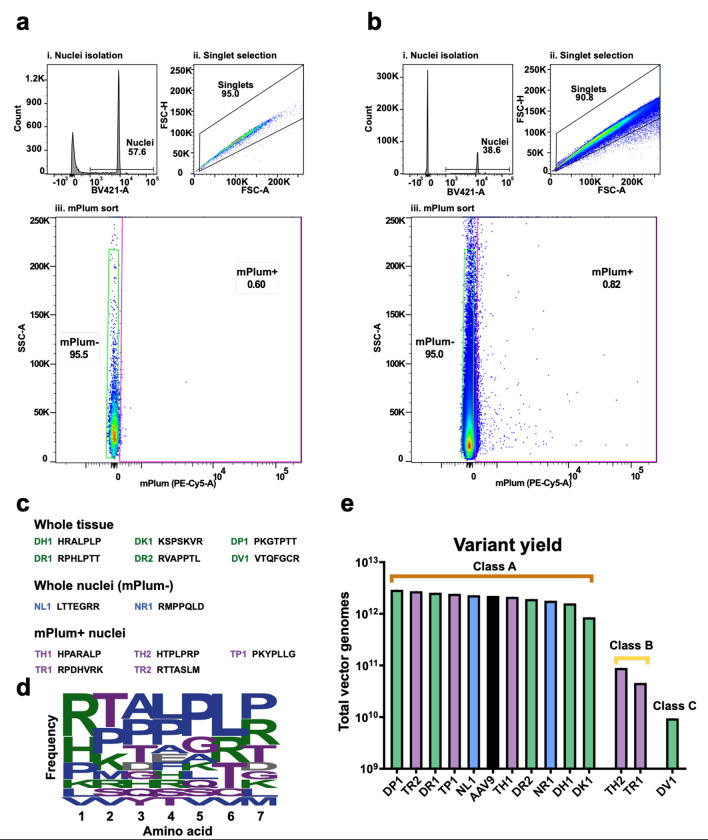
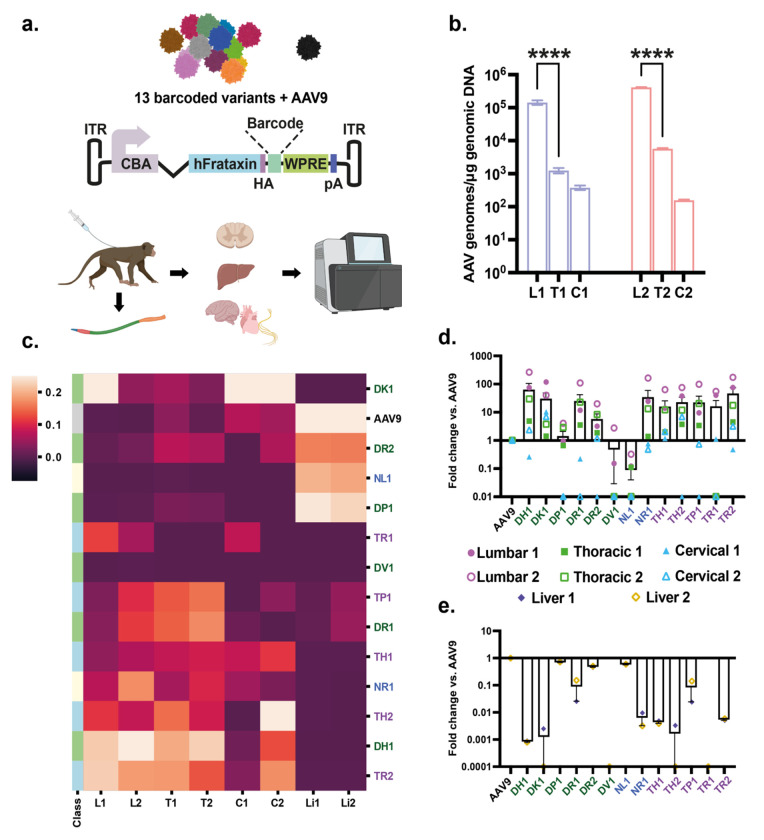
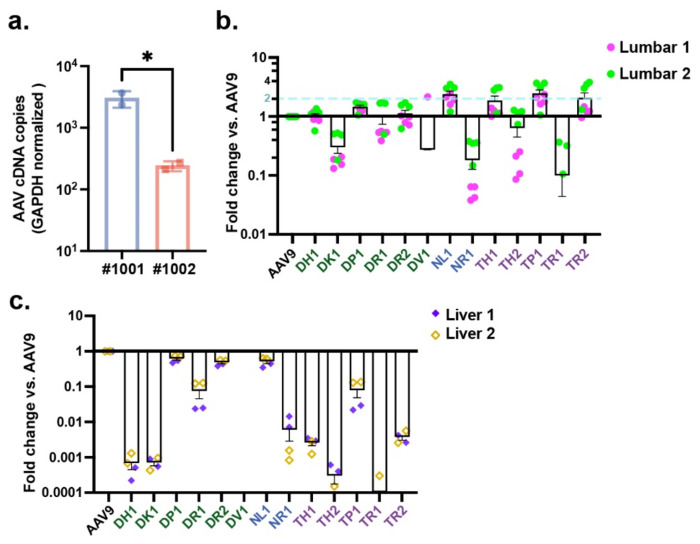
Systemic administration of adeno-associated virus (AAV) vectors for spinal cord gene therapy has challenges including toxicity at high doses and pre-existing immunity that reduces efficacy. Intrathecal delivery of AAV vectors into the cerebral spinal fluid (CSF) can avoid many of the issues of systemic delivery, although achieving broad distribution of the vector and transgene expression throughout the spinal cord is challenging and vector entry to the periphery occurs, sometimes initiating hepatotoxicity. Here we performed two rounds of biopanning in non-human primates (NHPs) with an AAV9 peptide display library injected intrathecally and performed insert sequencing on DNA isolated from either whole tissue (conventional selection), isolated nuclei, or nuclei from transgene-expressing cells. A subsequent barcoded pool of candidates and AAV9 was compared at the DNA (biodistribution) and RNA (expression) level in spinal cord and liver of intrathecally injected NHPs. Most of the candidates displayed enhanced biodistribution compared to AAV9 at all levels of spinal cord ranging from 2 to 265-fold. Nuclear isolation or expression-based selection yielded 4 of 7 candidate capsids with enhanced transgene expression in spinal cord (up to 2.4-fold), while no capsid obtained by conventional selection achieved that level. Furthermore, several capsids displayed lower biodistribution to the liver of up to 1,250-fold, compared to AAV9, providing a remarkable on target/off target biodistribution ratio. These capsids may have potential for gene therapy programs directed at the spinal cord and the selection method described here should be useful in clinically relevant large animal models.
将腺相关病毒(AAV)载体全身给药用于脊髓基因治疗存在诸多挑战,包括高剂量时的毒性以及会降低疗效的预先存在的免疫反应。将AAV载体鞘内注射到脑脊液(CSF)中可避免全身给药的许多问题,尽管要使载体和转基因在整个脊髓中广泛分布具有挑战性,并且载体有时会进入外周,引发肝毒性。在这里,我们用鞘内注射的AAV9肽展示文库在非人类灵长类动物(NHP)中进行了两轮生物淘选,并对从全组织(传统筛选)、分离的细胞核或转基因表达细胞的细胞核中分离的DNA进行了插入序列测定。随后,在鞘内注射NHP的脊髓和肝脏中,在DNA(生物分布)和RNA(表达)水平上比较了候选物和AAV9的条形码文库。与AAV9相比,大多数候选物在脊髓的各个水平上均显示出增强的生物分布,范围为2至265倍。基于细胞核分离或表达的筛选在7种候选衣壳中有4种在脊髓中具有增强的转基因表达(高达2.4倍),而通过传统筛选获得的衣壳均未达到该水平。此外,与AAV9相比,几种衣壳在肝脏中的生物分布降低了多达1250倍,提供了显著的靶向/非靶向生物分布比。这些衣壳可能对针对脊髓的基因治疗方案具有潜力,此处描述的筛选方法在临床相关的大型动物模型中应该会有用。