Emami Michael R, Espinoza Alejandro, Young Courtney S, Ma Feiyang, Farahat Philip K, Felgner Philip L, Chamberlain Jeffrey S, Xu Xiangmin, Pyle April D, Pellegrini Matteo, Villalta S Armando, Spencer Melissa J
Department of Neurology, David Geffen School of Medicine, University of California, Los Angeles, Los Angeles, CA, USA.
Department of Human Genetics, University of California, Los Angeles, Los Angeles, CA, USA.
Mol Ther Methods Clin Dev. 2023 Jun 12;30:90-102. doi: 10.1016/j.omtm.2023.06.002. eCollection 2023 Sep 14.
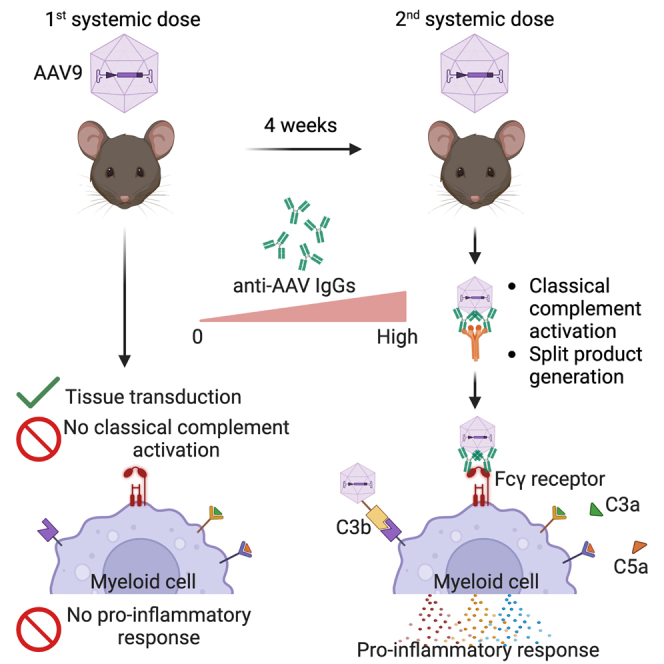
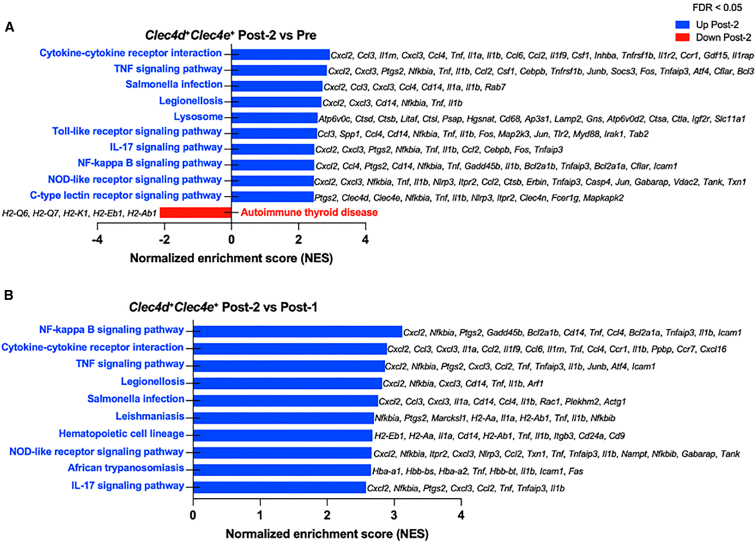
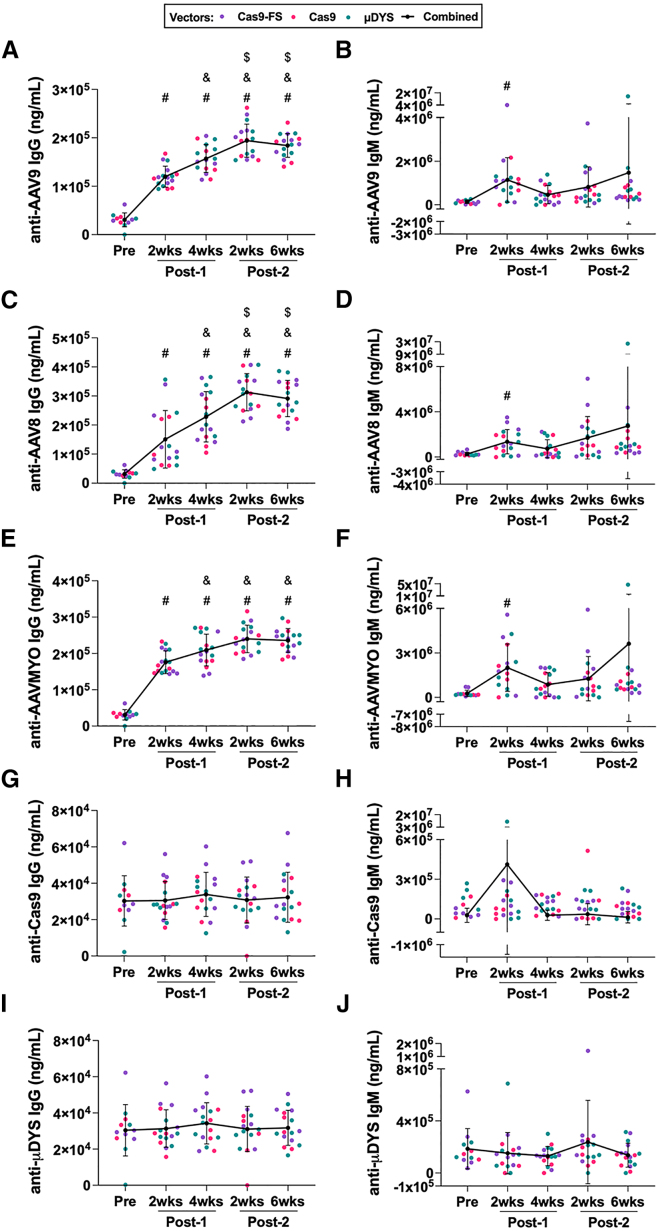
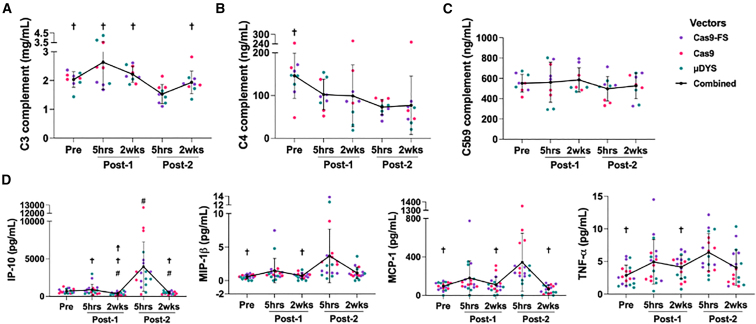
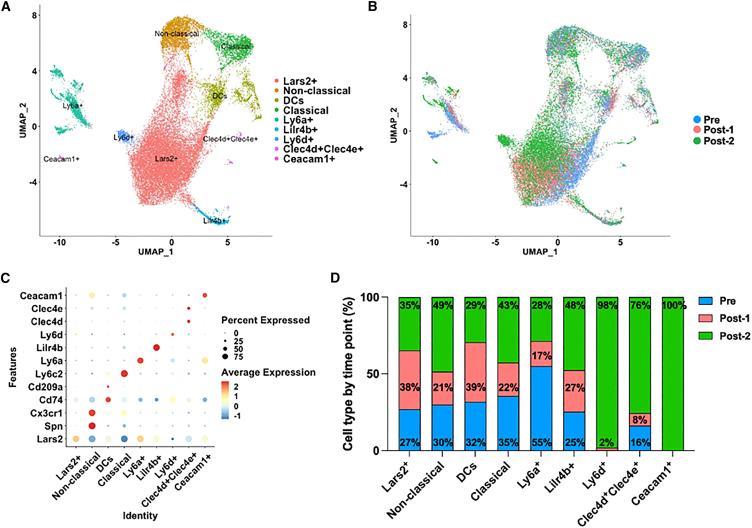
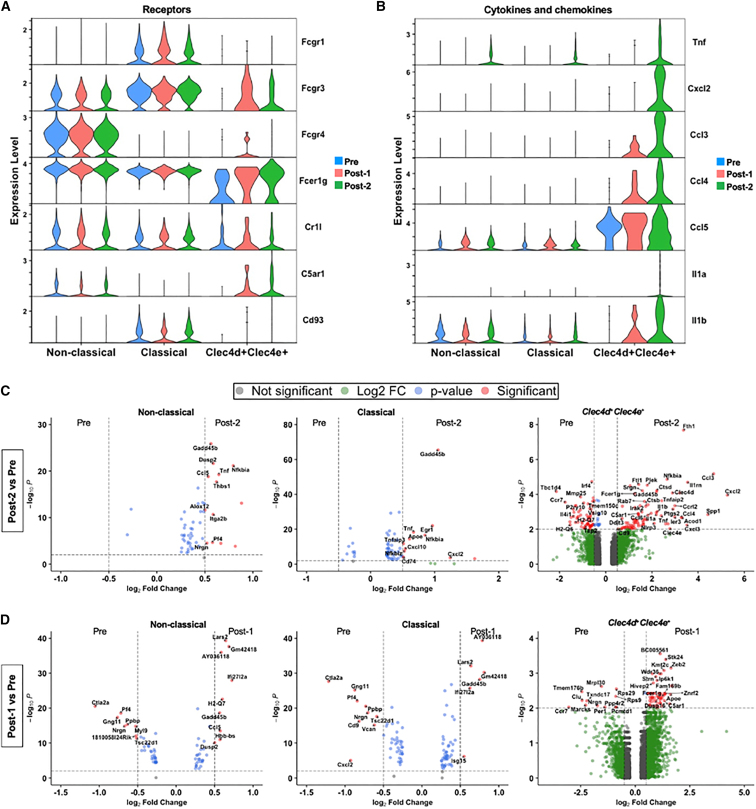
High systemic doses of adeno-associated viruses (AAVs) have been associated with immune-related serious adverse events (SAEs). Although AAV was well tolerated in preclinical models, SAEs were observed in clinical trials, indicating the need for improved preclinical models to understand AAV-induced immune responses. Here, we show that mice dual-dosed with AAV9 at 4-week intervals better recapitulate aspects of human immunity to AAV. In the model, anti-AAV9 immunoglobulin G (IgGs) increased in a linear fashion between the first and second AAV administrations. Complement activation was only observed in the presence of high levels of both AAV and anti-AAV IgG. Myeloid-derived pro-inflammatory cytokines were significantly induced in the same pattern as complement activation, suggesting that myeloid cell activation to AAV may rely on the presence of both AAV and anti-AAV IgG complexes. Single-cell RNA sequencing of peripheral blood mononuclear cells confirmed that activated monocytes were a primary source of pro-inflammatory cytokines and chemokines, which were significantly increased after a second AAV9 exposure. The same activated monocyte clusters expressed both Fcγ and complement receptors, suggesting that anti-AAV-mediated activation of myeloid cells through Fcγ receptors and/or complement receptors is one mechanism by which anti-AAV antigen complexes may prime antigen-presenting cells and amplify downstream immunity.
高全身剂量的腺相关病毒(AAV)与免疫相关的严重不良事件(SAE)有关。尽管AAV在临床前模型中耐受性良好,但在临床试验中观察到了SAE,这表明需要改进临床前模型以了解AAV诱导的免疫反应。在这里,我们表明以4周的间隔对小鼠进行两次AAV9给药能更好地模拟人类对AAV的免疫反应。在该模型中,抗AAV9免疫球蛋白G(IgG)在第一次和第二次AAV给药之间呈线性增加。仅在同时存在高水平的AAV和抗AAV IgG时才观察到补体激活。骨髓来源的促炎细胞因子以与补体激活相同的模式被显著诱导,这表明骨髓细胞对AAV的激活可能依赖于AAV和抗AAV IgG复合物的同时存在。外周血单核细胞的单细胞RNA测序证实,活化的单核细胞是促炎细胞因子和趋化因子的主要来源,在第二次暴露于AAV9后显著增加。相同的活化单核细胞簇同时表达Fcγ和补体受体,这表明抗AAV通过Fcγ受体和/或补体受体介导的骨髓细胞激活是抗AAV抗原复合物可能启动抗原呈递细胞并放大下游免疫反应的一种机制。