Department of Chemistry, University of Central Florida, Orlando, FL 32816, USA.
Biosensors (Basel). 2023 Sep 7;13(9):874. doi: 10.3390/bios13090874.
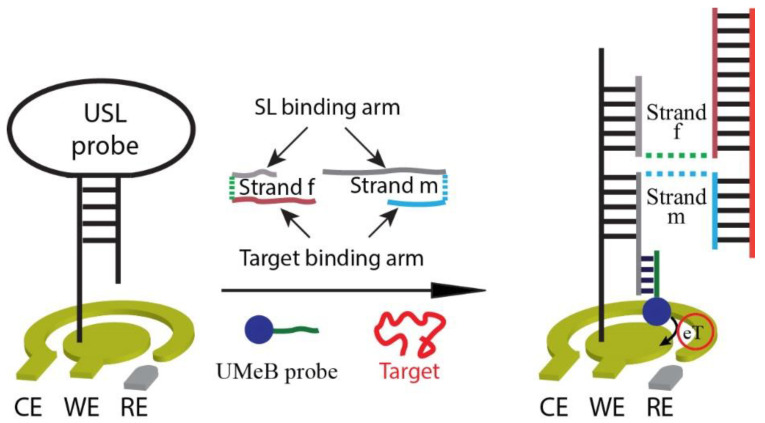
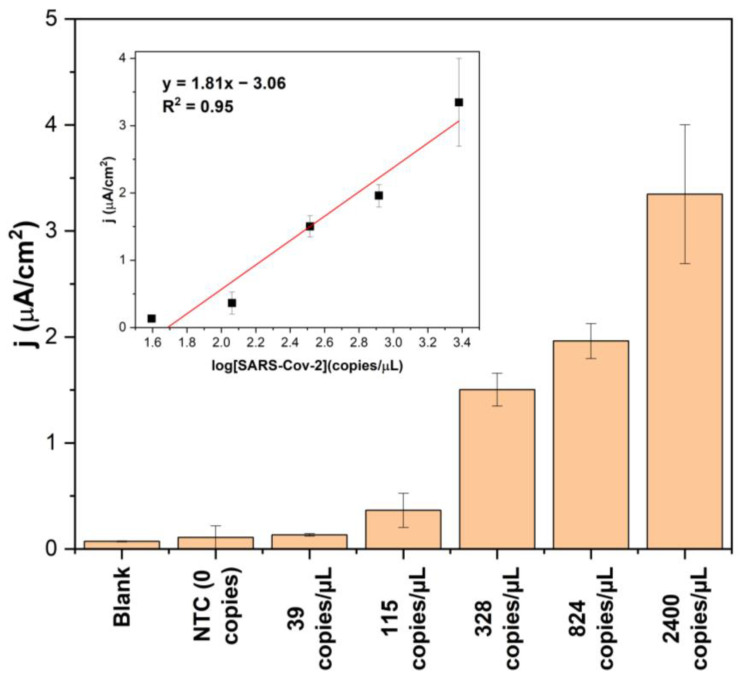
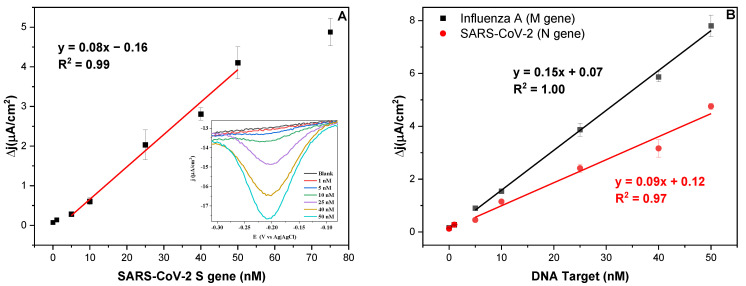
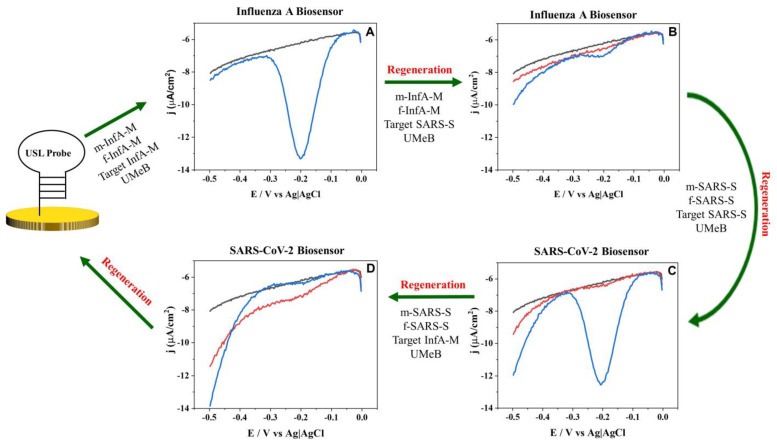
A modular, multi-purpose, and cost-effective electrochemical biosensor based on a five-stranded four-way junction (5S-4WJ) system was developed for SARS-CoV-2 (genes S and N) and Influenza A virus (gene M) detection. The 5S-4WJ structure consists of an electrode-immobilized universal stem-loop (USL) strand, two auxiliary DNA strands, and a universal methylene blue redox strand (UMeB). This design allows for the detection of specific nucleic acid sequences using square wave voltammetry (SWV). The sequence-specific auxiliary DNA strands (m and f) ensure selectivity of the biosensor for target recognition utilizing the same USL and UMeB components. An important feature of this biosensor is the ability to reuse the USL-modified electrodes to detect the same or alternative targets in new samples. This is accomplished by a simple procedure involving rinsing the electrodes with water to disrupt the 5S-4WJ structure and subsequent re-hybridization of the USL strand with the appropriate set of strands for a new analysis. The biosensor exhibited minimal loss in signal after rehybridization, demonstrating its potential as a viable multiplex assay for both current and future pathogens, with a low limit of quantification (LOQ) of as low as 17 pM.
基于五链四叉结(5S-4WJ)系统,开发了一种模块化、多用途且具有成本效益的电化学生物传感器,用于检测 SARS-CoV-2(基因 S 和 N)和甲型流感病毒(基因 M)。5S-4WJ 结构由电极固定的通用茎环(USL)链、两条辅助 DNA 链和通用亚甲蓝氧化还原链(UMeB)组成。该设计允许使用方波伏安法(SWV)检测特定的核酸序列。序列特异性辅助 DNA 链(m 和 f)确保了生物传感器对目标识别的选择性,利用相同的 USL 和 UMeB 组件。该生物传感器的一个重要特点是能够重复使用修饰 USL 的电极来检测新样品中的相同或替代目标。这是通过一个简单的程序来实现的,包括用水冲洗电极以破坏 5S-4WJ 结构,然后用适当的一组链与 USL 链重新杂交进行新的分析。重新杂交后,生物传感器的信号几乎没有损失,这表明它有潜力作为当前和未来病原体的可行多重分析物,其定量下限(LOQ)低至 17 pM。