Department of Biotechnology, Delhi Technological University, Shahbad Daulatpur, Delhi 110042, India.
Nanotechnology Group, Tyndall National Institute, University College Cork, T12 K8AF Cork, Ireland.
Biosensors (Basel). 2021 May 1;11(5):141. doi: 10.3390/bios11050141.
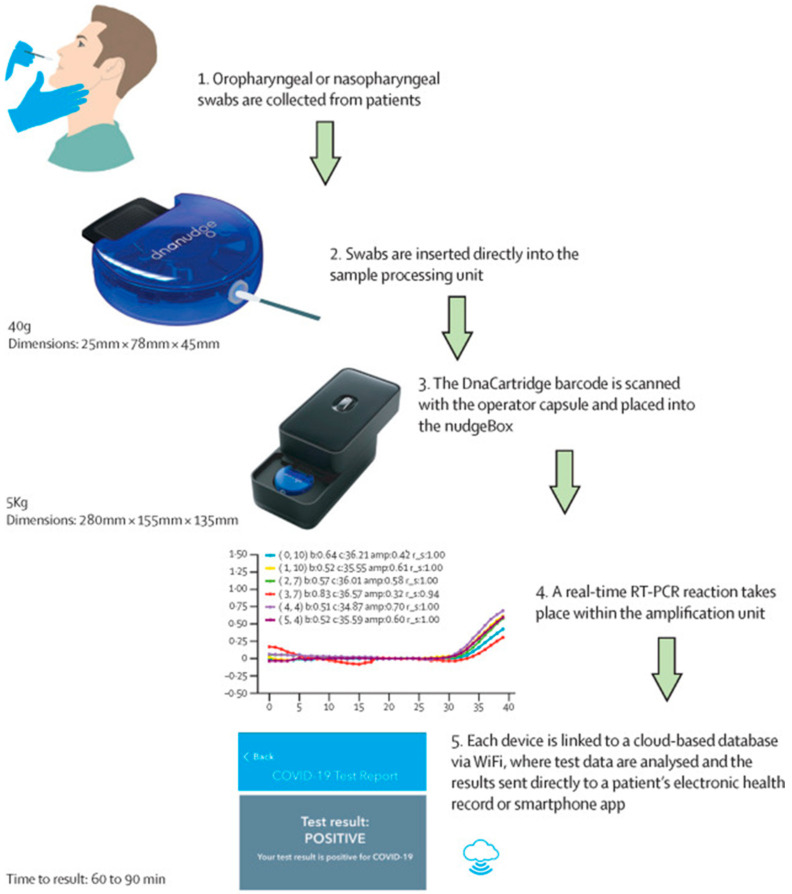
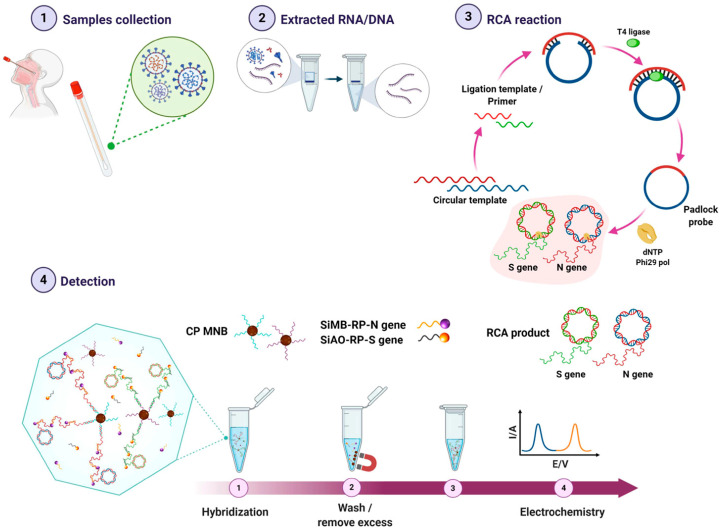
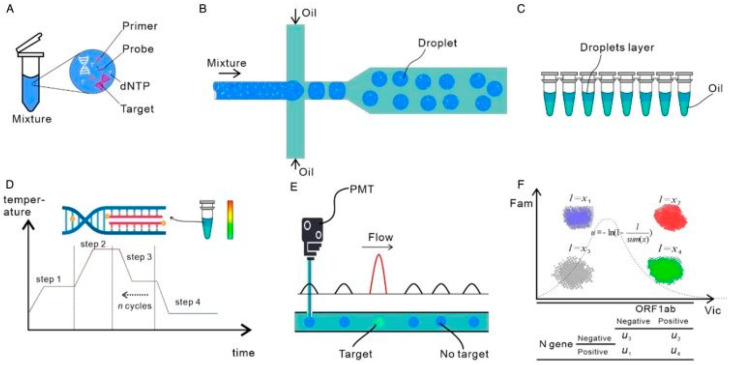
Molecular diagnostics has been the front runner in the world's response to the COVID-19 pandemic. Particularly, reverse transcriptase-polymerase chain reaction (RT-PCR) and the quantitative variant (qRT-PCR) have been the gold standard for COVID-19 diagnosis. However, faster antigen tests and other point-of-care (POC) devices have also played a significant role in containing the spread of SARS-CoV-2 by facilitating mass screening and delivering results in less time. Thus, despite the higher sensitivity and specificity of the RT-PCR assays, the impact of POC tests cannot be ignored. As a consequence, there has been an increased interest in the development of miniaturized, high-throughput, and automated PCR systems, many of which can be used at point-of-care. This review summarizes the recent advances in the development of miniaturized PCR systems with an emphasis on COVID-19 detection. The distinct features of digital PCR and electrochemical PCR are detailed along with the challenges. The potential of CRISPR/Cas technology for POC diagnostics is also highlighted. Commercial RT-PCR POC systems approved by various agencies for COVID-19 detection are discussed.
分子诊断一直是世界应对 COVID-19 大流行的领跑者。特别是逆转录-聚合酶链反应(RT-PCR)和定量变体(qRT-PCR)一直是 COVID-19 诊断的金标准。然而,更快的抗原检测和其他即时检测(POC)设备也通过促进大规模筛查和更快地提供结果,在遏制 SARS-CoV-2 的传播方面发挥了重要作用。因此,尽管 RT-PCR 检测具有更高的灵敏度和特异性,但 POC 检测的影响不容忽视。因此,人们越来越关注开发微型化、高通量和自动化的 PCR 系统,其中许多系统可在即时检测点使用。本综述总结了微型化 PCR 系统的最新进展,重点介绍了 COVID-19 的检测。详细介绍了数字 PCR 和电化学生物 PCR 的独特特征以及挑战。还强调了 CRISPR/Cas 技术在即时诊断中的潜力。讨论了经各机构批准用于 COVID-19 检测的商业 RT-PCR 即时检测系统。