Chen Ming, Luo Jing, Ji Hongwu, Song Wenkui, Zhang Di, Su Weiming, Liu Shucheng
College of Food Science and Technology, Guangdong Ocean University, Zhanjiang 524088, China.
Guangdong Provincial Key Laboratory of Aquatic Product Processing and Safety, Zhanjiang 524088, China.
Mar Drugs. 2023 Aug 29;21(9):477. doi: 10.3390/md21090477.
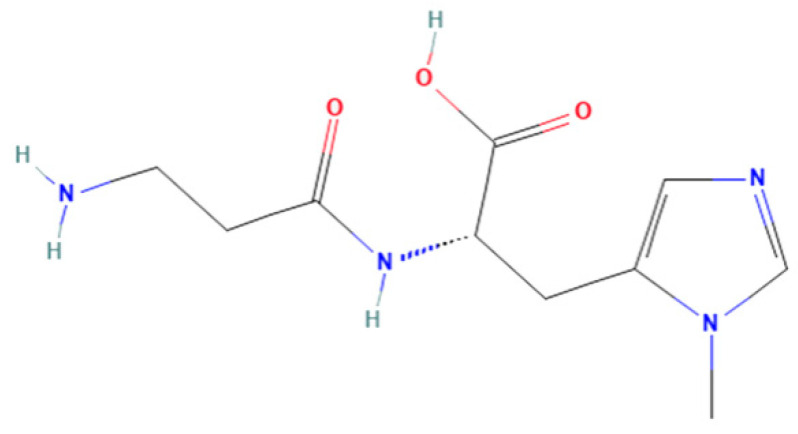
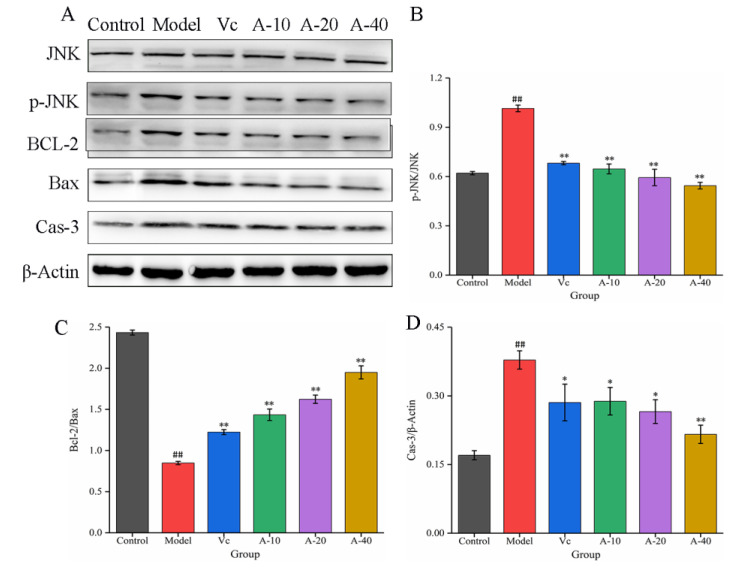
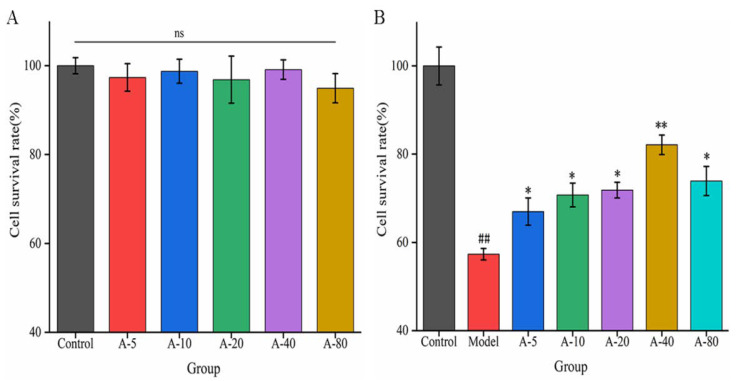
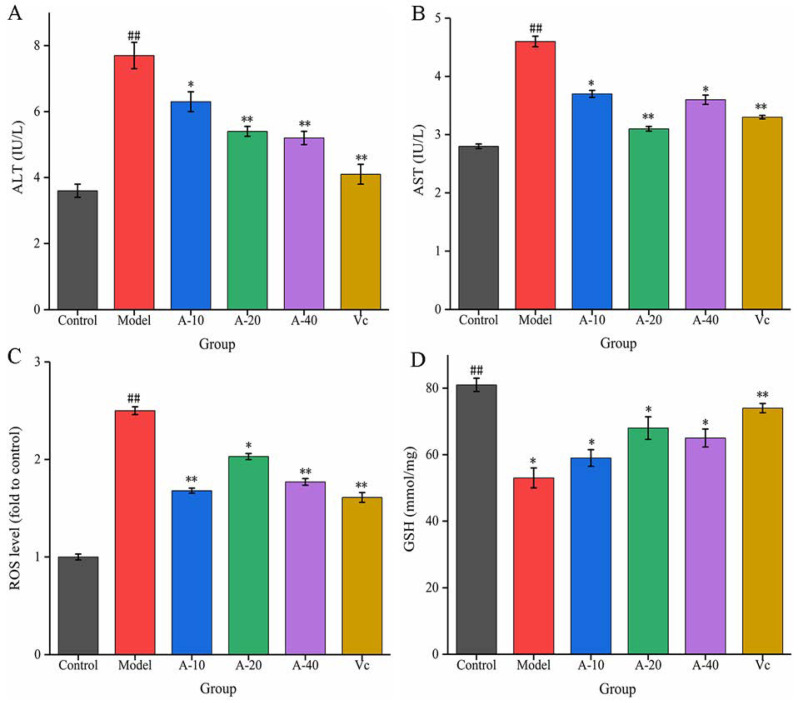
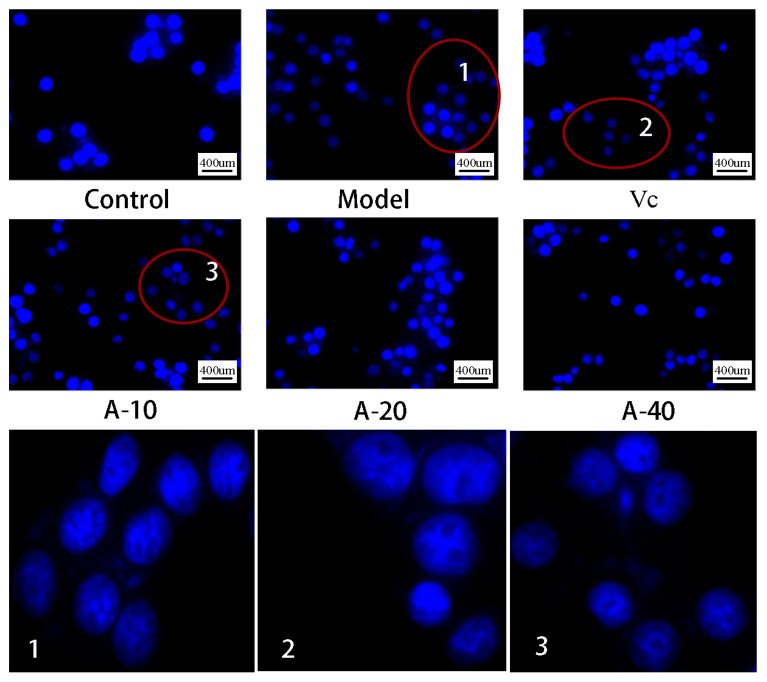
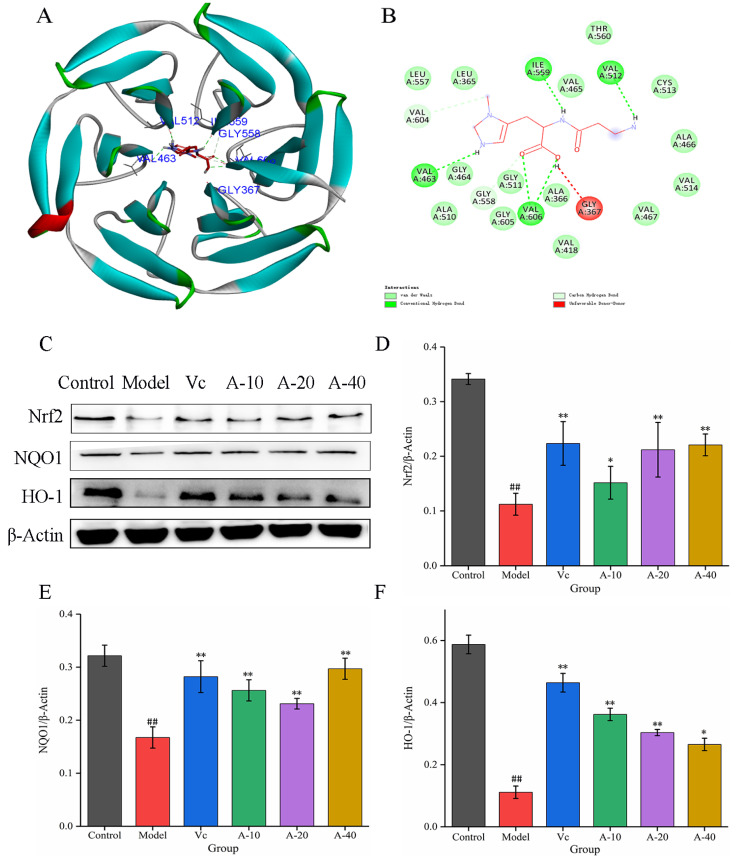
Anserine is a naturally occurring histidine dipeptide with significant antioxidant activities. This study aimed to investigate the preventive mechanism of anserine on tert-butyl hydroperoxide (TBHP)-induced liver damage in a normal human liver cell line (L-02 cells). The L-02 cells were pretreated with anserine (10, 20, and 40 mmol/L) and then induced with 400 μmol/L of TBHP for 4 h. The results showed that the survival rates of L-02 cells and the contents of GSH were significantly increased with the pretreatment of anserine; the activities of alanine aminotransferase (ALT) and aspartate aminotransferase (AST) in the extracellular fluid were sharply decreased; and the formation of reactive oxygen species (ROS), nuclear fragmentation, and apoptosis were significantly inhibited. In addition, anserine could bind to the Kelch domain of Kelch-like ECH-associated protein 1 (Keap1) with a binding force of -7.2 kcal/mol; the protein expressions of nuclear factor-erythroid 2-related factor-2 (Nrf2), quinone oxidoreductase 1 (NQO1), heme oxygenase-1 (HO-1), and Bcl-2 were upregulated by anserine in TBHP-induced L-02 cells, with the downregulation of p-JNK and caspase-3. In conclusion, anserine might alleviated liver injury in L-02 cells via regulating related proteins in the Keap1-Nrf2 and JNK-Caspase-3 signaling pathways.
鹅肌肽是一种天然存在的具有显著抗氧化活性的组氨酸二肽。本研究旨在探讨鹅肌肽对叔丁基过氧化氢(TBHP)诱导的正常人肝细胞系(L-02细胞)肝损伤的预防机制。将L-02细胞用鹅肌肽(10、20和40 mmol/L)预处理,然后用400 μmol/L的TBHP诱导4小时。结果表明,鹅肌肽预处理可显著提高L-02细胞的存活率和谷胱甘肽(GSH)含量;细胞外液中丙氨酸氨基转移酶(ALT)和天冬氨酸氨基转移酶(AST)的活性急剧下降;活性氧(ROS)的形成、核碎裂和细胞凋亡均受到显著抑制。此外,鹅肌肽能以-7.2 kcal/mol的结合力与类ECH相关蛋白1(Keap1)的Kelch结构域结合;在TBHP诱导的L-02细胞中,鹅肌肽上调了核因子红细胞2相关因子2(Nrf2)、醌氧化还原酶1(NQO1)、血红素加氧酶-1(HO-1)和Bcl-2的蛋白表达,同时下调了p-JNK和caspase-3。综上所述,鹅肌肽可能通过调节Keap1-Nrf2和JNK-Caspase-3信号通路中的相关蛋白来减轻L-02细胞的肝损伤。