Rubino Valentina, La Rosa Giuliana, Pipicelli Luca, Carriero Flavia, Damiano Simona, Santillo Mariarosaria, Terrazzano Giuseppe, Ruggiero Giuseppina, Mondola Paolo
Dipartimento di Scienze Mediche Traslazionali, Università di Napoli "Federico II", Via Pansini 5, 80131 Naples, Italy.
Dipartimento di Medicina Clinica e Chirurgia, Università di Napoli "Federico II", Via Pansini 5, 80131 Naples, Italy.
Antioxidants (Basel). 2023 Sep 10;12(9):1747. doi: 10.3390/antiox12091747.
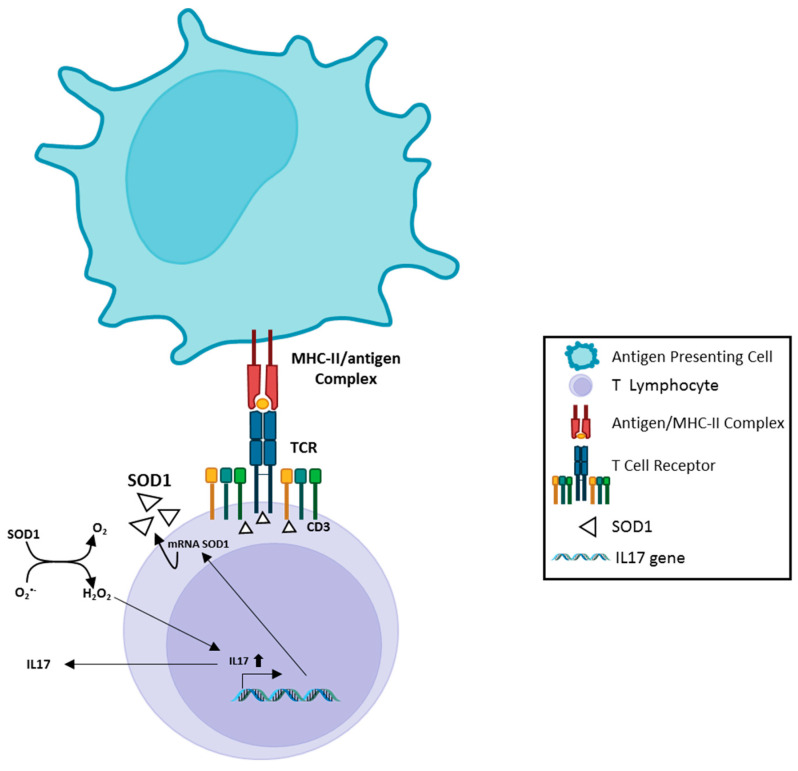
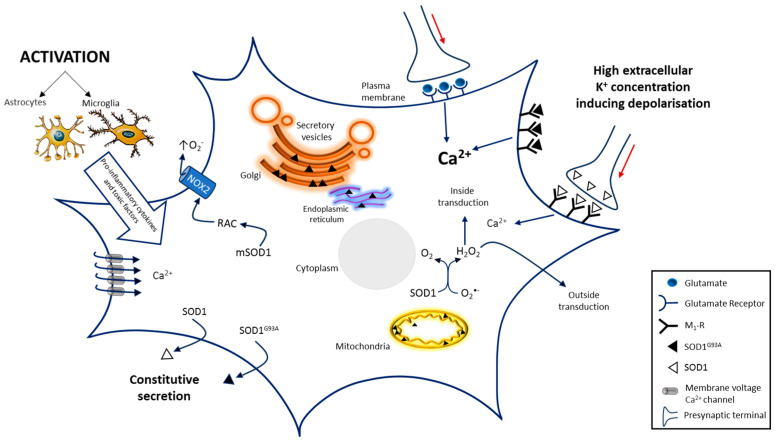
Amyotrophic Lateral Sclerosis (ALS) is a progressive motor neurodegenerative disease. Cell damage in ALS is the result of many different, largely unknown, pathogenetic mechanisms. Astrocytes and microglial cells play a critical role also for their ability to enhance a deranged inflammatory response. Excitotoxicity, due to excessive glutamate levels and increased intracellular Ca concentration, has also been proposed to play a key role in ALS pathogenesis/progression. Reactive Oxygen Species (ROS) behave as key second messengers for multiple receptor/ligand interactions. ROS-dependent regulatory networks are usually mediated by peroxides. Superoxide Dismutase 1 (SOD1) physiologically mediates intracellular peroxide generation. About 10% of ALS subjects show a familial disease associated with different gain-of-function SOD1 mutations. The occurrence of sporadic ALS, not clearly associated with SOD1 defects, has been also described. SOD1-dependent pathways have been involved in neuron functional network as well as in immune-response regulation. Both, neuron depolarization and antigen-dependent T-cell activation mediate SOD1 exocytosis, inducing increased interaction of the enzyme with a complex molecular network involved in the regulation of neuron functional activity and immune response. Here, alteration of SOD1-dependent pathways mediating increased intracellular Ca levels, altered mitochondria functions and defective inflammatory process regulation have been proposed to be relevant for ALS pathogenesis/progression.
肌萎缩侧索硬化症(ALS)是一种进行性运动神经退行性疾病。ALS中的细胞损伤是多种不同的、很大程度上未知的致病机制导致的结果。星形胶质细胞和小胶质细胞因其增强紊乱炎症反应的能力也发挥着关键作用。由于谷氨酸水平过高和细胞内钙浓度增加导致的兴奋毒性,也被认为在ALS发病机制/进展中起关键作用。活性氧(ROS)作为多种受体/配体相互作用的关键第二信使。ROS依赖的调节网络通常由过氧化物介导。超氧化物歧化酶1(SOD1)在生理上介导细胞内过氧化物的产生。约10%的ALS患者表现为与不同功能获得性SOD1突变相关的家族性疾病。也有散发性ALS的报道,其与SOD1缺陷无明显关联。SOD1依赖的途径参与了神经元功能网络以及免疫反应调节。神经元去极化和抗原依赖性T细胞激活均介导SOD1胞吐作用,导致该酶与参与神经元功能活动和免疫反应调节的复杂分子网络的相互作用增加。在此,有人提出,介导细胞内钙水平升高、线粒体功能改变和炎症过程调节缺陷的SOD1依赖途径的改变与ALS发病机制/进展相关。